


The Kidnapping of Shelly Kittleson: A Veteran Journalist Caught in Baghdad’s Dangerous Web
A Seasoned Reporter Vanishes in Broad Daylight
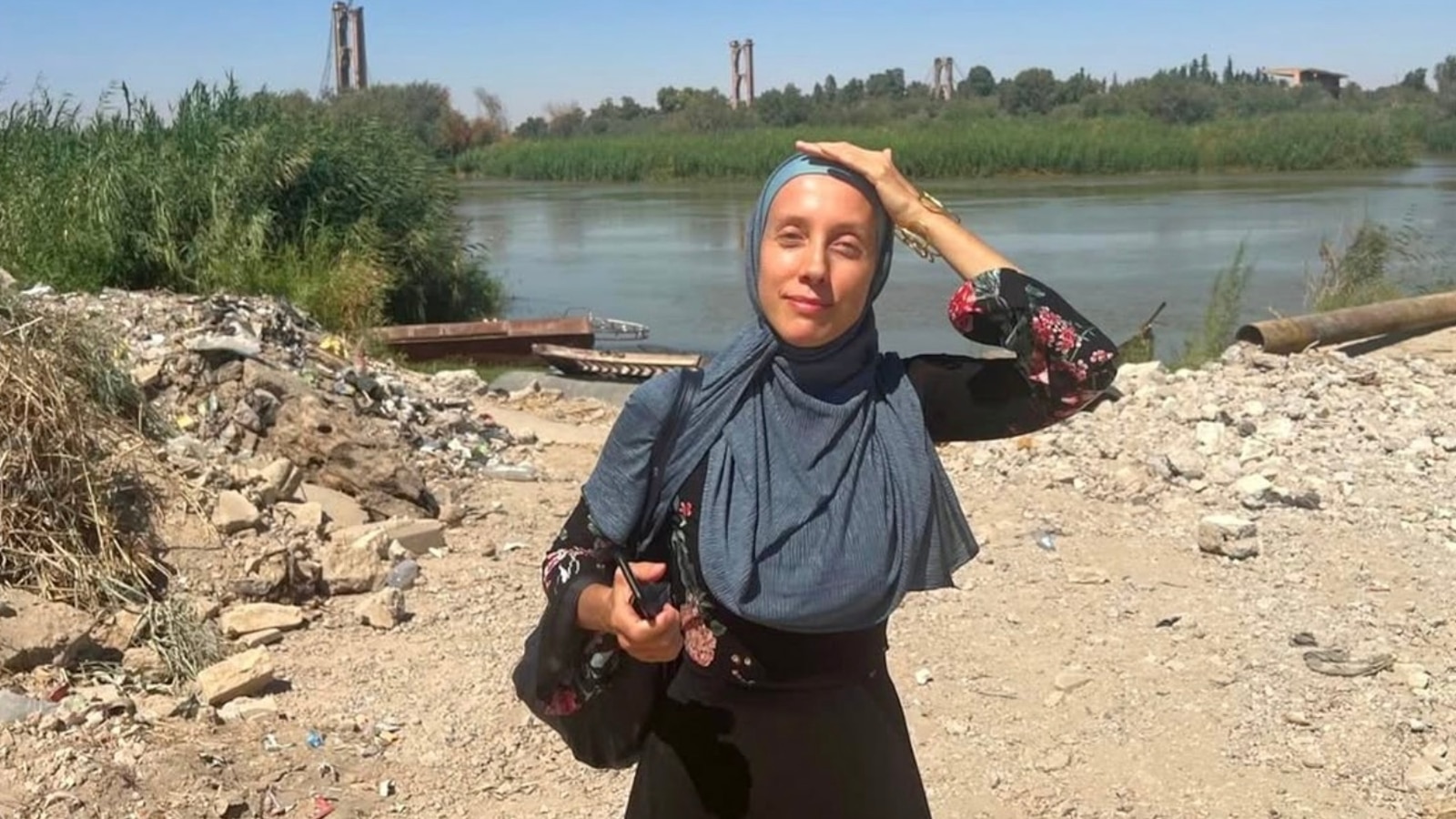
The search for American journalist Shelly Kittleson continues in Iraq following her shocking abduction on a Baghdad street in broad daylight this past Tuesday. The 49-year-old freelance reporter from Wisconsin has become the focus of an intense international effort involving both U.S. and Iraqi authorities. Security footage, which has been verified by ABC News and confirmed by Iraq’s interior ministry, captured the terrifying moment when Kittleson was standing on a sidewalk before a silver car pulled up alongside her. Multiple individuals emerged from the vehicle, grabbed her, and forcibly pulled her inside before speeding away. The brazen nature of the kidnapping—occurring in the middle of the day on a public street—has sent shockwaves through the journalism community and raised serious questions about the safety of reporters working in the region. According to the Iraqi Ministry of Interior, the incident represents a targeted attack on an American journalist, though the exact motives and identity of all perpetrators remain under investigation.
Understanding the Victim: A Passionate and Careful Journalist
Kiran Nazish, director of the Coalition for Women in Journalism and a colleague who knew Kittleson well, painted a picture of a journalist who was not only exceptionally talented but also extraordinarily cautious about her safety. “She is brilliant in her reporting,” Nazish told ABC News, adding that Kittleson was “very vigilant and careful” in her approach to covering one of the world’s most dangerous regions. Nazish emphasized that Kittleson had built “perhaps the strongest network of trusted allies” that any journalist she knew had established in the region—people who would protect her and with whom she felt safe. This wasn’t a reporter who took unnecessary risks or wandered into dangerous situations unprepared. In fact, just two weeks before her kidnapping, Kittleson had completed hostile environment and first aid training, known as HEFAT training in the journalism world. This intensive preparation included practicing scenarios specifically designed to prepare journalists for the possibility of being kidnapped. According to Nazish, who spoke with others who attended the training with Kittleson, the kidnapping simulation exercises were particularly difficult for her to process emotionally, causing her noticeable stress during that portion of the training. The tragic irony that this nightmare scenario became reality so soon after her preparation is not lost on those who knew her.
The Investigation and Iranian Connections
As the search entered its third day on Thursday, Iraqi officials acknowledged they had no new information regarding Kittleson’s whereabouts, though the investigation continues at full pace. One significant break in the case came when a second vehicle allegedly involved in the abduction crashed while attempting to flee the scene. Iraqi security forces managed to arrest one occupant from that vehicle, providing investigators with their first direct link to those responsible. According to Dylan Johnson, the U.S. assistant secretary of state for global public affairs, the arrested suspect has connections to Kataib Hezbollah, an Iranian-aligned militia group operating in Iraq. This connection has raised the stakes considerably and prompted U.S. officials to issue an urgent new warning to all Americans still in Iraq, advising them to leave the country immediately. The warning, issued by the United States Embassy and Consulate in Iraq, specifically stated that “Iraqi terrorist militia groups aligned with Iran may intend to conduct attacks in central Baghdad in the next 24-48 hours.” The alert further noted that “Iran and Iran-aligned terrorist militias have conducted widespread attacks against U.S. citizens and targets associated with the United States throughout Iraq, including in the Iraqi Kurdistan Region.” This heightened threat environment comes as the broader conflict between the U.S., Israel, and Iran has entered its second month, creating a particularly volatile situation for American citizens in the region.
The Complicated Question of Warnings and Threats
One of the more controversial aspects of this case involves the revelation that the State Department had warned Kittleson “multiple times” about threats against her before the kidnapping occurred. Dylan Johnson confirmed this in his statement, adding that the State Department is now coordinating with the FBI to secure her release. However, Nazish provided important context that helps explain why such warnings might not have deterred a journalist of Kittleson’s experience and commitment. She explained that threats against journalists working in Iraq and throughout the Middle East are unfortunately common, almost an occupational hazard of covering the region. “Working with Shelly and knowing her over the years, we do know that she would often get threats,” Nazish said. For journalists like Kittleson who have spent years building sources and understanding the region, the constant background noise of threats becomes something they learn to evaluate and manage rather than something that automatically ends their work. Nazish had spoken with Kittleson by phone just days before the kidnapping—on either Wednesday or Thursday of the previous week—though their conversation focused more on personal matters than professional ones. What Nazish did know was that Kittleson had been coordinating with colleagues, sources, and other contacts to work on a story that required her to travel into Iraq to speak with several families, though it remains unclear whether any news outlet had formally commissioned this particular piece of reporting.
A Journalist Deeply Connected to the Region
What emerges from conversations with those who knew Kittleson is a portrait of a journalist who wasn’t just passing through the Middle East for dramatic stories but had genuinely embedded herself in the fabric of the region. Though based in Rome, Kittleson had developed deep connections throughout Iraq and Syria over many years of reporting. “Shelly has stuck around the region because she really cares about it and she really knows the region,” Nazish explained. Unlike many Western journalists who parachute into conflict zones for brief periods, Kittleson had invested the time to learn Arabic and had built genuine trust with different communities across the region. “People in the region know Shelly as someone who has been there and she’s really built trust,” Nazish said, adding that Kittleson was “very well-connected” and often worked on a shoestring budget—a testament to her commitment to the work itself rather than financial gain. Her contributions to Al-Monitor, a Washington, D.C.-based news website covering the Middle East, had established her reputation for insightful, on-the-ground reporting that brought depth and nuance to stories from the region. The publication issued a statement this week expressing their alarm at her kidnapping and calling for her “safe and immediate release,” standing by “her vital reporting from the region” and calling for “her swift return to continue her important work.” Nazish believes that Kittleson’s nationality and her prominence as one of the few Western journalists regularly working in the region made her a target. “I do think she was certainly targeted because she’s American. So that’s a huge factor,” Nazish said. “Also, she is one of the very few journalists who go into the region. A lot of people know her. It’s possible that she was on the radar.”
The Broader Context and Hope for Resolution
The kidnapping of Shelly Kittleson represents more than just one journalist’s terrifying ordeal—it highlights the increasingly dangerous environment for reporters working in conflict zones and the specific risks faced by American journalists in regions where Iranian-aligned groups operate. The timing of the abduction, coming amid heightened tensions between the U.S., Israel, and Iran, suggests that journalists may increasingly become pawns in larger geopolitical struggles. The journalism community has rallied around calls for Kittleson’s release, recognizing that her work—and the work of reporters like her—provides essential information about regions that would otherwise remain invisible to much of the world. The fact that she had just completed hostile environment training and was known for her careful approach to safety makes her kidnapping all the more chilling, suggesting that even the most prepared and cautious journalists face unprecedented risks in today’s Middle East. As the search continues and diplomatic efforts intensify, those who know Kittleson describe a resilient person whose passion for the region and its people drove her to continue reporting despite the dangers. The hope is that the connections she built, the trust she earned, and the respect she commanded in the communities where she worked might somehow contribute to her safe return. For now, her family, friends, colleagues, and the broader journalism community wait anxiously for news, hoping that someone who dedicated her career to telling the stories of others will soon be able to tell her own story of survival and return home safely.