

Inside America’s Nuclear Arsenal: A Rare Look at the Minuteman III to Sentinel Transition
A Journey to America’s Most Secure Sites
In a rare and extraordinary glimpse behind the curtain of America’s nuclear defense system, military journalists recently accompanied top Air Force commanders deep into the heart of the nation’s ground-based nuclear deterrent. Flying aboard the military’s cutting-edge Grey Wolf helicopter over the vast, windswept prairies of Wyoming, the delegation—including General S.L. Davis of Air Force Global Strike Command and Admiral Rich Correll of U.S. Strategic Command—descended toward one of America’s most closely guarded secrets: an active Intercontinental Ballistic Missile (ICBM) silo. These underground fortresses, scattered across hundreds of square miles from Colorado stretching northward to the Canadian border, represent a critical component of the United States’ nuclear defense strategy. What makes this visit particularly significant is the historical context—these sites were once so heavily protected that unauthorized intruders could face lethal force on sight. Today, approximately 400 of these missiles stand ready at any given moment, poised to launch within minutes if the President issues the command, representing a sobering reminder of the constant vigilance required in nuclear deterrence.
Inside the Decommissioned Echo 10 Silo
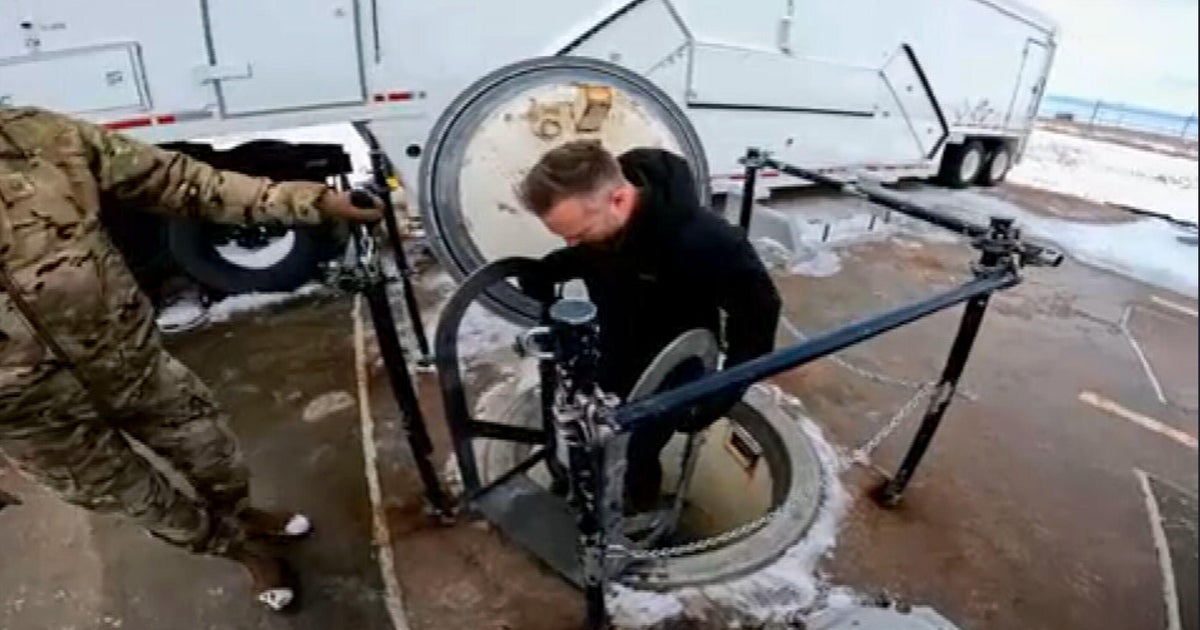
The helicopter touched down at Echo 10, positioned near the Wyoming-Colorado border, marking a historic moment as this became the first silo to be decommissioned in preparation for the massive modernization program replacing the aging Minuteman III system with the next-generation Sentinel missile system. Despite its decommissioned status, security remained extraordinarily tight—an Air Force rapid response team, specially trained to recapture nuclear facilities from hostile forces, had already secured the perimeter before the delegation’s arrival. Colonel Terrance J. Holmes, Wing Commander of the 90th Missile Wing at F.E. Warren Air Force Base, which oversees 150 Minuteman III ICBMs, greeted the visitors at the silo entrance. When asked about the immense responsibility of commanding so many nuclear warheads, Holmes acknowledged the gravity with measured words: “It is a heavy weight, but I can tell you that our defenders, our operators and the support personnel that drive the mission of the 90th Missile Wing, stand ready every single day, 24/7.” The journey into the silo itself felt like descending into a Cold War time capsule—climbing down a ladder through a circular shaft, passing through feet of reinforced concrete designed to withstand near-direct nuclear strikes, the visitors entered what Admiral Correll aptly described as “a world designed to destroy worlds.” The technology lining the walls immediately revealed the system’s age, with equipment that seemed frozen in time from the early 1960s, surrounding a shaft several stories high that once housed a 60-foot nuclear missile capable of delivering devastating firepower across continents.
The Aging Infrastructure Challenge
The starkness of the outdated technology serves as a powerful argument for the modernization program currently underway. Admiral Correll put the situation in perspective: “The system was originally designed for a decade. We’ve been operating it since 1961. So, it’s well past its design life.” General Davis added personal context to this assessment, noting that “The Minuteman III that’s on alert today is the Minuteman III that I took command of as a lieutenant over 35 years ago. The launch facility that supports the Minuteman III [was] built before I was born.” This remarkable longevity, while testament to robust initial engineering, has pushed the system far beyond its intended operational lifespan. The 60-year-old technology surrounding the silo represents not just outdated equipment but potential vulnerabilities in reliability, security, and operational efficiency. Back at F.E. Warren Air Force Base, the commanders showcased where the new Sentinel missiles and their warheads would be assembled—gleaming modern facilities that stood in stark contrast to the base’s historic red brick buildings constructed during an era when cavalry charges still represented cutting-edge military tactics. According to General Davis, the improvements are substantial and multifaceted: “It’s bigger, it’s faster. It has longer range and it can carry more payload. It’s safer, it’s more secure and it’s more reliable.”
The Controversial Cost of Modernization
The Sentinel program, however, comes with a price tag that has generated significant controversy and debate in Washington and beyond. Currently running approximately 80% over its original budget and costing American taxpayers roughly $141 billion, the program represents one of the most expensive military modernization efforts in recent history. The scope of construction is staggering—the Air Force is building over 450 new launch silos along with between 50 to 75 launch control centers and numerous other support facilities spread across the American heartland. Additionally, the program is running about a decade behind its original schedule, raising questions about project management and oversight. Despite these concerns, military commanders maintain that the long-term economics favor the upgrade. They argue that once fully operational, the Sentinel system will actually prove cheaper to maintain than the aging Minuteman III, primarily because the new technology will require significantly less maintenance and fewer repair interventions. The new Grey Wolf helicopter fleet, they point out, will enhance security capabilities, providing better reach, faster reaction times, and more reliable transportation to any silo location across the country. Colonel Holmes addressed concerns about maintaining nuclear readiness during the transition period, emphasizing that “I am focused on maintaining day to day nuclear surety and deterrence for the nation, and that mission does not and will not ever stop even during the transition to the Sentinel.”
The Philosophy of Nuclear Deterrence
Critics of the program frequently question whether such massive expenditure makes sense for weapons systems that, ideally, will never be used in combat. Admiral Correll, however, offered a compelling counterargument that reframes how we should think about nuclear weapons: “We use it every single day. Deterrence is active. The absence of action on the part of the adversary to do us harm is employment of that system day after day.” This philosophy represents the cornerstone of nuclear strategy since the Cold War—the concept that the mere existence of these weapons, and the credible threat of their use, prevents adversaries from launching attacks in the first place. From this perspective, nuclear weapons “succeed” every day they prevent conflict rather than participate in it. The commanders emphasized that this isn’t merely theoretical—America’s strategic adversaries, including China, Russia, and North Korea, are simultaneously pursuing their own nuclear modernization programs, developing new delivery systems, more sophisticated warheads, and enhanced command and control capabilities. In this context, allowing America’s nuclear deterrent to atrophy through neglect while adversaries modernize could invite miscalculation or embolden potential aggression. The Sentinel program doesn’t exist in isolation but represents one leg of the comprehensive modernization of America’s nuclear triad—the three-pronged approach to nuclear deterrence comprising land-based missiles, strategic bombers, and submarine-launched ballistic missiles.
Ensuring America’s Nuclear Future
The Pentagon is simultaneously upgrading the other components of this triad, replacing the legendary B-2 Stealth bomber with the even more advanced B-21 Raider, and transitioning from the Ohio Class nuclear-powered ballistic missile submarines to the next-generation Columbia Class. Together, these programs represent the most comprehensive overhaul of American nuclear forces since the Cold War, reflecting both the technological advances of the past half-century and the evolving strategic landscape of the 21st century. Admiral Correll concluded the tour with a statement of confidence and purpose: “Our nation’s nuclear deterrent is safe, secure, reliable and credible. America will be safer.” This assertion encapsulates the military’s position that despite the enormous costs, lengthy delays, and technical challenges, the modernization program represents an essential investment in national security that cannot be deferred. As the first Minuteman III silos go offline and construction of Sentinel facilities continues across the northern plains, the transition represents a pivotal moment in American defense policy. The men and women who staff these remote facilities, working in underground bunkers scattered across thousands of square miles of prairie, maintain a vigilance that most Americans never see or think about. Their mission—to stand ready to execute the most consequential orders a President could ever give—continues uninterrupted through the modernization process, ensuring that America’s nuclear deterrent remains credible and effective as it transitions from Cold War-era systems to the technologies that will secure the nation through the remainder of the 21st century.