


Iranian Naval Mines Threaten Global Oil Supply in Strait of Hormuz Crisis
Hidden Dangers Beneath Strategic Waters
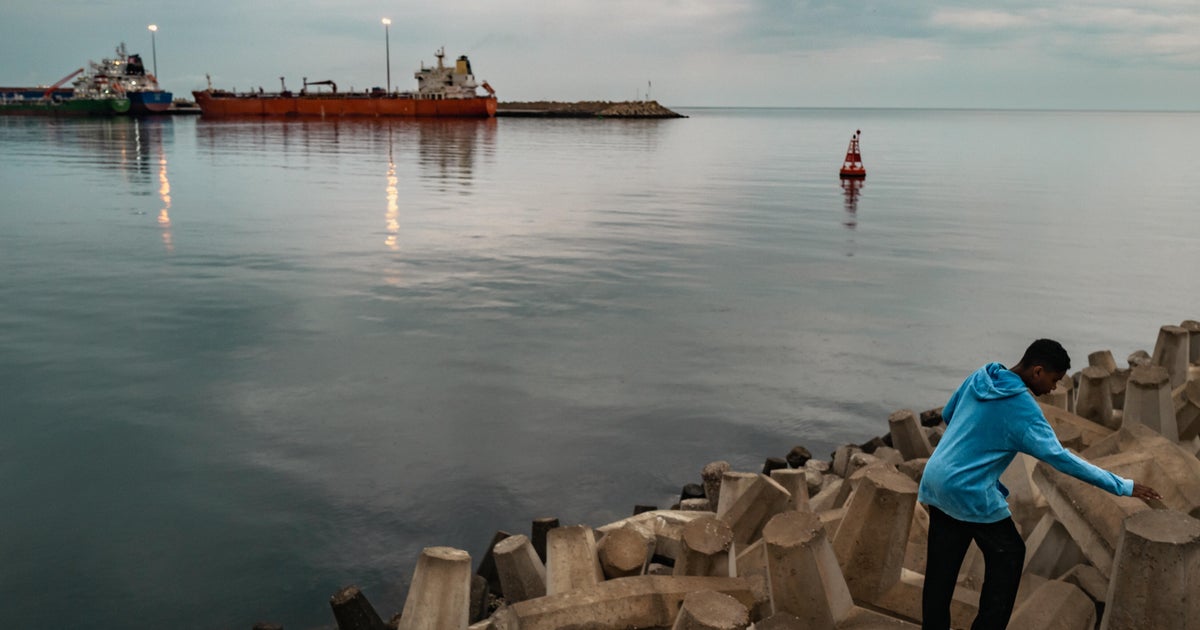
The Strait of Hormuz, one of the world’s most critical shipping chokepoints, has become the center of an escalating standoff between the United States and Iran. According to recent intelligence briefings shared with CBS News, American officials have confirmed that Iran has deployed at least a dozen underwater mines throughout this vital waterway, though exact numbers remain disputed among intelligence sources. These aren’t crude devices from a bygone era—they’re sophisticated, modern weapons designed specifically to evade detection and cause maximum disruption to commercial and military vessels passing through waters that carry roughly 20% of the world’s oil supply. The revelation comes as the Trump administration has alternated between threatening military action and claiming diplomatic progress with Tehran, creating a volatile situation that has already sent shockwaves through global energy markets and the American economy. The presence of these mines represents a tangible threat not just to military vessels but to the commercial shipping that forms the backbone of international trade, raising the stakes considerably in what has become a dangerous game of geopolitical chess in the Persian Gulf.
The Technology Behind Iran’s Underwater Arsenal
The mines currently deployed by Iran are sophisticated pieces of military hardware that represent significant advances in naval warfare technology. The primary weapons being used are the Iranian-manufactured Maham 3 and Maham 7 models, both designed to maximize damage while minimizing the chances of detection. The Maham 3 is a moored naval mine that employs magnetic and acoustic sensors to detect vessels passing nearby without requiring any physical contact. This intelligent weapon can engage targets within approximately ten feet, using advanced algorithms to analyze ship movement patterns and determine the optimal moment to detonate for maximum effect. What makes this mine particularly dangerous is its programmable timer system and configurable sensor inputs, which can be adjusted through coded commands to target specific types of vessels or to remain dormant during certain periods, making them unpredictable and difficult to neutralize. The Maham 7, publicly displayed for the first time at a 2015 arms exhibition, takes a different approach as a “sticking mine” or limpet mine designed to rest on the seabed. This compact high-explosive device combines acoustic sensors with three-axis magnetic detection systems to identify passing ships, with particular effectiveness against medium-sized vessels, landing craft, and smaller submarines. Its engineering is particularly clever—the mine’s shape was specifically designed to scatter incoming sonar waves, effectively making it nearly invisible to the minesweeping systems that would normally detect such threats. This stealth capability allows it to remain hidden on the ocean floor until a target vessel passes within striking range, at which point its sensors trigger detonation.
Military Response and Escalating Tensions
The United States military has responded to Iran’s mine-laying activities with an aggressive campaign of preemptive strikes and interdiction operations. General Dan Caine, Chairman of the Joint Chiefs of Staff, confirmed that U.S. Central Command has been systematically targeting and destroying Iranian mine storage facilities and naval ammunition depots throughout the region. The scale of American military operations has been substantial—more than 120 Iranian vessels have been destroyed, along with 44 specialized minelaying craft that Iran had been using to deploy these weapons throughout the strait. White House spokesperson Anna Kelly emphasized this military effort, stating that over 40 minelaying vessels had been destroyed specifically to prevent Iran from disrupting energy flows through the waterway. Admiral Brad Cooper, commanding U.S. Central Command operations in the region, has personally overseen more than 90 precision strikes, with particular focus on Kharg Island, a key location where Iran maintains significant mine storage and deployment facilities. This military campaign reflects the serious threat these mines pose and the determination of American forces to neutralize them before they can impact commercial shipping. The declassified footage released by U.S. Central Command showing airstrikes on 16 minelayers near the Strait of Hormuz serves both as evidence of the threat and as a demonstration of American military capability in the region.
Diplomatic Confusion and Political Maneuvering
The diplomatic situation surrounding this crisis has been characterized by confusion, contradictory statements, and what appears to be significant miscommunication between Washington and Tehran. President Trump initially threatened to “obliterate” Iranian power plants if Tehran continued blocking the strait, but subsequently backed away from this threat, claiming that productive negotiations were underway. According to the President, his Middle East envoy Steve Witkoff and son-in-law Jared Kushner had been engaging in discussions with Iranian leadership, leading Trump to predict that the strait would “be open very soon, if this works.” In a particularly controversial statement, the President suggested that oil flow through the strait would be jointly controlled by “me and the Ayatollah, whoever the Ayatollah is”—a comment that raised eyebrows both for its casual tone and apparent unfamiliarity with Iranian leadership. However, Iran’s foreign ministry flatly denied that any direct talks had taken place, while Iranian state media accused the American president of simply trying to buy time. This disconnect between American claims of diplomatic progress and Iranian denials creates significant uncertainty about whether any genuine negotiations are occurring or whether both sides are simply engaging in public posturing while the underlying crisis continues to simmer.
Economic Impact and Domestic Consequences
The conflict in the Strait of Hormuz and the broader tensions with Iran are having measurable impacts on the American economy and public opinion. Before the war began on February 28th, approximately 20% of the global oil supply flowed through this narrow waterway, and the disruption of that flow has had immediate consequences at American gas pumps. According to data from GasBuddy.com, domestic gas prices have risen by an average of roughly one dollar per gallon since the conflict began—a significant increase that American consumers are feeling every time they fill their tanks. This economic pain is reflected in public opinion surveys, with a recent CBS News poll revealing that the majority of Americans view the ongoing conflict negatively. Only 43% of respondents said the conflict was going “very to somewhat well,” while 57% reported that it was going “very to somewhat badly.” More significantly, 62% of Americans disapprove of President Trump’s handling of the Iran war, with only 38% approving—numbers that suggest this foreign policy crisis could have domestic political consequences. Financial markets have proven highly sensitive to developments in the crisis, with stock prices swinging dramatically based on news from the region. When President Trump announced he would delay his ultimatum deadline for Iran, claiming productive peace talks were underway, markets rallied sharply in response. The Dow Jones Industrial Average climbed more than 1,000 points in a single day, gaining 2.4% to reach 46,654, while the broader S&P 500 gained 2.1% and the technology-heavy Nasdaq Composite advanced 2.4%. These market movements demonstrate how closely investors are watching the situation and how quickly economic conditions could deteriorate if the crisis intensifies.
Strategic Implications and Uncertain Future
The presence of Iranian mines in the Strait of Hormuz represents more than just an immediate tactical threat—it highlights the vulnerability of global energy infrastructure and the potential for regional powers to disrupt international commerce. While official estimates of Iran’s total naval mine stockpile aren’t publicly available, intelligence assessments over the years have suggested Tehran possesses somewhere between 2,000 and 6,000 mines of various types, many manufactured domestically but others produced by China, Russia, or even dating back to the former Soviet Union. A 2019 Defense Intelligence Agency report estimated Iran’s stockpile at over 5,000 mines that could be rapidly deployed using “high-speed small boats equipped as minelayers”—a capability that makes comprehensive interdiction extremely difficult. The current crisis raises fundamental questions about the security of international waterways and the ability of any single nation, even one as militarily powerful as the United States, to guarantee safe passage through strategic chokepoints controlled or threatened by hostile powers. As the conflict enters its fourth week with no clear resolution in sight, the international community faces the possibility of prolonged disruption to energy supplies, with all the economic and political consequences that would entail. Whether through diplomatic negotiation or continued military operations, finding a sustainable solution to this crisis has become an urgent priority not just for the United States and Iran, but for the entire global economy that depends on the free flow of commerce through these strategic waters.