

Conservatives Navigate Complex Terrain as Iran War Unfolds During Election Season
A Party United Yet Divided on Military Intervention
As the Trump administration prosecutes a war with Iran amid a closely contested midterm election cycle, the Conservative Political Action Conference (CPAC) has become a microcosm of the complicated feelings many Republicans harbor about the conflict. While polling shows that an overwhelming majority of Republicans—84% according to recent CBS News data—support military action against Iran, the conference revealed subtle fractures in that support. The numbers tell part of the story: among non-MAGA Republicans, support drops to 70%, suggesting that enthusiasm for the conflict isn’t uniformly distributed across the party’s ideological spectrum. More troubling for the administration, 69% of independent voters oppose U.S. military action in Iran, a statistic that could prove decisive in determining congressional control come November. At CPAC, held this year in the Dallas area, speakers and attendees walked a careful tightrope—expressing loyalty to President Trump while voicing concerns about the war’s potential expansion. The tension between supporting the commander-in-chief and questioning the wisdom of another Middle Eastern entanglement has created an atmosphere of cautious optimism mixed with genuine anxiety about where this conflict might lead.
The Ground Troop Question Dominates the Conversation
Perhaps no single issue at CPAC generated more concern than the possibility of deploying American ground forces to Iran. Secretary of State Marco Rubio attempted to calm these fears by stating that ground troops wouldn’t be necessary to achieve U.S. objectives, but President Trump himself hasn’t definitively ruled out the option. Behind the scenes, Pentagon officials have been making detailed preparations for potentially deploying such forces, a reality that hasn’t escaped conference attendees. Janie Dean, a traveling nurse from central Texas, captured the sentiment of many when she told reporters, “I don’t want our boys and girls going to fight in Iran. It’s going to be another Vietnam.” Her words echoed through the conference halls, reflecting deep-seated fears that Iran could become the next generational quagmire for American forces. Despite these reservations, Dean emphasized that she continues to support President Trump and trusts his “judgment and discernment”—a refrain heard repeatedly throughout the conference. Former Republican Representative Matt Gaetz of Florida articulated perhaps the most pointed criticism from a Trump supporter, warning that “a ground invasion of Iran will make our country poorer and less safe.” Gaetz didn’t mince words about the practical consequences, predicting higher gas prices, elevated food costs, and the possibility that such an invasion might create more terrorists than it eliminates. His remarks represented a fascinating balancing act: maintaining loyalty to Trump while urging him toward diplomacy and away from a full-scale ground operation.
Iranian-American Voices Offer Different Perspective
The CPAC gathering this year featured an unusually prominent Iranian-American presence, with many attendees coming specifically to hear from former Iranian Crown Prince Reza Pahlavi, whose father ruled Iran until the 1979 Islamic Revolution toppled his regime. These voices provided a counterpoint to the cautious skepticism expressed by some conservative Americans, generally advocating for more robust military intervention rather than less. Shahin Nezhad, a petroleum engineer from Houston who left Iran in 1997, described the current Iranian government as “a very, very brutal theocratic dictatorship which has been ruling Iran with iron fists for the past 47 years.” For Nezhad and many like him, civil disobedience alone cannot dislodge the regime; meaningful change requires substantial external support, including military action. Many of these Iranian-Americans left their homeland following the 1979 revolution and have watched from afar as the clerical regime consolidated power. They praised President Trump for taking action and expressed hope that U.S. military operations could finally topple the government they fled decades ago. Interestingly, many Iranian-Americans at CPAC explicitly supported the deployment of ground troops, viewing them as necessary to either overthrow the regime or destroy Iran’s extensive missile stockpiles. Nezhad acknowledged that even if the U.S. successfully degrades Iran’s military capabilities, the regime’s repressive internal security forces might maintain their grip on power without boots on the ground. “So, I think boots on the ground, on a limited basis and for a particular purpose, is probably inevitable. It has to be done,” he stated, representing a viewpoint that puts him at odds with many native-born Americans at the conference but aligned with the experiences of those who’ve lived under Iranian rule.
Trump’s Shifting Messaging Creates Uncertainty
President Trump’s own statements about the Iran conflict have been characteristically difficult to pin down, oscillating between ambitious regime-change rhetoric and more modest military objectives. Hours after launching initial strikes, Trump encouraged the Iranian people to rise up against their government, suggesting a broader goal of fundamental political transformation. At other moments, however, he’s described the operation as a “short-term excursion” focused on degrading Iran’s military capabilities—a far more limited objective that wouldn’t necessarily involve toppling the regime. This ambiguity extends to the question of Iran’s future leadership, with Trump at times suggesting he wants input on who runs the country while at other times indicating preference for a moderate insider rather than an external figure. Regarding Crown Prince Pahlavi, who hasn’t lived in Iran since before his father’s government collapsed, Trump has been diplomatically noncommittal, acknowledging that “some people like him” but suggesting that “somebody from within maybe would be more appropriate.” This lack of clarity has created anxiety among some Iranian-Americans like Nassar Meyman of Dallas, who told reporters, “I hope Trump will be really serious about getting rid of the regime in Iran and we have a new start with the leadership of Crown Prince Pahlavi.” Meyman expressed worry when Trump talks about negotiating and finding somebody inside the existing regime or within Iran’s current power structure, fearing such an approach would leave the fundamental system intact. The president’s mixed messaging reflects a genuine strategic dilemma: how to satisfy both the non-interventionist wing of his coalition, which helped elect him in 2016 on promises to end endless wars, and supporters who see regime change in Iran as a generational opportunity to reshape Middle Eastern power dynamics.
High-Profile Conservative Dissent Emerges
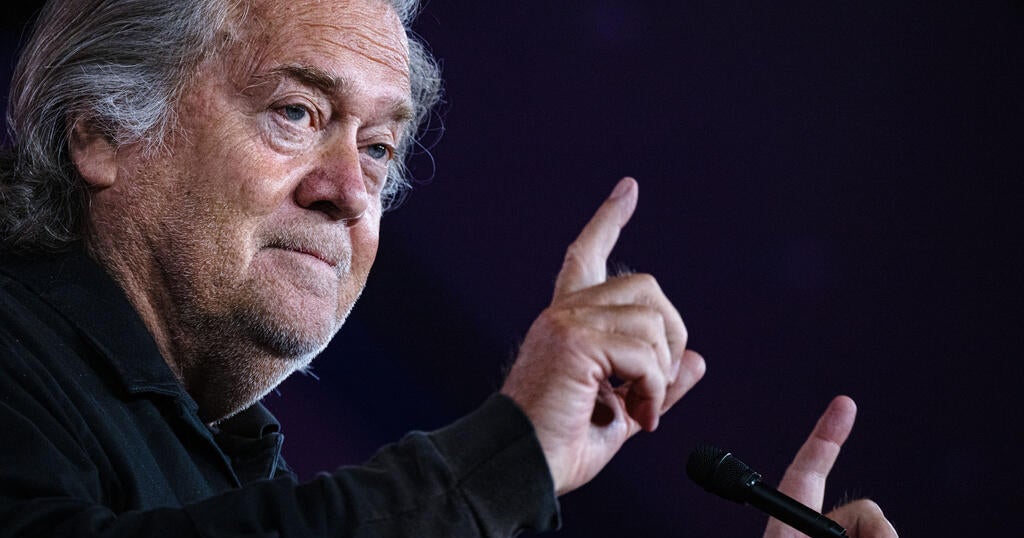
While the overwhelming majority of Republicans at CPAC expressed support for the president, several high-profile conservative figures have broken ranks to question the wisdom of the Iran operation. Republican Representative Nancy Mace of South Carolina articulated concerns shared by many when she said she hasn’t “seen an exit strategy yet” and has “grave concerns” about the conflict transforming into “another 20-year-plus endless war.” Her worry taps into deep frustration with the Afghanistan and Iraq wars, which consumed enormous resources and thousands of American lives with mixed results at best. Even more dramatically, National Counterterrorism Center Director Joe Kent resigned earlier this month over the war, publicly stating that Iran “posed no imminent threat”—a claim the White House has vehemently disputed. Kent’s resignation represents the most significant administration departure over the conflict and provides ammunition to critics who question the necessity and timing of military action. These dissenting voices carry particular weight because they come from within the conservative movement rather than from predictable Democratic opposition. Steve Bannon, who led Trump’s 2016 presidential campaign and served as a White House strategist during Trump’s first term, offered perhaps the most nuanced commentary at CPAC. Bannon has long championed an “America First” ideology centered on economic nationalism and strong opposition to foreign interventionism that critics characterize as isolationism. While carefully not taking a specific position on how the war should proceed, Bannon suggested that a genuine debate on the issue is necessary, saying “people have to have his back, and you’re only going to do that with full information.” His warning was stark: “You have to be convinced that this is the right thing to do, particularly now that we’re on the eve of potentially the insertion of American combat troops. Your sons, daughters, granddaughters, grandsons could be on Kharg Island or be holding a beachhead down by the Strait of Hormuz.”
The Electoral Implications of an Unpopular War
As CPAC delegates debated the merits and scope of the Iran conflict, the political calculations couldn’t be ignored. The war’s timing during a midterm election year creates enormous stakes for both parties, with control of Congress hanging in the balance. Republican strategists understand that while their base strongly supports the military action, independent voters—who often decide close elections—are decidedly opposed. This 69% opposition among independents represents a significant political liability that could cost Republicans seats in competitive districts. The war’s impact on energy prices adds another dimension to the electoral equation, with voters particularly sensitive to gas pump prices that directly affect their daily lives. Former Congressman Gaetz’s warning about higher gas and food prices wasn’t just policy analysis; it was a recognition of political reality. Americans have repeatedly demonstrated they’ll punish the party in power when their economic circumstances deteriorate, regardless of the geopolitical justifications offered. For Trump supporters like Deborah Thorne, a longtime ally who attended CPAC, the key is limiting the conflict’s scope and duration. “I think the Iranian people need to be in charge of their country. I don’t think Americans need to go in there and do what they’ve done in other wars, but I do believe Trump is right as far as we have to finish what we’ve started with them,” she explained. This sentiment—support the mission but keep it limited—may represent the consensus position among conservatives trying to balance competing impulses. The challenge for Republicans heading into the midterms is maintaining this delicate equilibrium: demonstrating strength and resolve on national security while avoiding the perception that they’ve dragged America into another endless Middle Eastern conflict. How successfully they navigate this tension may well determine whether they retain or lose congressional power this November.