


The End of an Era: Britain Removes Hereditary Peers from the House of Lords
A Historic Vote That Reshapes British Democracy
After more than seven centuries of aristocratic privilege in British politics, Parliament has voted to end one of the nation’s most enduring traditions. The House of Lords, Britain’s upper legislative chamber, will no longer include hereditary peers—those dukes, earls, and viscounts who inherited their parliamentary seats alongside their noble titles. This Tuesday, members of the Lords themselves dropped their objections to legislation that had already passed through the elected House of Commons, effectively sealing their own fate. Government minister Nick Thomas-Symonds celebrated the change as the elimination of “an archaic and undemocratic principle,” emphasizing that Parliament should be a place where talent and merit take precedence over birthright and centuries-old titles. The vote represents not just a legislative change but a fundamental shift in how Britain views political power and representation, moving away from the notion that family lineage should grant anyone automatic influence over the nation’s laws.
Understanding the House of Lords and Its Critics
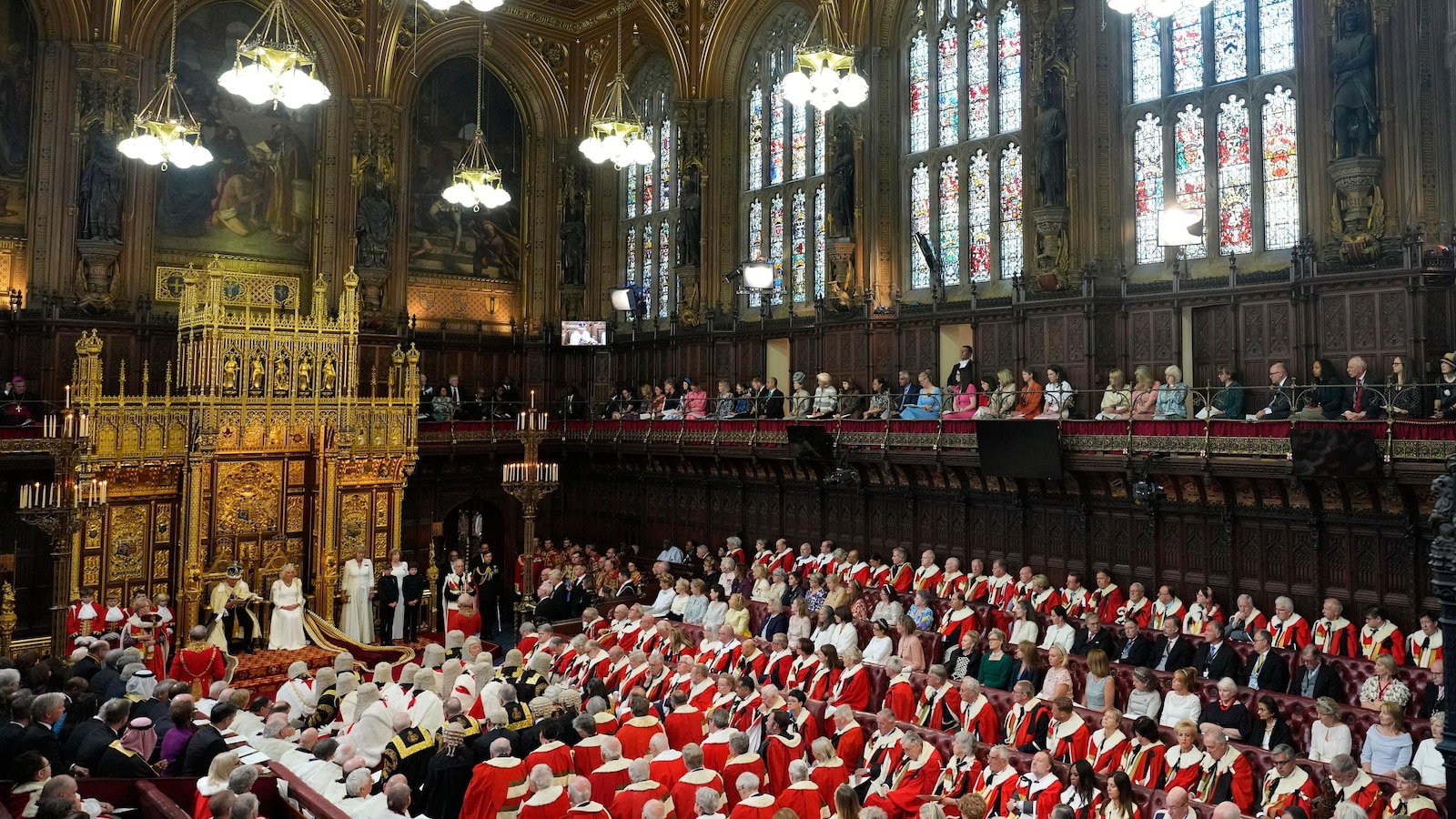
To appreciate the significance of this change, it’s important to understand what the House of Lords actually does and why it has faced increasing criticism. The Lords serves as Britain’s upper chamber, playing a crucial role in the country’s parliamentary democracy by scrutinizing and refining legislation that comes from the elected House of Commons. Think of it as a quality control mechanism—a place where proposed laws get a second, careful look before becoming official. However, critics have long pointed out that the chamber is both unwieldy and fundamentally undemocratic. With more than 800 members, it ranks as the second-largest legislative body on Earth, exceeded only by China’s National People’s Congress. The sheer size makes it difficult to manage, but more troubling to many is the fact that these members are not elected by the British people. Recent controversies, including the case of Peter Mandelson—who resigned in February following revelations about his friendship with convicted sex offender Jeffrey Epstein—have drawn renewed attention to the Lords and raised serious questions about accountability when members behave badly yet face no electoral consequences.
Seven Centuries of Hereditary Privilege
The history of the House of Lords stretches back approximately 700 years, and for most of that time, membership was an exclusive club of noblemen who inherited their seats along with their titles. Women were almost never included in this arrangement, highlighting another aspect of its archaic nature. These hereditary peers sat alongside a small number of bishops from the Church of England, who still retain seats today. The composition of the Lords began to change significantly in the 1950s when “life peers” were introduced—individuals appointed by the government for their lifetime only, without the ability to pass their seats to their children. These life peers typically included retired politicians, civic leaders, business figures, and other notable citizens who had made significant contributions to British society. Over time, life peers came to dominate the chamber numerically, yet hereditary peers remained, their presence a lingering reminder of an older Britain where bloodline determined political power. Currently, roughly one in ten members of the Lords are hereditary peers, a small but symbolically significant minority representing a direct link to medieval governance structures.
The Long Road to Reform
The journey to this week’s historic vote actually began a quarter-century ago, demonstrating just how slowly constitutional change can move in Britain. In 1999, Prime Minister Tony Blair’s Labour government took the first major step toward reform by evicting most of the 750 hereditary peers then sitting in the Lords. However, Blair faced significant resistance from the aristocracy and their allies, leading to a compromise that allowed 92 hereditary peers to remain temporarily. This was meant to be a transitional arrangement, a way to avoid an all-out rebellion from the nobility while still making progress toward a more democratic system. Those 92 peers have remained in place for the past 25 years, a testament to the difficulty of changing deeply entrenched political institutions. It took the election of another Labour government, this time led by Prime Minister Keir Starmer, to finally complete what Blair started. The current legislation removes these remaining hereditary peers, though not without some negotiation—a compromise was reached allowing an undisclosed number of the hereditary members to stay by being “recycled” into life peers, meaning they would hold their seats for their own lifetimes but couldn’t pass them to their heirs.
What Happens Next
The practical mechanics of the change are relatively straightforward. Once King Charles III grants royal assent—a ceremonial formality where the monarch approves legislation passed by Parliament—the bill will officially become law. The remaining hereditary peers will then depart at the end of the current parliamentary session this spring. In the slow-moving world of the House of Lords, this timeline actually represents remarkably swift action. For the peers themselves, many of whom have family histories of service stretching back generations, the change marks an emotional moment. Nicholas True, the Conservative Party leader in the Lords, acknowledged this sense of historical closure in his remarks to the chamber, noting that “here we are at the end of well over seven centuries of service by hereditary peers in this Parliament.” He defended the legacy of hereditary peers, arguing that while they may have been flawed individuals, “for the most part, they served their nation faithfully and well” and contributed thousands of improvements to British law over the centuries. His comments capture the tension at the heart of this reform—respect for tradition and historical service on one hand, and the demands of modern democracy on the other.
The Future of British Democracy
While the removal of hereditary peers represents significant progress for those who want a more democratic Britain, it’s important to recognize that this is just one step in a much longer journey. The House of Lords will remain an entirely unelected chamber, composed of life peers appointed by the government rather than chosen by voters. The Labour government has stated its commitment to eventually replacing the entire House of Lords with “an alternative second chamber that is more representative of the U.K.,” but if history is any guide, that change will come slowly indeed. The question of what should replace the Lords has been debated for decades without resolution—should it be a fully elected chamber like the Senate in other countries, or some hybrid model that combines appointment and election? How can Britain maintain the Lords’ valuable function of careful legislative review while making it democratically accountable? These are complex questions without easy answers, and the political will to tackle them comprehensively has been difficult to sustain across different governments and changing priorities. For now, Britain celebrates the end of inherited political power, a principle that increasingly felt out of step with modern values of equality and merit. As Minister Thomas-Symonds put it, Parliament “should never be a gallery of old boys’ networks, nor a place where titles, many of which were handed out centuries ago, hold power over the will of the people.” The removal of hereditary peers doesn’t create a perfect democracy, but it does remove one of the most glaring contradictions in the British political system—and sometimes, progress comes one symbolic step at a time.