


The Fall of El Mencho: How Romance Led to Mexico’s Most Wanted Cartel Leader
Following the Trail of Love and Violence
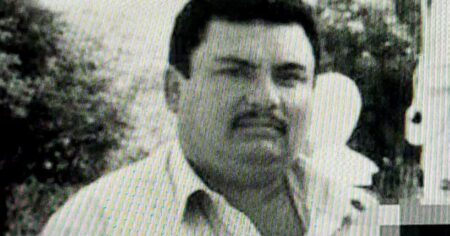
The decades-long hunt for one of the world’s most dangerous drug lords ended in a dramatic fashion that reads like a thriller novel, but with devastating real-world consequences. Nemesio Oseguera Cervantes, known throughout the criminal underworld and law enforcement circles as “El Mencho,” met his end in the rugged woodlands of Jalisco, Mexico, in an operation that would claim over 70 lives and shake the foundations of organized crime in Latin America. The leader of the Jalisco New Generation Cartel (CJNG), who had evaded capture for years despite a $15 million bounty on his head, was finally cornered not through conventional tracking methods, but through the most human of vulnerabilities: romantic companionship. Mexican Defense Secretary General Ricardo Trevilla revealed Monday that investigators had identified and begun surveillance of a trusted associate connected to one of El Mencho’s romantic partners, a detail that would prove to be the thread that unraveled the cartel leader’s carefully constructed web of security and secrecy.
The operation represented a significant turning point in U.S.-Mexico relations and counter-cartel cooperation. According to sources familiar with the mission, the successful raid was the result of intensified collaboration between American and Mexican authorities under Mexican President Claudia Sheinbaum’s administration. Intelligence sharing had expanded dramatically in recent months through newly emphasized joint interagency channels connected to U.S. Northern Command, marking a departure from the sometimes fractious relationship between the two nations on security matters. This individual, who escorted El Mencho’s romantic partner to the town of Tapalpa in Jalisco state on Friday, unknowingly led military investigators directly to their target. The exact location was confirmed through what General Trevilla described as “very important additional information” provided by U.S. intelligence agencies, showcasing the sophisticated surveillance capabilities and international cooperation that had been brought to bear on this most wanted fugitive, who the DEA had called “the number one priority for federal law enforcement in the United States” back in 2019.
The Carefully Orchestrated Trap Closes
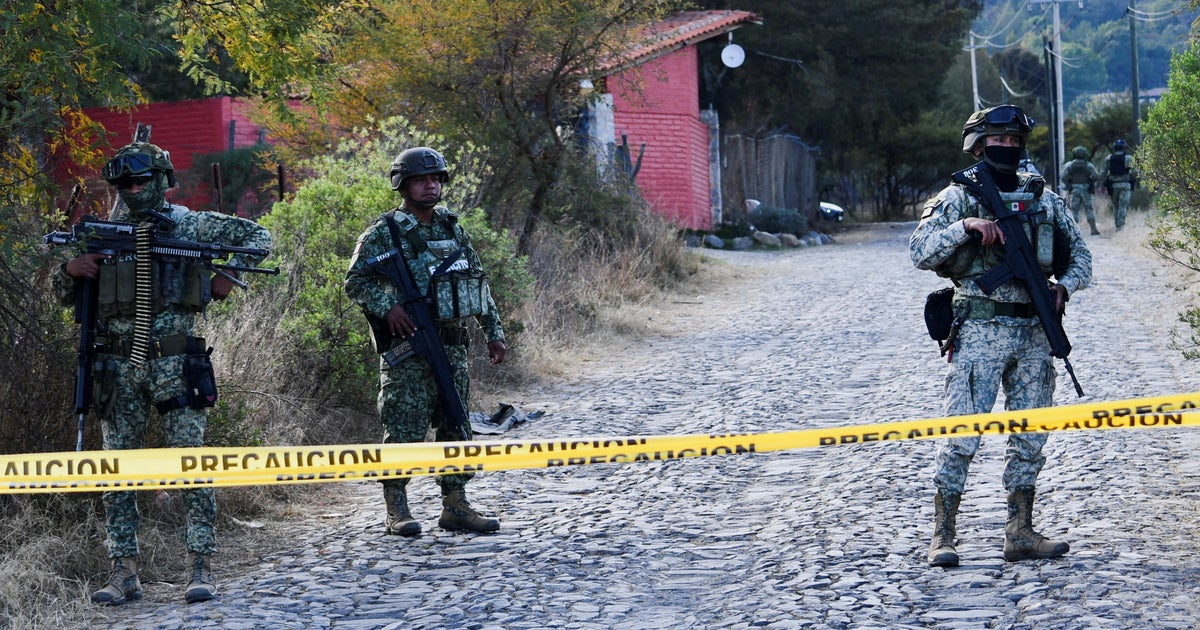
Once El Mencho’s romantic partner departed after spending the night with the cartel leader, Mexican special forces moved quickly to finalize their operational plans, having confirmed that their target was indeed in the area, protected by his security detail. What followed was a masterclass in military coordination and planning. Units from the Mexican army and National Guard established a ground cordon around the target area, effectively creating an inescapable ring of armed personnel. Six helicopters and additional special forces units were strategically positioned in states bordering Jalisco, ready to respond to any attempt at escape or reinforcement. The Mexican Air Force provided crucial overhead support with reconnaissance aircraft, giving commanders a bird’s-eye view of the developing situation and the ability to track any movement in real-time.
In the pre-dawn darkness of Sunday morning, with final confirmation of El Mencho’s presence secured, the operation launched. Throughout the tense hours that followed, President Claudia Sheinbaum, who was conducting a tour in northern Mexico, was kept continuously informed of every development, underscoring the national importance of the mission. The level of preparation and the resources committed to this single operation reflected both the priority placed on capturing El Mencho and the Mexican government’s determination to demonstrate its capability and willingness to confront the powerful cartels that had long operated with seeming impunity. The stage was set for a confrontation that would test the mettle of Mexico’s special forces against one of the most violent and well-armed criminal organizations in the Western Hemisphere.
A Battle in the Woods: Violence Meets Violence
When Mexican special forces moved in, they encountered exactly the kind of ferocious resistance that had made the CJNG notorious. General Trevilla described the criminals’ response as “extremely violent,” a chilling understatement for what became a multi-hour firefight in the wooded terrain outside Tapalpa. El Mencho attempted to flee with two of his bodyguards while a heavily armed contingent of his security force remained behind, engaging the advancing military units in a desperate attempt to buy their leader time to escape. The death toll at the immediate scene reached eight cartel members—four more than initially reported on Sunday—testament to the intensity of the fighting. Among the weapons seized were two rocket launchers, including one identical to the model the CJNG had used in 2015 to shoot down a military helicopter, a grim milestone that had demonstrated the cartel’s willingness and ability to engage Mexican authorities with military-grade firepower.
The cartel leader sought refuge in the dense undergrowth of a wooded area dotted with cabins on Tapalpa’s outskirts, terrain that under different circumstances might have provided adequate cover. Despite being heavily armed with those fearsome rocket launchers, Trevilla noted that the criminals never managed to deploy them effectively against the special forces. The Mexican troops, using their superior training and coordination, systematically cleared the area until they “located him hiding in the undergrowth.” What followed was another intense firefight that left El Mencho and two of his bodyguards critically wounded. In the chaos of the engagement, a military helicopter was struck by gunfire and forced into an emergency landing—a stark reminder of the dangers faced by the soldiers involved. Three soldiers were injured in the fighting, and two individuals were apprehended at the scene, while the wounded cartel leader and his bodyguards were quickly loaded onto another helicopter for emergency medical transport.
The Final Journey and Strategic Decisions
The decision-making didn’t end with El Mencho’s capture. General Trevilla confirmed that the cartel leader and his two bodyguards died during the helicopter flight, already in “critical condition” when they were loaded aboard. Faced with the reality of their deaths, Mexican authorities made a calculated strategic decision: instead of landing at the originally planned destination in Jalisco’s state capital, the flight plan was redirected to Mexico City. This wasn’t merely a procedural change—it was a deliberate move to prevent the bodies from becoming focal points for violent retaliation from the CJNG, which controlled significant territory and maintained substantial forces in Jalisco state. The decision reflected hard-learned lessons from previous operations against cartel leaders, where the immediate aftermath had sometimes proven as dangerous as the initial confrontation.
Despite the successful elimination of the cartel’s founder and leader, sources briefed on the operation cautioned that the CJNG was expected to retain substantial operational capacity. The organization El Mencho had built was not a traditional hierarchical structure dependent solely on one leader, but rather a network of regional commanders with their own resources, territories, and ambitions. Almost immediately, intelligence suggested that a succession struggle had begun within the cartel, with these regional commanders battling for power and control of the lucrative criminal empire. This pattern was familiar to anyone who had studied Mexico’s drug war: the removal of cartel leaders had historically resulted not in organizational collapse but in fragmentation and often increased violence as lieutenants fought among themselves for supremacy. The early indications suggested this familiar and troubling pattern was repeating itself, with revenge attacks and destabilization efforts reported across as many as 20 Mexican states, turning El Mencho’s death from a single operation into a nationwide security crisis.
Blood Money and Widespread Retaliation
The cartel’s response was swift, coordinated, and horrifyingly violent. About 62 miles west of Tapalpa, a logistics and financial operator known only as “El Tuli”—reportedly El Mencho’s right-hand man—allegedly offered gunmen a bounty of 20,000 pesos, over $1,000, for every soldier killed. This blood money incentivized attacks across Jalisco state, where “El Tuli” masterminded a campaign of roadblocks, arson attacks, and direct assaults on government installations. The violence that erupted in the operation’s aftermath dwarfed even the casualties from the initial confrontation. Security Secretary Omar García Harfuch reported that the most severe violence occurred in Jalisco, where the death toll included 25 National Guard members, a prison official, an employee of the prosecutor’s office, and a presumed civilian woman, along with 30 suspected criminals. In neighboring Michoacán state, four more gunmen died while 15 security personnel were wounded in related clashes.
Mexican forces eventually tracked down “El Tuli” himself, with a paratrooper rifle brigade locating and killing him in a subsequent shootout. The seizure at that scene told its own story about the cartel’s resources: long and short firearms alongside nearly $1.4 million in mixed U.S. and Mexican currency. Yet even “El Tuli’s” death didn’t end the retaliation. Attacks continued across multiple Mexican states as the cartel’s decentralized structure meant that numerous commanders could independently order operations. The staggering casualty count—more than 70 people killed in total, including security forces, suspected cartel members, and civilians caught in the crossfire—raised difficult questions about the cost of such operations and whether the elimination of even the most powerful cartel leader justified such widespread loss of life. For the families of the 25 National Guard members who died, for the wounded soldiers and civilians, and for the communities terrorized by the violence, El Mencho’s death was not simply a victory but a painful reminder of the ongoing human cost of Mexico’s drug war, a conflict that has claimed hundreds of thousands of lives over the past two decades with no clear end in sight.