


Chief Justice Roberts Speaks Out: Personal Attacks on Judges Must End
A Strong Warning from the Supreme Court’s Leader
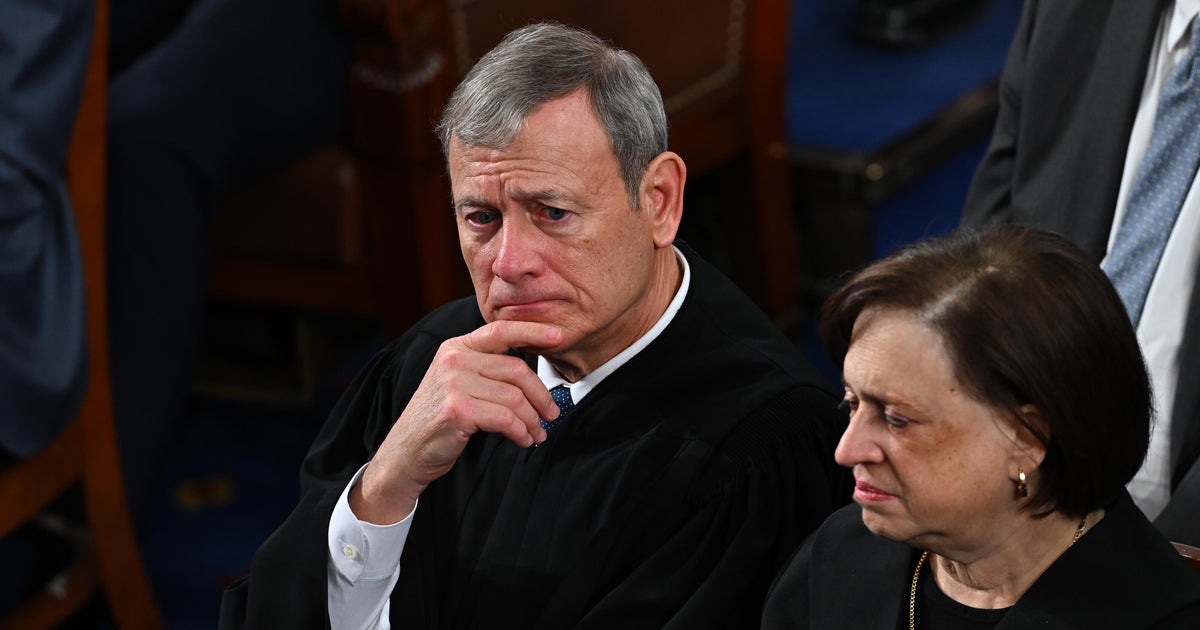
Chief Justice John Roberts delivered a powerful message this week that resonated far beyond the walls of Rice University in Houston, where he was speaking. During an event at the Baker Institute for Public Policy, Roberts made it clear that while criticism of judicial decisions is part of the democratic process, the increasingly personal and hostile attacks directed at judges have crossed a dangerous line. His words carried the weight of someone who has watched the discourse around the judiciary deteriorate to alarming levels. “Judges around the country work very hard to get it right,” Roberts explained, “and if they don’t, their opinions are subject to criticism. But personally directed hostility is dangerous and it’s got to stop.” This wasn’t just a casual observation from America’s top judge—it was a deliberate, forceful defense of an institution under unprecedented strain. The moment came during a question-and-answer session with U.S. District Judge Lee Rosenthal, who thanked the Chief Justice for consistently standing up for lower court judges, noting that judges across the country know “you have our backs.” This exchange highlighted a growing concern within the judiciary: that personal attacks are not just uncomfortable or unfair, but genuinely threatening to the safety of judges and the integrity of the legal system itself.
Understanding the Line Between Criticism and Hostility
Roberts was careful to draw an important distinction that often gets lost in today’s heated political climate. He fully acknowledged that criticism of Supreme Court decisions is not only inevitable but necessary and healthy for democracy. “We don’t believe we’re flawless in any way and it’s important that our decisions are subjected to scrutiny, and they are,” he stated frankly. The Chief Justice pointed out that even within the Supreme Court itself, justices regularly criticize each other’s reasoning through dissenting opinions—this kind of intellectual disagreement is fundamental to how the court operates and how legal thinking evolves. What concerns Roberts, however, is when the conversation shifts from debating legal reasoning and constitutional interpretation to attacking the character, motives, and personal integrity of individual judges. “The problem sometimes is that the criticism can move from a focus on legal analysis to personalities,” he explained. “And you see—from all over, not just any one political perspective on it—that it’s more directed in a personal way and that frankly can be actually quite dangerous.” This distinction is crucial: questioning a judge’s legal reasoning is democracy at work, but attacking them personally undermines the rule of law and puts real people at risk. The Chief Justice’s comments reflect a growing alarm within the federal judiciary about threats and intimidation that have surged in recent years, particularly after judges issue rulings in politically charged cases.
The Growing Threat Environment Facing Federal Judges
The backdrop to Roberts’ warning is genuinely alarming. Federal judges across the United States have experienced a dramatic increase in threats to their safety, with many of these threats emerging after they’ve ruled against the Trump administration in various legal matters. This isn’t just about angry emails or social media posts—we’re talking about credible threats that have required increased security measures for judges and their families. The situation has become serious enough that judicial security is now a regular topic of discussion in legal circles and among court administrators. What makes this moment particularly concerning is that some of the most inflammatory rhetoric directed at judges isn’t coming from fringe groups or anonymous internet trolls, but from the highest levels of government. President Trump and senior members of his administration have repeatedly leveled accusations against judges whose rulings they disagree with, branding them as “far-left” activists, “rogue” judges, and worse. This kind of language from political leaders doesn’t just express disagreement—it delegitimizes the judiciary in the eyes of the public and can inspire others to take more extreme actions. The message that filters down to the public when political leaders attack judges personally is that these officials are not legitimate arbiters of the law but rather political enemies who deserve contempt rather than respect, even when one disagrees with their decisions.
Presidential Attacks Following the Tariffs Ruling
The situation reached a boiling point after the Supreme Court struck down many of President Trump’s sweeping tariffs in a 6-3 decision last month. Rather than accepting the ruling or criticizing it on legal grounds, Trump launched deeply personal attacks against members of the court—including two justices he himself had appointed. He specifically called out Justices Neil Gorsuch and Amy Coney Barrett, saying their decision was an “embarrassment to their families.” This extraordinary statement represented a president attacking his own appointees not for their legal reasoning, but attempting to shame them personally and through their loved ones. The Chief Justice and the Court’s three liberal justices were also in the majority that found the tariffs illegal, making it a genuinely bipartisan ruling based on legal interpretation rather than political preference. But Trump went even further, making the baseless claim that the Supreme Court has been “swayed by foreign interests” and calling the justices in the majority “fools and lap dogs for the RINOs and the radical left Democrats.” In a post on his Truth Social platform, the president escalated his rhetoric, claiming the Supreme Court is “little more than a weaponized and unjust political organization.” He argued that Republican-appointed justices “openly disrespect the Presidents who nominate them” and suggested they rule against him deliberately to prove their independence. This narrative is particularly corrosive because it suggests that any judge who rules against the president—regardless of the legal merits—is somehow betraying a personal loyalty they supposedly owe him.
Lower Court Judges Also Under Fire
The attacks haven’t been limited to Supreme Court justices. President Trump has also targeted lower court judges by name, with U.S. District Judge James Boasberg of Washington, D.C., being a recent example. After Boasberg blocked Justice Department subpoenas to the Federal Reserve as part of an investigation into Chairman Jerome Powell—whom Trump frequently criticizes over interest rate policies—the president unleashed a barrage of personal insults. On social media, Trump called Boasberg “wacky, nasty, cooked, and totally out of control,” and claimed the judge suffers from “the highest level of Trump Derangement Syndrome.” This kind of language goes far beyond expressing disagreement with a legal ruling. By using terms like “deranged” and “out of control,” the president portrays the judge not as a legal professional who reached a different conclusion, but as someone mentally unfit and acting irrationally. These attacks create a template that encourages others to view judges who rule against their preferred political outcomes as enemies rather than as officials performing their constitutional duties. For lower court judges, who typically have less security and public profile than Supreme Court justices, such high-profile attacks can be particularly threatening. They know they may become targets not just of criticism but of people who take the president’s words as a call to action.
Roberts’ History of Defending Judicial Independence
This isn’t the first time Chief Justice Roberts has felt compelled to speak out about attacks on the judiciary, though such public statements remain relatively rare for someone in his position. Last year, when several judges faced calls for impeachment from President Trump and some Republicans in Congress simply because of their rulings, Roberts stated clearly that impeachment “is not an appropriate response to disagreement concerning a judicial decision.” That statement was significant because impeachment is constitutionally reserved for “high crimes and misdemeanors,” not for making legal decisions that politicians or the public disagree with. Using impeachment as a weapon against judges who rule a certain way would fundamentally compromise judicial independence. Going back to 2020, Roberts also pushed back against comments from then-Senate Minority Leader Chuck Schumer that targeted Justices Gorsuch and Kavanaugh, calling those remarks “inappropriate” and “dangerous.” This shows that Roberts’ concern about personal attacks on judges isn’t partisan—he’s willing to call out problematic rhetoric regardless of which side of the political aisle it comes from. What unites these moments is Roberts’ consistent defense of a principle that’s larger than any individual case or political controversy: that judges must be able to make decisions based on their understanding of the law without fear that they or their families will be threatened, that their jobs will be stripped away through inappropriate impeachment proceedings, or that they’ll be subjected to campaigns of personal vilification. The Chief Justice understands that once judges begin making decisions based on how they’ll be personally attacked rather than on legal merits, the rule of law itself begins to crumble. His warnings deserve to be heard and heeded by political leaders and citizens alike, because the independence of the judiciary isn’t just an abstract principle—it’s one of the fundamental pillars that prevents our democracy from sliding into authoritarianism where might makes right and those in power face no effective legal constraints.