
The Washington Hilton: A Historic Stage for Presidential Danger
A Night That Echoed History
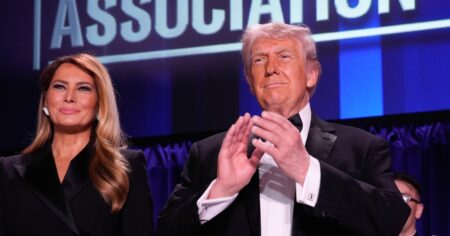
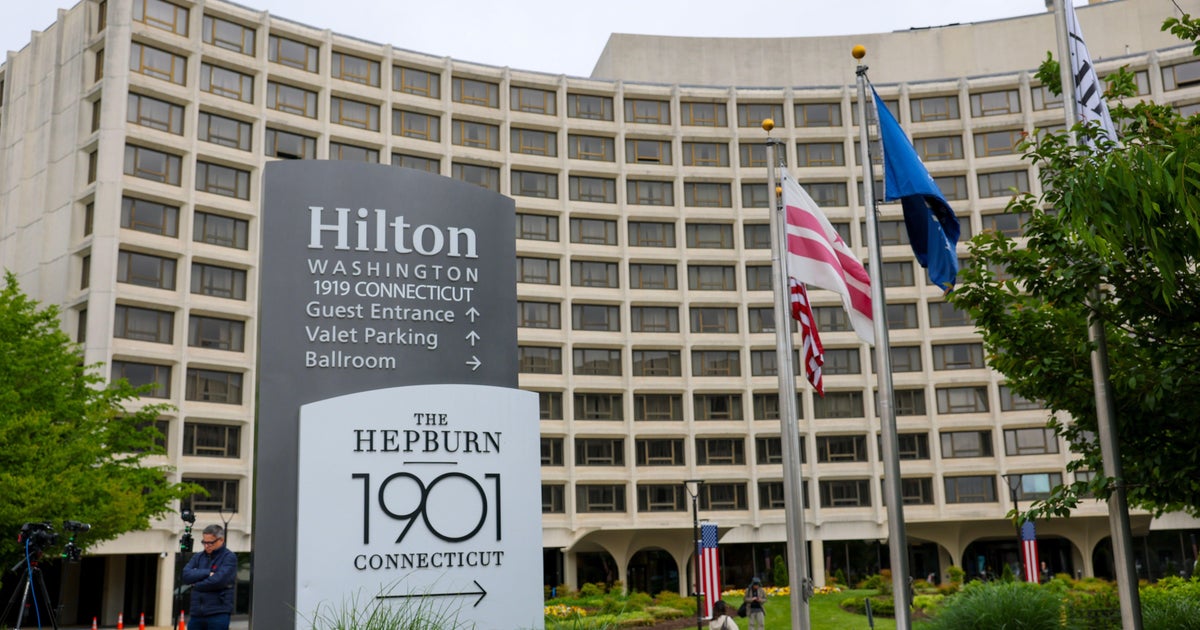
When gunfire shattered the elegant atmosphere of the White House Correspondents’ Association Dinner at the Washington Hilton on Saturday night, with President Trump in attendance, it served as a chilling reminder of the hotel’s dark place in American presidential history. The incident instantly brought to mind another terrifying moment that unfolded at the same location over four decades earlier. On March 30, 1981, President Ronald Reagan came perilously close to death when John Hinckley Jr. fired six shots from a .22 caliber revolver in a mere 1.7 seconds from just 15 feet away. Reagan had just finished addressing AFL-CIO union members in the hotel’s ballroom, concluding with words that would later become famous in a different context: “Together we’ll make America great again.” The Secret Service agent who saved Reagan’s life that day, Jerry Parr, had ironically been inspired to join the Secret Service after watching Reagan portray an agent in a movie during his Hollywood years. According to Del Wilbur, author of “Rawhide Down” (Reagan’s Secret Service code name), Parr acted with lightning speed to push Reagan into the waiting limousine. However, Hinckley’s sixth and final bullet struck the limousine’s side, flattened to the size of a dime, and slipped through a narrow gap between the door and frame, ultimately hitting the president. The attack also left three others wounded: White House press secretary James Brady, who suffered a paralyzing head wound; D.C. police officer Thomas Delehanty, shot in the back; and Secret Service agent Tim McCarthy, hit in the chest.
Reagan’s Close Call and Remarkable Recovery
Presidential historian Tevi Troy emphasizes how remarkably close Reagan came to dying that day, a fact often overshadowed by the president’s legendary toughness and quick recovery. Despite his life-threatening condition, Reagan insisted on walking into the hospital under his own power, determined not to show weakness. Once inside and away from public view, he collapsed, revealing the true severity of his injuries. This display of strength wasn’t merely about presidential pride—it was a calculated decision to prevent national panic. Reagan understood that the image of a critically wounded president being carried into a hospital could destabilize the country during an already frightening time. His ability to project strength while seriously wounded became one of the defining moments of his presidency, demonstrating both his personal courage and his deep understanding of the symbolic importance of presidential resilience. The assassination attempt marked a pivotal moment not just for Reagan’s presidency but for the Washington Hilton itself, forever linking the luxury hotel to one of the most dramatic moments in modern American history. The incident would fundamentally transform how the Secret Service approached presidential security, particularly at events held in public venues.
The Hilton’s Presidential Design and Appeal
The Washington Hilton was deliberately designed to attract presidential visits from its very inception. Its distinctive wing-shaped architecture, resembling a bird in flight when viewed from above, was just the beginning of its presidential appeal. The hotel opened sixteen months after President John F. Kennedy’s assassination in Dallas, at a time when presidential security was being completely reconsidered. Recognizing the importance of securing presidential visits, the hotel’s designers incorporated numerous security features that were remarkably forward-thinking for their time. A secret passageway, a secure safe room, and most importantly, a private presidential entrance on T Street were all built into the structure. As Wilbur explains, the hotel understood that to attract the president regularly, they needed to provide him with his own secure entrance. This entrance features an elegant spiral staircase and a private elevator leading to a specially designed holding room. This subterranean room, with no windows and secure communications equipment wired directly to the White House, allowed the president to remain in contact with his staff and manage any crisis that might arise during an event. A secure hallway connects this holding room directly to the ballroom, allowing the president to move through the hotel without exposure to public spaces. The strategy worked brilliantly—presidents have frequented the Washington Hilton constantly since its opening, with the hotel hosting the White House Correspondents’ Association Dinner annually since the late 1960s. The ballroom, one of Washington D.C.’s largest, has welcomed every president since Lyndon Johnson and has been the venue for the National Prayer Breakfast, the First Lady’s Luncheon, and numerous inaugural balls for presidents including Richard Nixon, Barack Obama, George W. Bush, Bill Clinton, and Reagan himself.
Security Transformed After Reagan’s Shooting
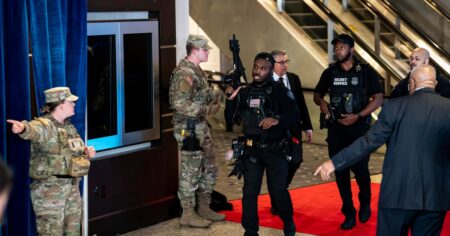
The Reagan assassination attempt exposed a critical vulnerability in the hotel’s otherwise impressive security infrastructure. When Reagan was shot, he had just exited the hotel and was exposed on the sidewalk while approaching his limousine—a gap in security that nearly proved fatal. The hotel responded by constructing a bunker-like garage with a secure door, ensuring that presidents would never again have to step outside between the hotel and their vehicle. But the changes extended far beyond the Washington Hilton’s physical structure. According to Wilbur, the assassination attempt led to sweeping changes in Secret Service protocols across all presidential events. Perhaps most significantly, magnetometers—metal detectors—became mandatory at all presidential events, despite considerable resistance from politicians, donors, and event organizers who complained that the security measures disrupted events and created barriers between politicians and the people they served. The Secret Service also completely revised their staffing procedures and even added magnetometers to the White House itself, where they hadn’t been used before. These enhanced security measures proved their worth forty-five years later when Cole Tomas Allen allegedly attempted to rush through a magnetometer into the hotel’s ballroom, carrying a pump-action shotgun and a .38 caliber pistol in what authorities describe as an assassination attempt against President Trump. According to an affidavit and Allen’s alleged “manifesto” obtained by CBS News, he had targeted “administration officials” ranked “from highest-ranking to lowest,” with the exception of Kash Patel.
An Alarming Pattern of Threats
The alleged attempt at the Washington Hilton marked the third time someone has allegedly tried to assassinate President Trump, creating what presidential historian Troy describes as a “very unusual” pattern. In February, Ryan Routh received a life sentence for plotting to assassinate Trump at the Trump International Golf Club in West Palm Beach, Florida, during the 2024 election campaign. Before that, in July 2024, Thomas Crooks attempted to kill Trump at a campaign rally in Butler, Pennsylvania, with a bullet grazing the president’s ear. Troy notes that multiple assassination attempts against a single president are exceptionally rare in American history. The only comparable recent example is Gerald Ford, who faced two separate assassination attempts in California within a one-month period in 1975. The frequency of attempts against Trump represents an unprecedented security challenge for the Secret Service and raises serious questions about political violence in contemporary America. The contrast between how these cases have been handled and the outcome of the Reagan assassination attempt is striking and reflects significant changes in how the justice system approaches such cases.
Legal Changes and Moving Forward
The Reagan assassination attempt didn’t just transform security protocols—it fundamentally changed American law regarding the insanity defense. John Hinckley Jr. was found not guilty by reason of insanity, a verdict that sparked public outrage and led to significant legal reform. Hinckley’s motive—attempting to impress actress Jodie Foster—seemed incomprehensible to most Americans, and many felt justice had not been served. The controversy led directly to the Insanity Defense Act of 1984, which shifted the burden of proof in insanity cases from prosecutors to defendants. In Hinckley’s trial, prosecutors had to prove his sanity beyond a reasonable doubt; after the law changed, defendants had to prove their own insanity. Hinckley spent more than three decades at St. Elizabeth’s Hospital in Washington, D.C., before being released in 2016. In a 2022 television interview with CBS News chief Washington correspondent Major Garrett, Hinckley expressed deep remorse: “I feel terrible for what I did. I have remorse for what I did. If I could take it all back, I would.” Reagan himself demonstrated remarkable compassion toward his would-be assassin, writing in his diary that he prayed for Hinckley’s soul and hoped he would “find his way back to the fold.” Reagan returned to the Washington Hilton just six months after the shooting for a charity ball, entering and leaving through the new secure garage entrance without mentioning the assassination attempt in his remarks. Following the recent shooting, President Trump has insisted that the White House Correspondents’ Dinner be rescheduled within 30 days with increased security measures. On the night of the incident, reporters gathered in the White House press briefing room, some still in their black-tie attire from the dinner, as Trump declared with characteristic defiance: “We’re going to do it again.” The Washington Hilton remains a symbol of both presidential tradition and the persistent dangers that come with America’s highest office.