
Costa Rica Severs Diplomatic Ties with Cuba Amid Rising Hemispheric Tensions
A Bold Move in Central American Diplomacy
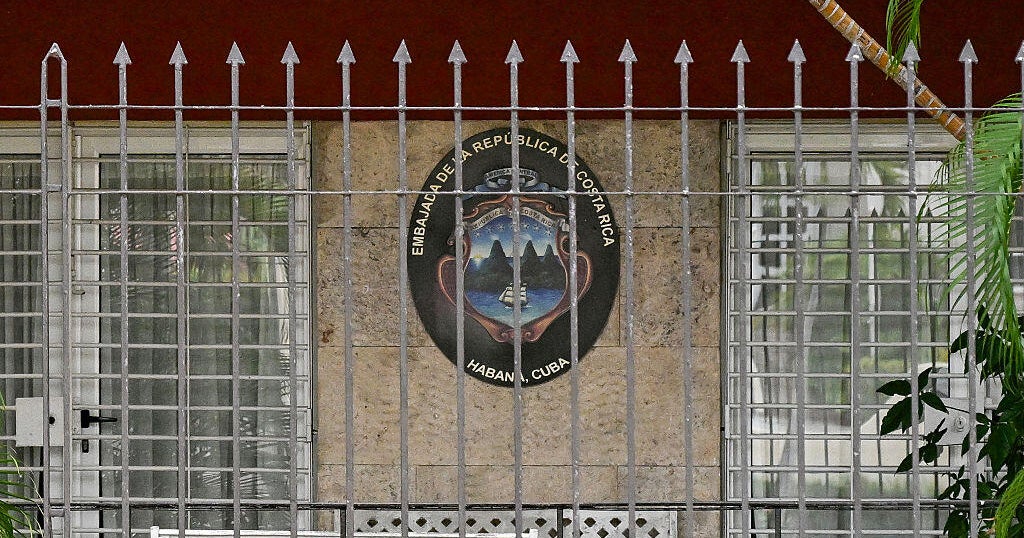
In a dramatic diplomatic development that has sent ripples throughout Latin America, Costa Rica announced on Wednesday that it would be closing its embassy in Havana and ordering Cuban diplomats to leave its capital, San José. The decision marks a significant shift in regional relations and represents one of the most forceful rejections of Cuba’s communist government by a Latin American nation in recent years. Costa Rican President Rodrigo Chaves didn’t mince words when explaining the rationale behind this unprecedented move, declaring bluntly that “we have to clean out communists from the hemisphere.” This stark language signals not just a diplomatic disagreement but a fundamental ideological rejection of Cuba’s political system. The Cuban Embassy in the United States quickly responded to the announcement, taking to social media to suggest that Costa Rica’s decision came “under pressure from the United States,” an allegation that highlights the complex web of international relationships and influences at play in this unfolding situation.
Human Rights Concerns Take Center Stage
Costa Rican Foreign Minister Arnoldo Andre Tinoco provided more detailed justification for the severing of diplomatic relations, citing what he described as a “deep concern” regarding the “sustained deterioration of the human rights situation on Cuba, as well as the increase in acts of repression against citizens, activists and dissidents.” This official explanation points to documented instances of the Cuban government cracking down on opposition voices and limiting fundamental freedoms of expression and assembly. Tinoco announced that while the Costa Rican embassy would close and most Cuban diplomatic personnel would be required to leave San José, an exception would be made for consular officials who assist Cuban citizens with practical matters like passport renewals and documentation. This nuanced approach suggests that while Costa Rica is taking a hard line against the Cuban government politically, it doesn’t want ordinary Cuban citizens to suffer the consequences of deteriorated relations. The timing of this decision is particularly significant, coming as Cuba faces severe internal challenges including widespread power blackouts that left the entire island without electricity this week, along with reports of protests breaking out last week as frustrated citizens took to the streets to express their discontent with living conditions.
Following Ecuador’s Lead and Aligning with Trump
Costa Rica’s decision doesn’t exist in a vacuum but rather follows a pattern established by other nations in the region that have recently taken confrontational stances toward Cuba’s communist government. The most notable precedent came from Ecuador, another ally of President Trump, which on March 4th expelled Cuba’s ambassador, Basilio Gutierrez, on serious charges of interfering in Ecuador’s internal political affairs and engaging in what the Ecuadorian government characterized as “violent activities.” This sequence of events suggests a coordinated or at least ideologically aligned movement among certain Latin American nations to reassess and potentially sever their relationships with Cuba. The role of the United States, and specifically the Trump administration, looms large over these diplomatic developments. Costa Rica’s leadership has positioned itself as allied with President Trump, whose administration has recently ramped up pressure on Cuba through both economic sanctions and increasingly aggressive rhetoric. The combination of ideological alignment with Washington and genuine concern about human rights creates a powerful justification for Costa Rica’s dramatic diplomatic pivot, though critics might argue about which factor carries more weight in the government’s calculations.
Trump’s Provocative Statements on Cuba
President Trump’s recent comments about Cuba have added fuel to an already volatile situation, with the American president making statements that range from cryptic to openly provocative. On Sunday, Trump revealed that talks are ongoing between the Cuban and U.S. governments, adding that “I think we will pretty soon either make a deal or do whatever we have to do.” The vagueness of this statement has left observers wondering exactly what options the president is considering. He followed up on Tuesday by telling reporters, “We’ll be doing something with Cuba very soon,” again without providing specifics. Perhaps most alarmingly, on Monday Trump stated, “Whether I free it, take it, I think I could do anything I want with it,” language that suggests possibilities ranging from regime change to some form of direct intervention or even territorial acquisition. These statements, while characteristically bold and ambiguous, represent a significant escalation in rhetoric toward Cuba and have naturally alarmed the island nation’s leadership. The suggestion that the United States might “take” Cuba echoes colonial-era language and raises serious questions about respect for national sovereignty and international law, though it remains unclear whether Trump is speaking literally or employing his typical hyperbolic style.
Cuba’s Defiant Response and Deepening Crisis
Cuban President Miguel Díaz-Canel Bermúdez responded swiftly and firmly to President Trump’s provocative statements, taking to social media late Tuesday to declare that “any external aggressor will clash with an impregnable resistance.” This defiant rhetoric reflects Cuba’s long-standing narrative of standing firm against American pressure, a story that has been central to the communist government’s legitimacy since the 1959 revolution. However, the reality on the ground in Cuba paints a picture of a nation facing severe challenges that may limit its capacity to resist external pressure. The island has been suffering from sustained energy shortages that have culminated in this week’s island-wide power blackouts, leaving millions of Cubans without electricity for extended periods. These infrastructure failures have compounded existing economic difficulties, food shortages, and limited access to basic goods that have characterized Cuban life in recent years. Reports of protests last week suggest that public patience with these hardships may be wearing thin, potentially creating internal pressure on the government at the same time it faces increasing international isolation. The combination of economic crisis, energy infrastructure collapse, and diplomatic isolation creates a perfect storm of challenges for Cuba’s leadership.
Regional Implications and the Future of Cuba’s International Standing
The severing of diplomatic relations between Costa Rica and Cuba carries implications that extend far beyond these two nations, potentially signaling a broader shift in how Latin American countries relate to Cuba’s communist government. For decades, many nations in the region maintained diplomatic relations with Cuba even when they disagreed with its political system, viewing engagement as preferable to isolation. This recent trend toward confrontation and diplomatic rupture suggests that calculus may be changing, at least among governments ideologically aligned with conservative or right-wing political movements. The question now becomes whether other nations will follow Costa Rica and Ecuador’s lead, potentially leaving Cuba increasingly isolated within its own hemisphere. For ordinary Cubans, both on the island and in the diaspora, these diplomatic developments create uncertainty about future travel, family connections, and the possibility of political change. The exception Costa Rica made for consular officials suggests recognition that diplomatic disputes shouldn’t completely sever people-to-people connections, but the broader trajectory points toward increasing isolation. As the United States under President Trump continues to hint at dramatic actions regarding Cuba, and as Cuba’s internal situation grows more precarious, the coming weeks and months may prove decisive in determining the island nation’s future relationship with its neighbors and its place in the hemisphere. Whether this pressure leads to meaningful political reform, humanitarian crisis, or simply hardened resistance remains an open and increasingly urgent question.