


XRP, Ethereum, and Shiba Inu Show Signs of Recovery After Extended Market Decline
XRP Demonstrates Strong Comeback with Nearly $1 Billion in Trading Volume
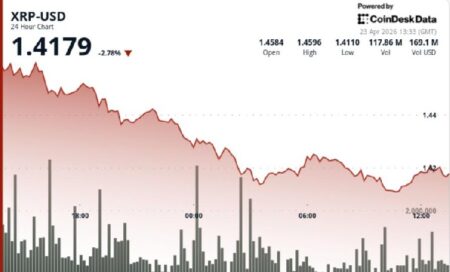
After enduring several challenging weeks of relentless selling pressure that pushed the asset into increasingly difficult territory, XRP has staged an impressive recovery that has caught the attention of traders and investors across the cryptocurrency market. The digital asset’s resurgence has been particularly noteworthy on major exchanges, where trading activity has experienced a substantial spike as buyers have confidently returned to the market after sitting on the sidelines during the downturn. The most recent bounce has been accompanied by nearly $991 million in trading volume across leading platforms like Binance, which serves as a strong indicator that risk appetite among traders is making a temporary return to the market. This massive volume surge is especially significant because it demonstrates that substantial capital has been deployed to counteract the persistent selling pressure that had dominated XRP’s price action in recent weeks.
Before this recovery, XRP had been trapped within a consistent downward channel, repeatedly failing to reclaim important moving averages that traders use as benchmarks for trend strength. Each time the asset attempted to rally over the past several weeks, those efforts were quickly met with renewed selling pressure that pushed prices back down, gradually moving XRP closer to oversold territory and eroding confidence among both institutional investors and everyday retail traders. The pattern had become frustratingly predictable for XRP holders, as any glimpse of hope was quickly extinguished by sellers who remained firmly in control of the market direction. However, the recent price action tells a different story, with buyers now aggressively entering positions near key support zones and triggering a sharp reaction move that has broken the previous pattern. The volume spikes during this bounce are particularly crucial because recoveries without substantial volume typically fade quickly and prove unsustainable, but the nearly billion-dollar surge indicates that serious capital has been committed to reversing the downtrend.
This influx of buying pressure has allowed XRP to reclaim short-term levels that previously served as breakdown points during the descent, giving traders an opportunity to reassess their positions and potentially adjust their strategies. Momentum indicators are also suggesting that sellers may be temporarily exhausted, with RSI readings curling upward after reaching severely oversold levels—a pattern that typically signals diminishing downside pressure and creates conditions favorable for short-term recovery efforts. Additionally, both futures and spot market flows indicate genuine renewed buying interest rather than just brief short covering, which adds credibility to the move. However, traders should maintain caution because the true test will come when full market participation resumes after the weekend, as liquidity conditions during weekends often amplify price movements. A fresh wave of selling pressure when Monday trading begins could quickly deflate the bounce and push XRP back toward its most recent lows, reminding everyone that the cryptocurrency market remains highly volatile and unpredictable.
Ethereum Reclaims Critical Ground After Narrowly Avoiding the $2,000 Breakdown
Ethereum has managed to claw back important ground after experiencing a vicious sell-off that nearly caused the second-largest cryptocurrency to drop below the psychologically significant $2,000 mark—a level that many traders and analysts consider crucial for maintaining market confidence. Buyers have stepped in forcefully, pushing ETH back into what traders commonly refer to as the “green zone,” with prices stabilizing above the $2,000 threshold and suggesting that the acute short-term panic that gripped the market may be subsiding. This recovery comes after a stretch of unrelenting downward pressure that saw Ethereum crash through several support levels as market panic and cascading liquidations took control of price action, creating a negative feedback loop that accelerated the decline.
As selling momentum finally began to slow, even modest buying activity proved sufficient to trigger a dramatic recovery bounce from the deeply oversold conditions that had developed. The spike in trading volume that accompanied this upward move suggests that buyers weren’t merely covering short positions but may have been actively accumulating Ethereum at discounted prices, viewing the decline as a buying opportunity rather than a reason for further panic. Despite this encouraging bounce, Ethereum still faces numerous obstacles from a technical analysis perspective. Key moving averages remain positioned above current price levels, indicating that ETH is still operating within a larger corrective trend that hasn’t yet been invalidated. For the recovery to prove sustainable and develop into something more substantial than a brief relief rally, the asset must first consolidate above the $2,000 level to establish it as reliable support, and then work to reclaim areas near $2,300 to $2,500, where earlier support levels transformed into resistance during the sell-off.
Looking ahead, there exists a genuine possibility that the market could continue its recovery trajectory if overall sentiment improves across the cryptocurrency sector and if Bitcoin—which often sets the tone for the broader market—manages to avoid another significant decline. The fundamental foundations of Ethereum’s ecosystem remain solid, with long-term support continuing to come from consistent demand for network usage, growing participation in staking following the transition to proof-of-stake, and increasing adoption of layer-2 scaling solutions that expand the network’s capabilities. However, the threat of a bull trap remains very real, particularly if early-week trading sessions result in fresh selling pressure that reverses the recent gains. If Ethereum can successfully hold its current levels and gradually build upward momentum, the cryptocurrency may quickly regain market confidence and enable a sustained move toward earlier consolidation ranges. Conversely, failure to protect the $2,000 region once more could trigger another selling wave and push ETH into deeper correction territory, potentially testing levels not seen in quite some time.
Shiba Inu Reaches Extreme Oversold Conditions That May Signal Turnaround
Shiba Inu has entered one of its most technically oversold conditions in recent memory, with the Relative Strength Index plunging to extremely low levels following an extended period of decline that has tested the patience of even the most dedicated holders. After enduring months of constant selling pressure that gradually wore down support levels and trader confidence, SHIB has now reached price levels where it appears that downside momentum has been significantly depleted, potentially creating conditions favorable for a period of recovery or at least stabilization. The recent decline represented the completion of a consistent downward trend that had been developing since late last year, pushing SHIB through several support zones that had previously held firm during earlier tests.
Notably, the most recent leg down was accompanied by a significant increase in trading volume combined with RSI readings approaching their lowest points in the token’s trading history. These conditions typically indicate capitulation—the point at which sellers finally exhaust their ammunition and weaker hands exit their positions in frustration or fear, often clearing the way for a relief rally as the selling pressure diminishes. From a technical perspective, SHIB remains positioned below important moving averages, which indicates that the overall trend structure is still bearish and hasn’t yet shifted to a bullish configuration. However, experienced market observers know that markets rarely move in straight lines for extended periods. When an asset reaches such deeply oversold levels, even relatively light buying pressure can trigger aggressive short-covering by traders closing bearish positions, along with speculative inflows from opportunistic buyers, creating conditions that can produce steep upward corrections that surprise those positioned for continued declines.
If SHIB can establish stability around its current levels and build a base from which to launch a recovery attempt, the token could potentially recover toward previously broken support zones that would now serve as initial resistance. The first significant challenge would be regaining the nearby resistance levels that formed during the previous consolidation phase before the most recent breakdown. Successfully pushing through those threshold levels could pave the way for more forceful corrective action and potentially attract additional buyers who had been waiting on the sidelines for confirmation of trend reversal. However, caution remains absolutely necessary when evaluating any potential recovery scenario. Oversold conditions alone don’t guarantee an immediate reversal, particularly if overall sentiment across the broader cryptocurrency market deteriorates once again. Even with technical indicators showing improvement, a fresh decline in Bitcoin or Ethereum—which tend to influence the entire cryptocurrency ecosystem—could easily drag SHIB lower regardless of its individual technical setup. Nevertheless, the current market positioning suggests that downside risk may be becoming less severe than it was during previous weeks when selling pressure seemed relentless. For traders and speculators who practice proper risk management, this type of environment frequently offers attractive short-term opportunities to enter positions with favorable risk-reward ratios, though it’s essential to remain aware that the situation could change quickly and that protective stops should be employed to guard against the possibility that the downtrend hasn’t actually ended.