
Cuba Releases Over 2,000 Prisoners Amid Mounting U.S. Pressure and Energy Crisis
A Humanitarian Gesture During Turbulent Times
In a significant development that has caught international attention, the Cuban government announced late Thursday the pardon and release of 2,010 prisoners from its detention facilities. This sweeping action represents one of the largest prisoner releases in recent Cuban history and comes at a particularly challenging moment for the Caribbean island nation. Cuba is currently facing unprecedented pressure from the Trump administration, including what has been described as an oil blockade that has severely restricted fuel shipments to the country. The Cuban Embassy in the United States characterized this mass release as both a “humanitarian and sovereign gesture,” signaling that despite external pressures, the Cuban government maintains its autonomy in making decisions about its internal affairs. The announcement was made through the embassy’s social media channels, providing details about who would benefit from this clemency initiative.
The release encompasses a diverse group of inmates, including young offenders, women, elderly prisoners over the age of 60, Cuban citizens who maintain residency abroad, and even foreign nationals who had been detained in Cuban facilities. However, the government made it clear that this humanitarian gesture has its limits—prisoners convicted of various violent crimes were specifically excluded from eligibility for release. This marks the second major prisoner release this year, following a smaller action last month when 51 detainees were freed. What remains unclear and particularly significant for international human rights observers is whether any political prisoners were included in this latest wave of releases. According to Prisoners Defenders, a nonprofit organization that monitors political imprisonment in Cuba, there are currently 1,211 political prisoners being held on the island, making this an important question for those tracking Cuba’s human rights record.
The Energy Crisis and Temporary Relief
The prisoner releases cannot be separated from the broader context of Cuba’s ongoing energy crisis, which has brought the island nation to its knees in recent months. The Trump administration’s aggressive stance toward Cuba included threats to impose substantial tariffs on any countries that chose to export oil to the island. This policy had devastating effects, causing fuel shipments to grind to a virtual halt for several months and plunging Cuba into an energy crisis that affected everything from electricity supply to transportation and basic services. The shortage of fuel has had cascading effects throughout Cuban society, impacting hospitals, schools, businesses, and households. However, just this week, Cuba experienced what might be described as a partial reprieve from this energy stranglehold when the United States permitted a sanctioned Russian-flagged oil tanker to dock in Havana carrying more than 700,000 barrels of oil—a substantial delivery that offers temporary relief to the beleaguered nation.
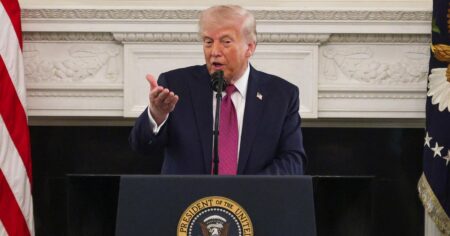
Russia, which has maintained closer ties with Cuba even as relations between Havana and Washington have deteriorated, has indicated plans to send a second tanker, providing a crucial lifeline to the island. When questioned about this apparent softening of the oil blockade, White House press secretary Karoline Leavitt explained that the Trump administration’s decision to allow the first tanker through was made “for humanitarian reasons.” President Trump himself addressed the issue over the weekend, stating somewhat casually, “We don’t mind having somebody get a boatload because they need…they have to survive.” This acknowledgment of basic humanitarian needs suggests at least some recognition within the administration of the severe hardships being experienced by ordinary Cuban citizens. However, Leavitt was quick to clarify that the U.S.’s overall policy stance toward Cuba remains unchanged, and future decisions regarding whether to allow oil tankers access to Cuban ports will be evaluated on a strictly “case-by-case basis,” leaving Cuba in a state of continued uncertainty about its energy supply.
Trump’s Aggressive Rhetoric and Intentions
The Trump administration’s approach to Cuba has been marked by increasingly aggressive rhetoric that has raised eyebrows both domestically and internationally. President Trump has heaped considerable pressure on the Cuban government in recent months, with administration officials openly suggesting they want to see fundamental changes to the country’s governance structure. In perhaps his most provocative statement on the matter, Trump floated the extraordinary idea of “taking Cuba in some form” last month, a suggestion that harkens back to earlier eras of American intervention in Latin America. His comments to reporters were particularly striking: “Whether I free it, take it, I think I could do anything I want with it.” Such language represents a dramatic departure from typical diplomatic discourse and has understandably caused concern in Cuba and throughout Latin America about American intentions in the region.
This aggressive posture toward Cuba fits into a broader pattern of the Trump administration’s more confrontational approach to foreign policy in recent months. The U.S. military launched what was described as a daring operation in January aimed at capturing former Venezuelan President Nicolás Maduro, who is a close ally of Cuba’s government. Additionally, for nearly five weeks, the United States has been involved in an aerial conflict with Iran, demonstrating the administration’s willingness to use military force to achieve its objectives. During a statement on Sunday, Trump ominously declared that “Cuba’s going to be next,” characterizing it as a “failing country.” Such rhetoric has naturally heightened tensions and raised questions about what exactly the administration might be planning regarding Cuba and whether diplomatic engagement or more coercive measures are being contemplated.
Calls for Regime Change and Political Reform
Secretary of State Marco Rubio, who has Cuban heritage and has long been one of the most vocal critics of the Cuban government in American politics, has been particularly explicit in suggesting that Cuba needs entirely new leadership. In an interview with Fox News host Sean Hannity late Tuesday, Rubio outlined what he believes Cuba requires to move forward: “I think Cuba is in need of two things: economic reforms and political reform. You cannot fix their economy if you don’t change their system of government.” He characterized Cuba’s current leaders as “incompetent” and suggested the country is facing severe difficulties. “They’re in a lot of trouble,” Rubio stated. “There’s no doubt about it. And you know, we’ll have more news on that fairly soon. We’re working on that as well.” This last comment is particularly intriguing, as it hints at ongoing efforts or plans that have not yet been made public.
Rubio’s critique goes to the heart of Cuba’s political and economic system, which has endured, with various modifications, since Fidel Castro’s revolutionary rise to power in 1959. The communist system that Castro established has proven remarkably resilient despite decades of U.S. sanctions, economic hardships, and the collapse of its former patron, the Soviet Union. However, Rubio and other critics argue that the system is fundamentally flawed and incapable of providing prosperity for the Cuban people without fundamental transformation. The question of whether such change should come from internal pressure and evolution or external intervention remains highly controversial, both in terms of international law and practical effectiveness.
Negotiations and Cuban Resistance
Despite the harsh rhetoric and economic pressure, both the Trump administration and the Cuban government have acknowledged that negotiations between the two countries are taking place. Interestingly, Cuba’s former president, Raúl Castro—Fidel’s brother who led the country from 2006 to 2018—has been playing a role in these discussions, suggesting that even though he has stepped back from his official leadership position, he remains an influential figure in Cuban politics and diplomacy. The nature and scope of these negotiations have not been fully disclosed, but they represent at least some channel of communication between the two governments despite their profound differences.
However, Cuba has forcefully pushed back against President Trump’s more provocative suggestions about taking control of the country. Current President Miguel Díaz-Canel Bermúdez issued a stern warning last month that made Cuba’s position clear: “any external aggressor will clash with an impregnable resistance.” This statement invokes Cuba’s history of resistance to foreign intervention and suggests that any attempt at invasion or forced regime change would be met with fierce opposition. Cuban leaders have consistently maintained that despite the country’s economic challenges and the pressure from the United States, they will not surrender their sovereignty or accept external dictation of their political system. This standoff between American pressure for change and Cuban insistence on self-determination continues to define the relationship between these two nations, separated by just 90 miles of water but worlds apart in their political philosophies and visions for Cuba’s future. As the situation continues to evolve, the international community watches closely to see whether diplomacy, coercion, or some combination of approaches will shape the next chapter in this long and complicated relationship.