

Dramatic Nighttime Rescue Operation off Puerto Rico’s Coast Saves Five Lives
A Perilous Situation Unfolds in Darkness
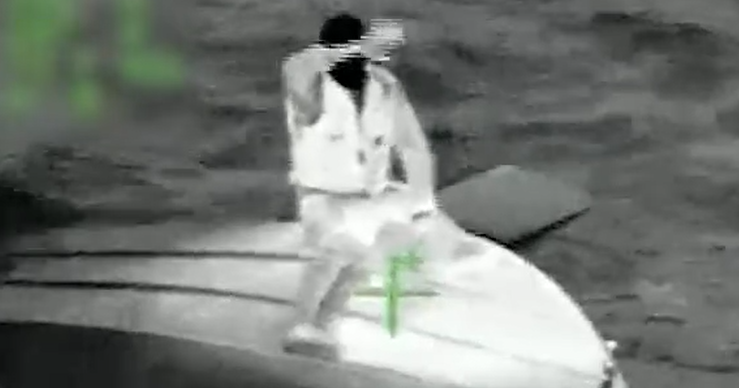
When distress calls echo across dark, churning waters, every second counts. This reality became starkly apparent one Tuesday evening off the coast of Puerto Rico’s Goat Island, when what began as a routine boating incident quickly escalated into a life-threatening emergency requiring multiple rescue teams. At 9:05 p.m., the Puerto Rico Police Joint Forces of Rapid Action contacted Coast Guard watchstanders at Sector San Juan with alarming news: a vessel had capsized in the treacherous waters near the small islet. What followed was an extraordinary display of coordination, courage, and determination as rescue teams battled 10-foot swells and darkness to save five people from the unforgiving sea. The incident, captured on dramatic video footage, showcased both the dangers of the ocean and the remarkable bravery of first responders who risk their own lives to save others.
Multiple Agencies Spring into Action
The moment the distress call came through, the Coast Guard’s emergency response system kicked into high gear. Watchstanders immediately broadcast an alert to all vessels in the area while simultaneously dispatching a 45-foot Coast Guard response boat and a Jayhawk helicopter to the scene. But the Coast Guard wasn’t alone in this fight against time and nature. The operation quickly became a multi-agency effort, with a Customs and Border Protection Caribbean Air and Marine Branch marine unit joining the rescue attempt, along with a Puerto Rico police helicopter. This coordinated response demonstrated the seamless cooperation between federal and local authorities when lives hang in the balance. Adding to the rescue effort, a “Good Samaritan” – an everyday citizen who happened to be in the area – played a crucial role by spotting the capsized 22-foot vessel and reporting that two people were clinging to it desperately. This civilian’s quick thinking and willingness to help provided responding teams with vital positioning information, allowing the Puerto Rican police helicopter to fly directly over the site and begin assessing the situation from above.
When Rescuers Become Victims
In what can only be described as every rescue coordinator’s nightmare, the dangerous conditions that had claimed the first vessel struck again with devastating swiftness. As the Customs and Border Protection marine unit approached the scene to assist the two people holding onto the capsized boat, they encountered massive 10-foot swells rolling through the darkness. These weren’t ordinary waves – they were walls of water capable of overwhelming even experienced mariners in specially equipped rescue vessels. Despite the training and expertise of the CBP agents aboard, the violent seas proved too powerful. The marine unit capsized, throwing three federal agents into the cold, dark water. Suddenly, what had been a two-person rescue operation had become a five-person emergency. The agents, who had arrived to save others, now found themselves fighting for their own survival in the same treacherous conditions. This dramatic turn of events added urgency and complexity to an already dangerous situation, requiring rescue coordinators to quickly reassess their approach and prioritize getting everyone out of the water safely.
Battling Impossible Conditions
The Coast Guard response boat crew faced an agonizing situation as they attempted to reach the people in the water. Despite their determination and skill, the combination of severe sea conditions and the location of the original capsized vessel created obstacles that even their specialized training couldn’t overcome. The rough seas that had already claimed two boats made it impossible for them to safely approach and recover the survivors. It was a frustrating reality that every first responder dreads – being so close to people in need yet unable to reach them due to circumstances beyond their control. Fortunately, the multi-layered response plan meant that other assets were available. The Puerto Rican police helicopter crew, maintaining their position above the scene, became the first to achieve success in the rescue operation. Working with precision in difficult conditions, the helicopter crew managed to pluck one of the original boaters and one of the CBP agents from the water. These two survivors were then transported to the nearby island, marking the first small victory in what had become an increasingly complex and dangerous mission. Meanwhile, the remaining three people – two CBP agents and one boater – continued treading water in the darkness, waiting for their chance at rescue.
The Jayhawk’s Heroic Intervention
When the Coast Guard’s Jayhawk helicopter arrived on scene, it brought with it specialized capabilities specifically designed for exactly this type of extreme rescue situation. One of the most dangerous and skilled roles in maritime rescue is that of the rescue swimmer – individuals trained to be lowered from helicopters into perilous waters to save lives. In this case, a rescue swimmer was deployed into the ocean, descending through the darkness into the churning sea below. What followed was a testament to the extraordinary training these professionals undergo. Working in 10-foot swells, in darkness, with the constant motion of both the water and the hovering helicopter above, the swimmer successfully reached the remaining two CBP agents and the final boater. One by one, they were secured and hoisted to safety aboard the Jayhawk. The precision required for such an operation cannot be overstated – the helicopter pilot must maintain position in challenging conditions, the crew must coordinate the hoist operation perfectly, and the rescue swimmer must secure each person while being tossed about by waves. All five survivors were then transported to Fernando Luis Ribas Dominicci Airport in San Juan, Puerto Rico, where first responders were waiting to provide medical treatment. Remarkably, all five individuals escaped this harrowing ordeal with only minor injuries – a outcome that seemed almost miraculous given the severity of the situation.
Teamwork Triumphs Over Tragedy
In reflecting on the successful rescue operation, Lt. David Tirado-Tolosa, the Jayhawk helicopter aircraft commander, emphasized that the positive outcome was the result of “excellent team effort” rather than any single act of heroism. His humble assessment highlighted how the “quick actions” of both the Puerto Rican police and the CBP unit enabled rescuers to maintain “constant eyes on all five people in the water” throughout the ordeal, which proved essential to their prompt rescue. “We are very glad everyone made it home safely, as this could have easily had a different outcome,” Tirado-Tolosa noted, acknowledging the thin line between success and tragedy in such operations. The location of this dramatic rescue, Goat Island or Isla de Cabras, is a small islet situated at the mouth of San Juan Bay with a unique history. Once separated from the main island by a narrow, submerged sandbank, it became accessible in the 1940s when the shoal was landfilled, creating a land bridge. Today, the island is known for its reefs and shoals – beautiful to look at but treacherous to navigate – as well as its historical sites, parks, and scenic viewpoints. This incident serves as a sobering reminder that these picturesque waters can turn deadly in moments, and that the brave men and women of our rescue services stand ready, day and night, to face danger so that others might live.