



House Ethics Committee Finds Democratic Representative Guilty of Pandemic Relief Fund Theft
Serious Allegations Against Florida Congresswoman
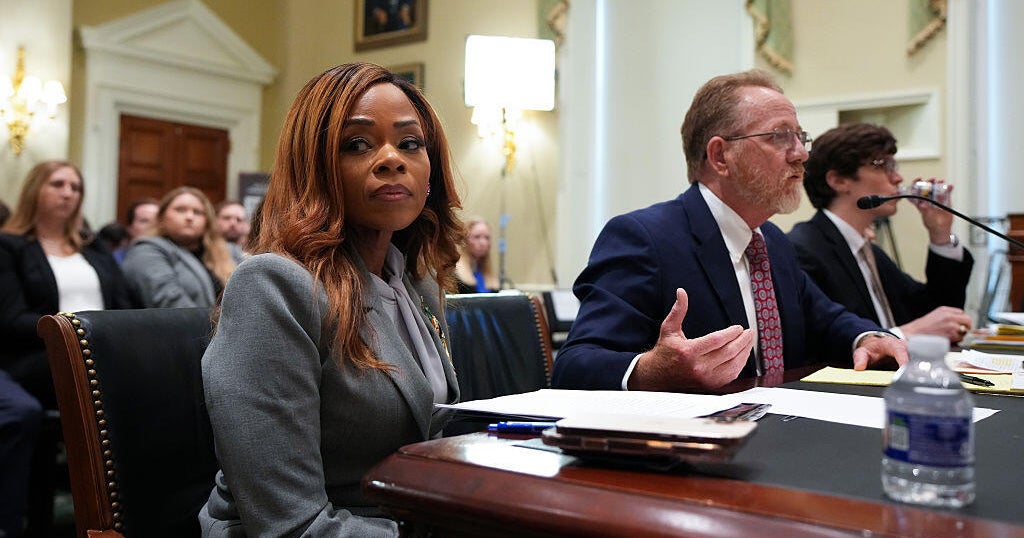
The House Ethics Committee delivered a bombshell announcement on Friday, revealing that they’ve found credible evidence supporting nearly all allegations against Florida Democratic Representative Sheila Cherfilus-McCormick. The congresswoman stands accused of a shocking scheme involving the theft of $5 million in federal pandemic relief funds, which she allegedly funneled into her congressional campaign. Out of 27 alleged violations examined during a rare public hearing, the committee determined that 25 had been proven by clear and convincing evidence. This damning finding comes after Cherfilus-McCormick was indicted last November on federal charges, to which she has firmly pleaded not guilty. The committee has decided to postpone any recommendations for disciplinary action until after Congress returns from its April recess, leaving the congresswoman’s political future hanging in the balance while the full weight of these allegations settles over Capitol Hill.
The Path to Power and Allegations of Fraud
Sheila Cherfilus-McCormick’s journey to Congress was marked by persistence after unsuccessful attempts in 2018 and 2020. She finally won a special election in 2022 to represent Florida’s 20th Congressional District, filling the seat left vacant after the death of longtime Democratic Representative Alcee Hastings in 2021. However, investigators now allege that her successful campaign was built on ill-gotten gains. According to federal prosecutors and the Ethics Committee’s findings, the scheme centered around Trinity Healthcare Services, a company co-founded by Cherfilus-McCormick’s mother and stepfather. The company had secured a contract with the Florida Division of Emergency Management to assist with COVID-19 vaccine registration during the height of the pandemic. When the state accidentally overpaid Trinity Healthcare by more than $5 million, prosecutors allege that instead of returning the funds as required, Cherfilus-McCormick and her brother orchestrated an elaborate cover-up, moving the money through various bank accounts to disguise its origin before transferring over $1 million to accounts connected to her congressional campaign.
Lavish Spending and Financial Misconduct
The allegations against Cherfilus-McCormick extend beyond campaign finance violations into territory that paints a picture of personal enrichment and luxury. The Justice Department’s indictment details how the congresswoman allegedly used stolen pandemic relief funds to purchase a 3.14-carat yellow diamond ring for herself, along with jewelry from the prestigious Tiffany & Co., a Tesla vehicle, and designer clothing. Furthermore, prosecutors claim she deliberately inflated business expenses and charitable contributions on her tax returns to reduce what she owed to the government. The House Ethics Committee’s investigation uncovered what they described as “more extensive misconduct” than even the federal indictment revealed. Their 59-page report documented a pattern of financial irregularities spanning multiple election cycles, including inaccurate and incomplete campaign finance reports, improper contributions disguised as personal loans, acceptance of illegal contributions, and deliberately inflated cash-on-hand figures. Investigators noted that the timing of money transfers to her campaign suspiciously aligned with movements of funds from her healthcare company, suggesting a coordinated effort to funnel the stolen pandemic relief money into her political ambitions.
Bipartisan Push for Expulsion
The severity of these findings has triggered a growing movement to expel Cherfilus-McCormick from Congress, with House Republicans leading the charge but some Democrats also expressing support for her removal. Republican Representative Greg Steube of Florida has been at the forefront of this effort and indicated on social media that he’s prepared to move forward with formal expulsion proceedings. Perhaps most significantly for Cherfilus-McCormick’s political survival, at least one Democratic colleague has publicly called for her departure. Representative Marie Gluesenkamp Perez of Washington didn’t mince words when she wrote on social media, “You can’t crime your way into legitimate power. Since she was found guilty, she should resign or be removed.” If the House ultimately votes to expel Cherfilus-McCormick, she would become only the seventh House member in American history to face this ultimate congressional sanction. The precedent is fresh in lawmakers’ minds: in 2023, the House voted to remove Republican George Santos from Congress after an Ethics Committee investigation found substantial evidence of illegal activity involving his finances. Santos was later convicted of wire fraud and identity theft, though President Trump controversially commuted his sentence in October 2024.
Legal Defense and Constitutional Concerns
Throughout this ordeal, Cherfilus-McCormick has maintained her innocence, characterizing the federal indictment as a “sham” and denying all wrongdoing. Her legal strategy has evolved as the investigations progressed. Initially, she cooperated with the Ethics Committee’s inquiry, but she eventually invoked her Fifth Amendment right against self-incrimination, refusing to answer questions that might be used against her in the pending criminal trial. During Thursday’s public hearing before the adjudicatory subcommittee—composed of eight Republican and Democratic House members—her attorney made an unsuccessful attempt to postpone any committee action. The defense argued that proceeding with ethics sanctions before the conclusion of her criminal trial would jeopardize Cherfilus-McCormick’s constitutional right to a fair trial. The committee rejected this argument, determining that their investigation had produced sufficient evidence to move forward with findings, though they agreed to delay any sanction recommendations until after the April recess. Her lawyer has stated that Cherfilus-McCormick disputes both the allegations and the committee’s report, setting the stage for what promises to be a contentious legal and political battle.
What Happens Next
The coming weeks will be crucial in determining Representative Cherfilus-McCormick’s fate both in Congress and in the criminal justice system. When the full Ethics Committee reconvenes after the April recess, they will consider what sanctions, if any, should be recommended against the Florida Democrat. The options range from censure—a formal statement of disapproval—to the nuclear option of recommending expulsion, which would require a two-thirds vote of the entire House of Representatives. Given that the adjudicatory subcommittee found that 25 of 27 alleged violations had been proven by clear and convincing evidence, the committee may feel compelled to recommend the harshest penalty available. If they do recommend expulsion and the measure comes to the House floor, it will test whether enough Democrats are willing to vote against one of their own colleagues, especially in a closely divided chamber where every seat matters for partisan control. Meanwhile, Cherfilus-McCormick faces the federal criminal charges that could result in significant prison time if she’s convicted. The parallel tracks of the Ethics Committee process and the criminal prosecution create a complex situation where her congressional career could end before her criminal case is resolved, or she could potentially survive politically even while fighting federal charges. The precedent of George Santos suggests that serious financial misconduct proven by the Ethics Committee can generate sufficient bipartisan support for expulsion, regardless of party loyalty. As this drama unfolds, it serves as a stark reminder that the billions of dollars in pandemic relief funds distributed during the COVID-19 emergency created opportunities for fraud that authorities are still investigating and prosecuting years later.