
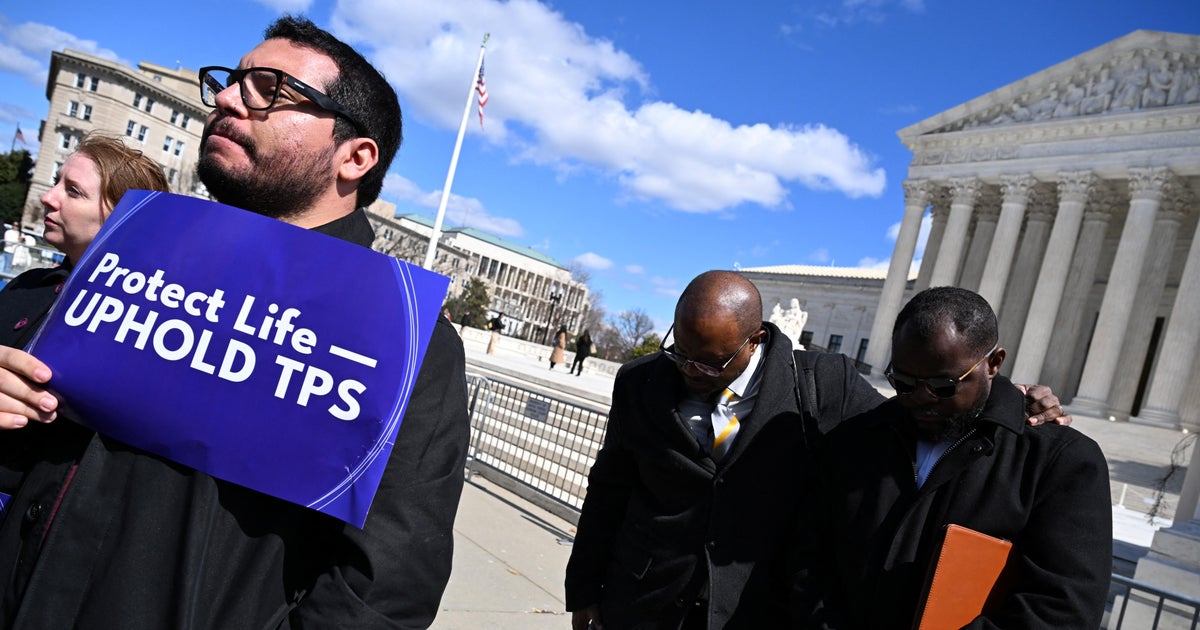

The Human Cost of Temporary Protected Status: Lives in Limbo as Supreme Court Weighs Syrian and Haitian Deportation Protections
A Decade of Building a Life, Now Under Threat
Dahlia Doe’s story represents thousands of immigrants caught in an impossible situation—neither able to return safely to their home countries nor certain they can remain in the one they’ve built their lives in. The young Syrian woman, now in her twenties, arrived in the United States over a decade ago to pursue her college education. Since then, she’s established deep roots in American soil, working as a research director in the Bronx while caring for her father who suffers from Parkinson’s disease. Her family has woven themselves into the fabric of American life—her parents hold green cards as lawful permanent residents, and her sister is a U.S. citizen. Yet despite these connections, Dahlia faces the terrifying prospect of deportation to Syria, a country where she was never born and has never lived, where no immediate family awaits her return.
The shock came in September when the Department of Homeland Security announced plans to terminate Temporary Protected Status for more than 6,000 Syrian nationals, giving them just 60 days to leave voluntarily or face arrest and deportation. For Dahlia, who received her TPS designation in 2021, the announcement felt like watching her entire adult life crumble. “It shows how little our lives matter,” she told reporters, her voice carrying the weight of a community living in constant fear. The brevity of the notice—just two months to uproot a life built over ten years—struck her as particularly cruel. She knew the Trump administration had been systematically targeting TPS countries one by one, but the reality of facing removal herself transformed abstract policy into personal catastrophe. Everything she had worked for, every relationship she had nurtured, every professional achievement she had earned suddenly hung by the thinnest of legal threads, waiting for nine Supreme Court justices to decide her fate.
Understanding Temporary Protected Status and Its Uncertain Future
The Temporary Protected Status program emerged from Congress in 1990 as a humanitarian response to global crises, recognizing that sometimes people cannot safely return to their home countries through no fault of their own. The program grants the Secretary of Homeland Security authority to provide country-specific relief to foreign nationals facing extraordinary circumstances—whether war, natural disasters, epidemics, or other temporary yet severe conditions that make return dangerous or impossible. These protections last up to 18 months but can be extended repeatedly, with Congress deliberately placing no limit on how many times a country’s designation could be renewed. The program isn’t available to everyone; those convicted of felonies, multiple misdemeanors, anyone involved in drug trafficking or terrorism, or those whose presence threatens national security are excluded from protection.
Syria first received TPS designation in 2012 under the Obama administration as former President Bashar al-Assad brutally suppressed anti-government protests, plunging the country into a civil war that would rage for over a decade. Haiti’s designation came even earlier, in 2010, following a catastrophic earthquake that devastated roughly one-third of the island nation’s 9 million residents. The Biden administration later extended Haiti’s protections multiple times as the country descended into economic chaos, public health crises, and political violence following the assassination of its president in 2021. These weren’t arbitrary decisions but responses to documented humanitarian emergencies that made safe return impossible for nationals living in the United States.
However, the Trump administration has taken a dramatically different approach, moving to roll back temporary protections for 13 countries, affecting over 1 million people. Shortly after President Trump’s inauguration, then-Secretary of Homeland Security Kristi Noem announced terminations for more than 6,000 Syrian immigrants and 350,000 Haitians. Following consultations with other agencies and reviews of country conditions, Noem determined that neither country still met the criteria for TPS. Syria’s designation was scheduled to end last November, Haiti’s in February, with both groups receiving roughly 60 days’ notice. The administration has also targeted Afghanistan, South Sudan, Yemen, Nicaragua, and Venezuela, with the Supreme Court already allowing revocation of protections for hundreds of thousands of Venezuelan migrants. The Justice Department and administration defenders argue that TPS was always meant to be temporary and that ending these programs protects national security and public safety.
Lower Courts Find Political and Racial Animus Behind Terminations
The administration’s terminations didn’t go unchallenged. Dahlia joined six other Syrian nationals in filing a lawsuit to block the removal of their protections, while Haitian TPS recipients filed their own separate legal challenge. The district court judges who heard these cases found deeply troubling evidence that the decisions to end protections were driven not by genuine country conditions assessments but by improper political and discriminatory motivations. U.S. District Judge Katherine Polk Failla, overseeing the Syrian case, found evidence of “undue political influence,” citing President Trump’s statements about the illegality of the TPS program and executive orders directing DHS to rescind policies he claimed contributed to illegal immigration. In a particularly pointed observation during a November hearing, Judge Failla stated that Noem “endeavored to terminate TPS status whenever presented with an opportunity to do so, resulting in termination decisions that are grounded not in law and not in fact, but in political considerations simply not relevant under the TPS statute.”
The findings in the Haiti case proved even more damning. U.S. District Judge Ana Reyes concluded there was sufficient evidence that Noem’s decision was motivated in part by “anti-Black and anti-Haitian” animus. Judge Reyes cited a pattern of derogatory statements from President Trump, including his infamous characterization of Haiti as a “s**thole country” and his amplification of completely debunked conspiracy theories that Haitian immigrants in Springfield, Ohio, were eating residents’ pets—racist falsehoods that terrorized the Haitian community and led to bomb threats in Springfield. These weren’t isolated remarks but part of a documented pattern suggesting that decisions about who deserved protection were being made based on the nationality and race of the protected individuals rather than objective assessments of country conditions. Both judges temporarily blocked the terminations from taking effect, and when appeals courts declined to pause these rulings, the Trump administration took the extraordinary step of seeking emergency intervention from the Supreme Court, which agreed in March to hear the cases while keeping protections in place during the legal process.
The Supreme Court Battle: Can Courts Even Review These Decisions?
When the Supreme Court hears arguments on Wednesday, it must first resolve a threshold question that could have enormous implications beyond just these two countries: can federal courts review TPS termination decisions at all? The Trump administration has adopted an expansive interpretation of the TPS statute, arguing that Congress intended to bar judicial review not only of the final decision to designate, terminate, or extend protections but also of all the steps, analysis, and reasoning the Secretary employs in reaching that determination. Solicitor General D. John Sauer wrote in the government’s brief that “Congress forbade federal courts to second-guess TPS determinations, no matter whether courts would cavil with the final outcome, the Secretary’s decisional process, the substantive reasoning, or something else.” The administration argues that allowing court review would transform district judges into “ultimate foreign-policy superintendents” and reduce Congress’s intended restrictions on judicial involvement to a “minor speedbump.”
The government points to procedural checks Congress built into the statute—like the 18-month designation limit and required regular reviews—as evidence that Congress intended the executive branch to have nearly unfettered discretion. Sauer accused the lower courts of improperly “substituting their own views for those of the Executive as to procedures, country conditions, and foreign-policy objectives.” He also dismissed claims of racial animus in the Haiti decision as a “legal and factual nonstarter” and rejected arguments that Noem failed to properly consult with the State Department before concluding both countries were safe for return. According to the administration, the consultation requirement doesn’t “invite district courts to sit in judgment of when agencies have communicated enough”—the statute merely requires DHS to solicit and receive other agencies’ views, leaving the executive branch to determine how that process happens.
Documents produced during litigation, however, revealed the consultation process consisted of little more than a brief email exchange in which a State Department official stated there were “no foreign policy concerns” with ending the programs—this despite the State Department maintaining Level 4 travel advisories (the highest warning level) for both countries, explicitly warning Americans against travel due to kidnapping, terrorist activity, and civil unrest. The challengers argue this superficial communication violated the statute’s requirement for meaningful consultation. Lupe Aguirre, a lawyer with the International Refugee Assistance Project representing the Syrian nationals, emphasized that “in the statute, it says that these decisions need to be made based on country conditions and after consulting with appropriate agencies, which is here the Department of State. They simply did not do that here or in Haiti or in the numerous other countries that have systematically terminated TPS status for.”
What’s Really at Stake: Accountability and the Rule of Law
The legal battle transcends the fate of Syrian and Haitian TPS recipients—it’s fundamentally about whether any limits exist on executive power and whether courts can enforce statutory requirements when agencies appear to ignore them. Lawyers for both the Haitian and Syrian immigrants warn that if the Supreme Court accepts the administration’s broad interpretation barring all judicial review, it would create a dangerous precedent where the Secretary of Homeland Security could act with complete impunity, immune from accountability even when blatantly violating statutory requirements. “Congress could not possibly have envisioned writing a statute where the government could very unabashedly violate the law, the mandates that they themselves created, and not have to account for it,” Aguirre argued. She emphasized the judiciary’s constitutional duty to check the Trump administration’s “efforts to wield unfettered power and strip away the status of over 1 million people that have been here lawfully and cannot return to unsafe countries.”
The challengers take a more nuanced view of what Congress intended to shield from judicial review. They argue the statute bars courts from second-guessing the Secretary’s ultimate determination about whether a country is safe—that substantive foreign policy judgment belongs to the executive branch. However, courts should retain authority to review whether the Secretary followed the required process and applied the criteria Congress specified in the law. This distinction matters enormously: it preserves executive discretion on foreign policy while ensuring compliance with statutory procedures designed to produce informed, lawful decisions. The evidence of political statements from both the Secretary and President Trump, the plaintiffs argue, demonstrates that Noem moved to terminate TPS to help achieve the president’s predetermined goal of rolling back all deportation protection programs, regardless of whether specific countries were actually safe for return. “The Trump administration came into office with the plan to try to de-document—that is, strip away the lawful status of as many immigrants as possible,” Aguirre stated. “TPS was on the chopping block, and as we have seen with every systematic termination, that has come to bear.”
The Broader Context of Trump’s Immigration Agenda
The TPS terminations represent just one component of President Trump’s comprehensive second-term immigration agenda, which has mass deportations as its centerpiece. The administration has invoked the Alien Enemies Act, a wartime law dating to 1798, to authorize summary deportations of Venezuelans alleged to be gang members without traditional due process protections. The president has attempted to suspend access to the asylum system for migrants crossing the U.S.-Mexico border, despite international treaty obligations and domestic statutes protecting asylum seekers. Perhaps most controversially, Trump signed an executive order seeking to end birthright citizenship for babies born to undocumented immigrants or people in the U.S. on temporary status—a directive that appears to directly contradict the Fourteenth Amendment’s guarantee that “all persons born or naturalized in the United States” are citizens, which the Supreme Court appears poised to invalidate.
These policies share a common thread: aggressive use of executive power to restrict immigration and remove immigrants already in the country, often pushing or exceeding legal boundaries. The TPS cases will test whether courts can serve as a meaningful check on this expansive view of executive authority or whether the administration can proceed with minimal judicial oversight. For Dahlia and hundreds of thousands like her, the Supreme Court’s decision will determine not just legal status but the trajectory of entire lives. “My life would turn into a constant state of fear and uncertainty. Everything I’ve built, my entire adulthood, would vanish right in front of my eyes,” Dahlia explained. “It’s not just a legal change. It’s not just a policy. It’s disrupting entire lives overnight for people like me who have been here a decade or more.”
The human dimension of this case cannot be overstated. These aren’t abstract legal questions about administrative procedure—they’re decisions that will determine whether families stay together or are torn apart, whether people can continue working in jobs they’ve held for years or face unemployment and removal, whether individuals will be forced to return to countries they’ve never lived in or where violence and instability make survival uncertain. As the Supreme Court prepares to hear arguments, the justices will decide not only the legal boundaries of executive power but also the fate of over a million people who have built lives in America while wars, natural disasters, and political chaos made return to their home countries impossible. The coming decision will reveal whether America’s legal system can hold government accountable to the laws Congress writes or whether claimed national security concerns and political preferences can override statutory requirements designed to ensure fair, fact-based decision-making in matters that profoundly affect vulnerable populations.