


Federal Appeals Court Orders Review of Trump’s White House Ballroom Project Amid Security Concerns
Complex Legal Battle Over Presidential Authority and National Security
The construction of President Trump’s ambitious $400 million White House ballroom project has hit another legal roadblock, with a federal appeals court demanding a closer examination of the national security implications involved in halting the massive renovation. On Saturday, a three-judge panel from the U.S. Court of Appeals for the District of Columbia Circuit made a pivotal decision that neither completely stopped nor fully approved the controversial construction project. Instead, the judges determined they lacked sufficient information to make a definitive ruling about whether suspending parts of the project could potentially endanger the safety of the president, his family, and the White House staff. The case has now been sent back to the trial judge for further consideration, with specific instructions to clarify how much of the project is truly essential for security purposes and how much is simply architectural enhancement. This legal maneuvering has set up a complex timeline, with the appeals court extending previous deadlines to April 17, giving the Trump administration a narrow window to potentially seek Supreme Court intervention if they choose to escalate the matter further.
The Scope and Scale of the Controversial Ballroom Project
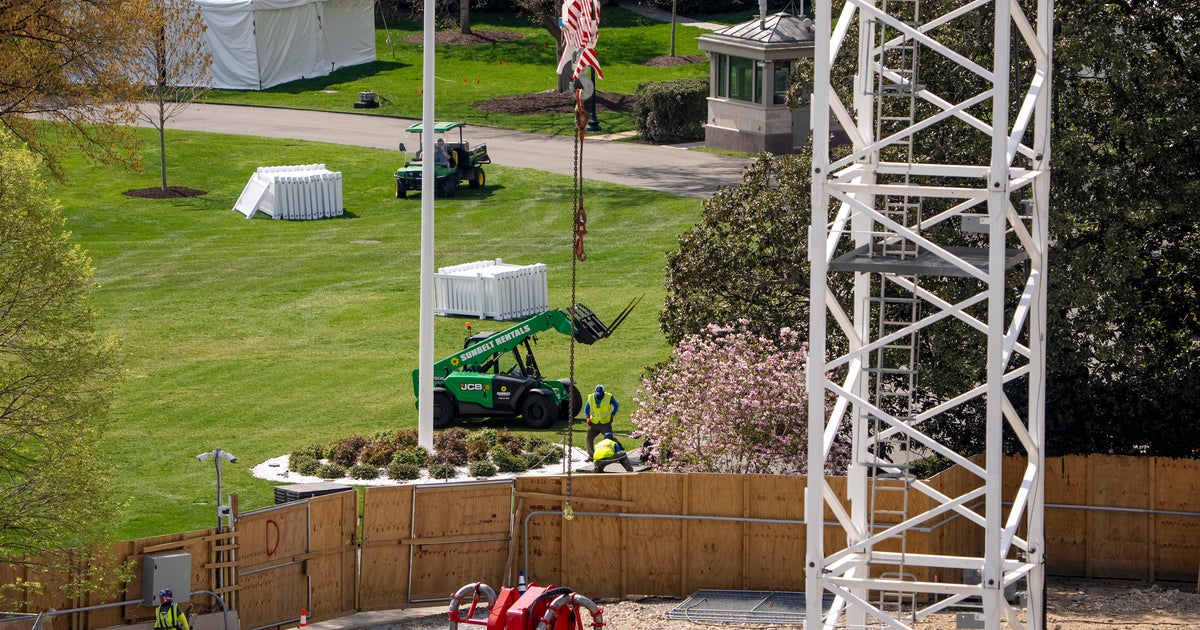
The White House ballroom project represents one of the most significant structural modifications to the presidential residence in over seven decades. The ambitious plan calls for a massive 90,000-square-foot ballroom capable of accommodating 999 guests, a dramatic expansion that required the complete demolition of the historic East Wing, which was completed in December. President Trump has promoted the project as a necessary modernization that would allow the White House to host larger state functions and diplomatic events befitting America’s position on the world stage. However, the project extends far beyond just an elegant entertainment space. According to government lawyers, the construction includes substantial security enhancements designed to protect against modern threats including drone attacks, ballistic missiles, and biological hazards. The underground components are particularly extensive, featuring bomb shelters, military installations, and a complete medical facility beneath the ballroom floor. These security features have become central to the legal debate, as the Trump administration argues that the entire project is essentially a security upgrade with the ballroom serving as the visible component above ground. The administration maintains that President Trump is funding the ballroom itself through private donations, though public money is being used for the underground security infrastructure and protective systems.
Judicial Intervention and Questions of Presidential Authority
The legal challenge to the ballroom project was initiated by the National Trust for Historic Preservation, which filed suit in December shortly after the East Wing demolition was completed. U.S. District Judge Richard Leon, who was appointed by Republican President George W. Bush, issued a ruling on March 31 that temporarily barred construction from proceeding without explicit congressional approval. In his strongly worded decision, Judge Leon concluded that the preservationist organization was likely to succeed in their lawsuit because the president lacks the independent constitutional or statutory authority to undertake such a massive structural change to the White House without legislative approval. His ruling included a particularly pointed observation about the nature of presidential stewardship: “The President of the United States is the steward of the White House for future generations of First Families. He is not, however, the owner!” This statement encapsulated the judge’s view that the White House belongs to the American people and cannot be fundamentally altered at the discretion of any single president without proper authorization. Judge Leon did include an important exception in his injunction, allowing any construction work genuinely necessary for the safety and security of the White House to continue. He stated that he had reviewed classified materials submitted privately by the government before determining that a construction halt would not compromise national security.
The Security Dispute at the Heart of the Appeal
The Trump administration’s appeal to the higher court focused heavily on the security dimensions of the project, arguing that Judge Leon’s injunction could create dangerous vulnerabilities. Government lawyers presented detailed information about the protective features being installed, describing a “heavily fortified” facility with multiple layers of defense against various threat scenarios. They emphasized that delaying construction would leave existing security gaps unaddressed and potentially “imperil the President and others who live and work in the White House.” However, the appeals court identified a significant inconsistency in the government’s arguments that has now become the crux of the case. Initially, the White House suggested that the below-ground security work was “distinct from construction of the ballroom itself and could proceed independently,” implying that the ceremonial ballroom and the security infrastructure were separate components. But in later arguments, the administration characterized these security upgrades as “inseparable” from the overall project, suggesting that work on the ballroom above ground was somehow essential to completing the security enhancements below. This apparent contradiction troubled the three-judge panel, which noted they couldn’t determine “whether and to what extent” proceeding with various aspects of the ballroom construction was genuinely necessary for the security components. This ambiguity is precisely what the appeals court wants the trial judge to resolve before making a final determination about how much of the project can be halted without creating security risks.
Diverse Judicial Perspectives and the Path Forward
The three-judge appeals panel reflected the political diversity of federal judicial appointments, consisting of Patricia Millett (nominated by Democratic President Barack Obama), Neomi Rao (nominated by President Trump), and Bradley Garcia (nominated by Democratic President Joe Biden). Despite this political mix, only Judge Rao dissented from the majority decision to send the case back for further clarification. In her dissenting opinion, Judge Rao cited federal statutes that she believes grant the president authority to undertake improvements to the White House, and she expressed concern that the majority was giving insufficient weight to security considerations. “Importantly, the government has presented credible evidence of ongoing security vulnerabilities at the White House that would be prolonged by halting construction,” Rao wrote, arguing that these concrete security concerns should outweigh what she characterized as the “generalized aesthetic harms” presented in the preservationist lawsuit. Her dissent suggests that at least some judges are sympathetic to arguments about presidential authority and national security, which could influence how the case ultimately unfolds. The case now returns to Judge Leon with specific instructions to clarify the relationship between the ballroom construction and the security upgrades, and to determine more precisely which elements of the project, if any, must proceed to protect the safety of the White House occupants.
Broader Implications for Historic Preservation and Democratic Accountability
The ballroom controversy has raised fundamental questions about the balance between executive authority, historic preservation, and democratic accountability. Carol Quillen, president and CEO of the National Trust for Historic Preservation, emphasized these concerns in her statement responding to the appeals court decision. She noted that her organization remains “committed to honoring the historic significance of the White House, advocating for our collective role as stewards, and demonstrating how broad consultation, including with the American people, results in a better overall outcome.” This statement highlights the preservationists’ core argument: that decisions about fundamentally altering one of America’s most iconic and historically significant buildings should involve public input and congressional oversight rather than being made unilaterally by a sitting president. The controversy has been complicated by the Trump administration’s approach to seeking approvals from oversight agencies. Two days after Judge Leon’s initial ruling against the project, the ballroom plans received final approval from a key oversight agency that had been staffed with Trump allies. Another commission, similarly constituted with Trump loyalists, had approved the project earlier in the year. However, President Trump had proceeded with demolishing the East Wing and beginning the largest structural change to the White House in more than 70 years before seeking input from these commissions, raising questions about whether the approval process was genuine oversight or merely retrospective rubber-stamping. As the legal battle continues with a new April 17 deadline, the case represents a significant test of constitutional limits on presidential power and the proper process for making irreversible changes to national landmarks that belong not to any individual president but to all Americans.