

Elon Musk Steps Back from Government Role as Tesla Faces Mounting Challenges
Tesla’s Financial Troubles Force a Strategic Shift
Elon Musk has announced he will significantly reduce his involvement with the Department of Government Efficiency (DOGE) starting in May, shifting his focus back to Tesla as the electric vehicle manufacturer faces serious financial headwinds. This decision comes at a critical moment for Tesla, which recently reported a devastating 71% drop in quarterly profits, falling from $1.39 billion in the first quarter of 2024 to just $409 million in the same period this year. The company’s revenues also missed forecasts substantially, declining 9% to $19.3 billion between January and March. Perhaps most alarmingly for investors, Tesla’s share price has collapsed by more than 50% since reaching record highs in mid-December, erasing billions in shareholder value and raising urgent questions about the company’s direction and leadership.
The timing of Musk’s announcement is particularly noteworthy given his previous dismissal of similar rumors just weeks earlier. In April, he had vigorously denied reports suggesting he would step away from his DOGE responsibilities, labeling such speculation as “fake news.” However, the mounting pressures on Tesla appear to have forced a recalculation. As a special government employee, Musk was already limited to 130 days in his DOGE role, which was primarily focused on identifying and implementing cuts to federal spending. The dramatic deterioration in Tesla’s financial performance and market position has apparently convinced him that his primary business requires immediate and sustained attention if it is to weather the current storm of challenges threatening its future.
Public Backlash and Political Controversy
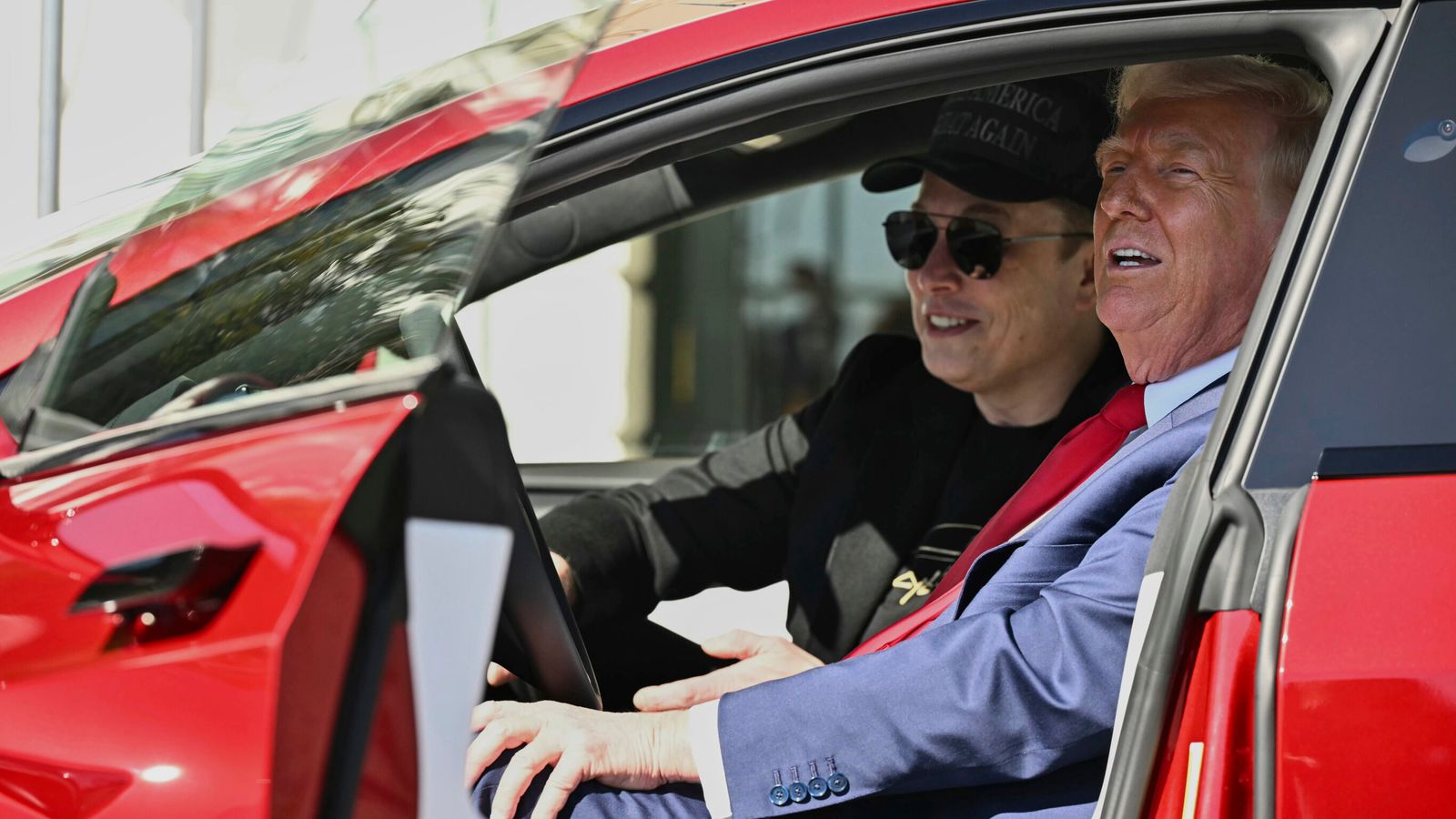
Musk’s work with DOGE has proven to be deeply controversial, contributing to the problems now facing Tesla in the marketplace. His role in President Trump’s administration, specifically his involvement in cutting government jobs and slashing federal spending, has divided the American public and sparked a significant backlash against his business interests. This opposition has manifested in concrete actions targeting Tesla, including organized protests and physical attacks on Tesla showrooms across the country. The situation became serious enough that President Trump himself addressed it, controversially labeling those vandalizing Tesla properties as “terrorists.” This inflammatory rhetoric, while defending Musk’s business interests, has likely further polarized public opinion on both the government efficiency initiative and Tesla as a brand.
The political dimension of Tesla’s troubles represents a relatively new challenge for the company. While Tesla has always had its critics, the current wave of opposition is explicitly tied to Musk’s political activities and his close association with the Trump administration. This has transformed what was once primarily an aspirational brand associated with environmental consciousness and technological innovation into a politically charged symbol that many consumers now actively avoid. For a company that built its early success partly on appealing to environmentally conscious consumers—a demographic that typically skews progressive politically—this shift represents a fundamental threat to its market positioning and brand equity.
Investor Concerns and Leadership Questions
The depth of concern among Tesla’s investor base has become increasingly apparent, with Musk’s ability to effectively lead the company emerging as one of the most frequently raised issues during recent shareholder communications. In the question-and-answer portal established ahead of an investor call, queries about Musk’s role as chief executive dominated the discussion, reflecting widespread anxiety about his divided attention. These concerns are not without merit: beyond his responsibilities at Tesla, Musk simultaneously serves as CEO of space exploration company SpaceX and owns the social media platform X (formerly Twitter). This portfolio of high-profile, demanding leadership positions has raised legitimate questions about whether any individual, regardless of their capabilities, can effectively manage such diverse and complex enterprises simultaneously.
Prominent early Tesla investor Ross Gerber has publicly voiced what many in the investment community are thinking privately. In a recent interview with Sky’s Business Live, Gerber stated bluntly that Musk has “lost his focus” and has become too “divisive” a figure to effectively lead the company forward. This criticism from a longtime supporter carries particular weight, suggesting that doubts about Musk’s leadership extend beyond typical critics to those who have historically championed his vision and backed it with their capital. Gerber went so far as to suggest that Tesla needs new leadership entirely—a remarkable statement from someone who invested in the company based largely on confidence in Musk’s vision and execution abilities.
Operational Challenges and Competitive Pressures
Beyond the leadership questions and political controversies, Tesla faces substantial operational and competitive challenges that would test any management team. The company’s recently released financial results and forward-looking statements revealed significant uncertainty about key product initiatives that investors have been counting on to drive future growth. While Tesla confirmed that work on a more affordable vehicle remains “on track for start of production in the first half of 2025,” the company provided no details about prototypes or specifications, leaving analysts and investors to wonder about the actual progress being made. Similarly, production of the much-hyped Cybercab robotaxi has been scheduled for 2026, but with few concrete details about the technology, regulatory approvals, or go-to-market strategy.
The competitive landscape has shifted dramatically against Tesla’s favor, particularly with the rise of Chinese electric vehicle manufacturers who are producing quality vehicles at lower price points. This competition has been especially fierce in international markets, where Tesla sales have slumped significantly across Europe. Additionally, the global trade war initiated by the Trump administration—ironically, an administration in which Musk serves—has created substantial headwinds for Tesla’s business model. The company’s financial outlook statement explicitly pointed to the harm that tariffs could inflict on the business. While many Tesla vehicles are manufactured in the United States, the company also operates factories in China and Germany. Under the current tariff regime, components and vehicles produced at these international facilities face additional taxes when entering the American market, directly impacting Tesla’s cost structure and pricing flexibility.
The Road Ahead: Uncertainty and Critical Decisions
As Tesla navigates these multiple simultaneous challenges, the company finds itself at a genuine crossroads. The financial market turbulence caused by global trade tensions, intensifying competition from established and emerging rivals, damage to the brand from Musk’s political activities, and legitimate questions about leadership focus have combined to create perhaps the most difficult period in Tesla’s history as a public company. The company that once seemed to effortlessly defy gravity—both literally with its space ambitions and figuratively with its stock price—now faces very earthbound challenges that require focused, strategic responses.
Musk’s decision to reduce his DOGE involvement and refocus on Tesla represents an acknowledgment of these realities, but it remains unclear whether this adjustment will be sufficient to address the depth of the company’s challenges. The damage to Tesla’s brand among certain consumer segments may prove difficult to repair, regardless of Musk’s time allocation. The competitive pressures from Chinese manufacturers and the operational complexities created by the tariff environment require more than just CEO attention—they demand strategic innovation and potentially uncomfortable changes to Tesla’s business model. Most fundamentally, the company needs to deliver on its product promises, particularly the affordable vehicle that could open mass-market segments, and the autonomous driving technology that has been promised for years but remains elusive. Whether Musk, even with renewed focus, can successfully navigate these challenges while maintaining investor confidence and rebuilding consumer trust represents the defining question for Tesla’s future. The coming quarters will reveal whether this pivot back to Tesla comes in time to reverse the company’s fortunes or whether the damage from this period of divided attention and controversy has created problems too substantial to quickly overcome.