



Birmingham’sBin Strike Crisis: A City Buried Under Waste
The Growing Mountain of Rubbish
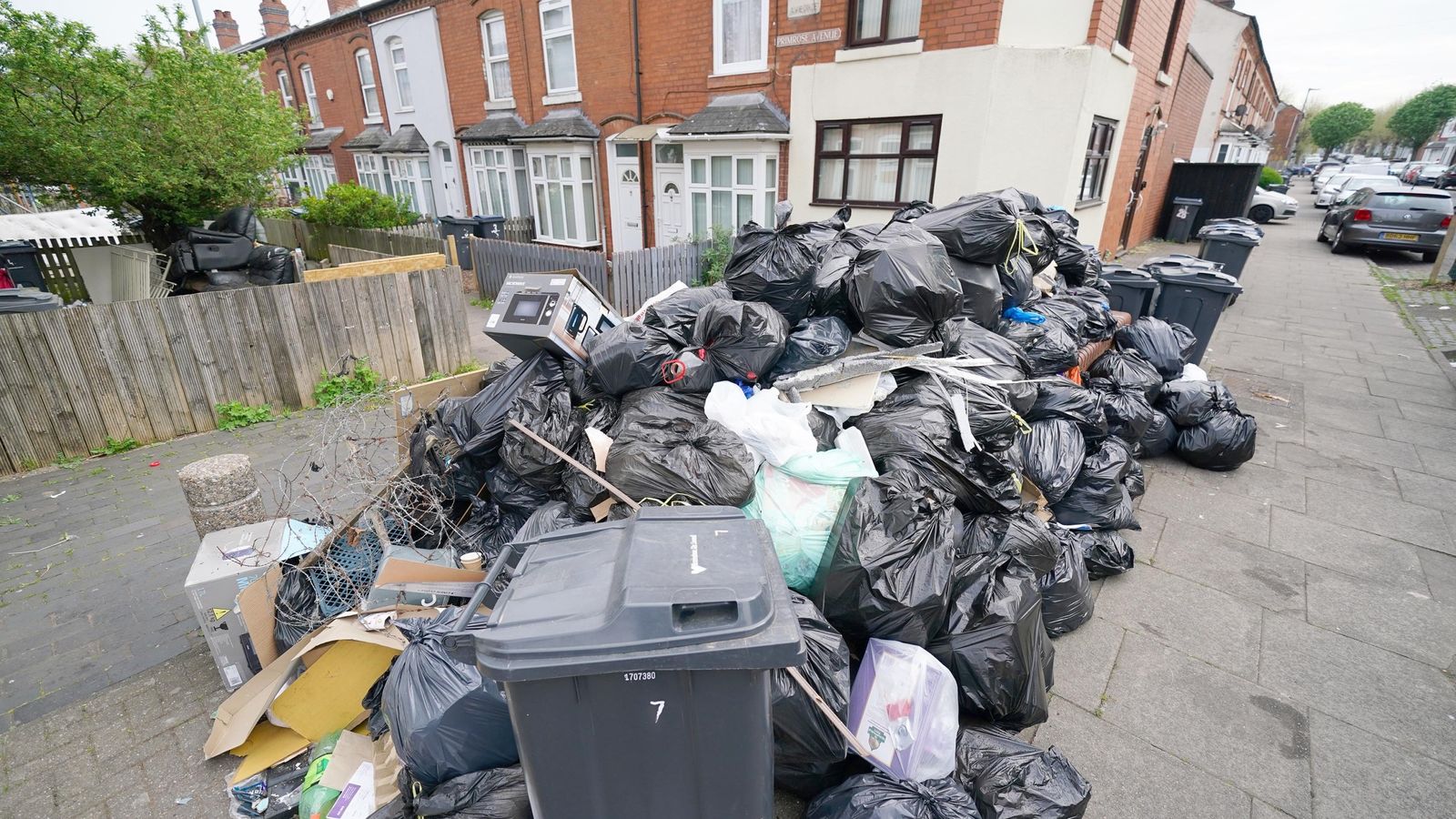
Birmingham’s streets have become an unwelcome canvas of overflowing bins and bulging rubbish bags throughout early 2025, painting a grim picture of a major British city in crisis. What started as intermittent disruptions in January escalated into a full-blown emergency by late March, when Birmingham City Council took the unprecedented step of declaring a major incident. The situation became so dire that picket lines were effectively blockading waste depots, preventing collection vehicles from even leaving to do their jobs. For residents of Britain’s second-largest city, the sight of mounting rubbish piles has become a daily reality, with rotting food waste attracting vermin and creating genuine public health concerns. The council, already struggling with severe financial difficulties after effectively declaring bankruptcy in 2023, now faces an additional crisis that’s testing both its resources and its resolve. Images of Birmingham’s rubbish-strewn streets have been broadcast worldwide, causing embarrassment for city leaders and genuine hardship for the more than one million people who call Birmingham home.
Why Workers Walked Out
At the heart of this dispute lies a fundamental disagreement about jobs, pay, and working conditions that has proven stubbornly resistant to resolution. Over 350 waste collection workers, represented by the Unite union, initially began a series of walkouts in January before ramping up to indefinite strike action on March 11th. The workers’ primary grievance centers on the council’s decision to eliminate the Waste Recycling and Collection Officer (WRCO) role—a move that would reduce bin lorry crews from four workers to three. According to Unite, this seemingly administrative change would leave approximately 150 workers facing pay cuts of around £8,000 annually, a devastating financial blow for people already working in demanding, low-paid jobs. The council tells a different story, insisting that only 17 workers would actually be affected and that the pay reductions would be far less severe than the union claims. From the council’s perspective, scrapping the WRCO role simply brings Birmingham’s waste operations in line with standard national practice and represents a necessary step toward improving service efficiency. They’ve maintained that all affected workers have been offered alternative employment at the same pay rate, driver training opportunities, or voluntary redundancy packages. However, these assurances have done little to reassure workers who see the changes as yet another erosion of their livelihoods and working conditions.
The Stalemate That Won’t Break
Despite weeks of negotiations, talks between Unite and Birmingham City Council have yielded no breakthrough, creating what has become one of the longest-running waste collection strikes the UK has seen in recent years. When the council put forward what it characterized as a “significantly improved” offer in April, union members decisively rejected it—97% voted against the proposal on a 60% turnout, calling it “totally inadequate” and arguing it failed to address potential pay cuts affecting 200 drivers. Sharon Graham, Unite’s general secretary, expressed no surprise at the rejection, stating bluntly that workers “simply cannot afford to take pay cuts of this magnitude to pay the price for bad decision after bad decision.” The frustration extends beyond the immediate negotiating parties, with even Deputy Prime Minister Angela Rayner visiting Birmingham on April 10th to urge the union to end what she called the “misery and disruption” by accepting a deal. Council leader John Cotton has publicly stated that seeing images of rubbish mounds and rats broadcast around the world “pained” him, but he’s also maintained that the cash-strapped council has “red lines” it cannot cross during negotiations. When talks resumed on May 1st, there seemed to be hope for progress, but Unite subsequently accused the city council of missing three deadlines to submit revised pay offers. The union has gone further, claiming that government-appointed commissioners overseeing Birmingham’s finances have actively “sabotaged” negotiations, allegations the government vehemently denies. This blame game has achieved little except to demonstrate how deeply entrenched both sides have become.
The Human Cost for Residents
For ordinary Birmingham residents, the strike has transformed everyday life into a significantly more unpleasant experience. Under normal circumstances, the city’s waste teams would complete more than half a million collections weekly using 200 vehicles operating eight-hour daily shifts—a massive logistical operation keeping Britain’s second city clean. With that system paralyzed, rubbish has accumulated rapidly on pavements and streets, with rotting food waste creating not just an eyesore but a genuine public health hazard. Foxes, rats, and even cockroaches have been drawn to the festering piles, creating scenes more reminiscent of a developing nation than a major British city. Rashid Campbell, who organized volunteer litter-picking teams from Birmingham Central Mosque, described collecting 24 bags of rubbish from just two streets on Easter Sunday, telling reporters: “If we don’t [litter-pick], we’re just going to be drowning in rubbish.” Another resident, Latifat Abdul Majed Isah, noted that even in areas where bins had finally been collected, the streets remained “dirty, unpalatable and unpleasant to see.” Perhaps most concerning has been the surge in vermin. Joseph McHale, a professional rat-catcher from Vergo Pest Management, reported a 60% increase in Birmingham residents calling for help in April, explaining that discarded bin bags provide rodents with “somewhere to hide, somewhere to feed, somewhere to stay warm.” For families with children, elderly residents, and anyone with health vulnerabilities, the situation has become increasingly worrying as spring temperatures encourage decomposition and disease transmission.
Emergency Response and Military Involvement
Recognizing the severity of the crisis, authorities have mounted an unprecedented response effort to prevent the situation from spiraling completely out of control. The government took the unusual step of calling in military planners—though importantly, not actual soldiers—to provide logistical support to Birmingham’s overwhelmed council. These office-based military staff have helped coordinate a massive cleanup operation involving resources drawn from across the region. By mid-April, the Ministry of Housing, Communities and Local Government reported deploying 100 to 120 rubbish collection vehicles daily, clearing approximately 1,500 tonnes of waste each day. The council has been forced to get creative, repurposing up to 60 vehicles normally used for housing and street cleaning duties and deploying large “grab trucks” specifically designed to tackle the biggest accumulations of rubbish. Communities minister Jim McMahon announced on April 22nd that “significant progress” had been made, with a “concerted effort” involving other councils, private operators, and workers removing some 26,000 tonnes of excess waste. According to official figures, all the largest rubbish piles in the worst-affected areas had been cleared before the Easter weekend, along with 85% of street waste citywide. To help residents cope with ongoing disruption, the council has established mobile household waste centers where people can dispose of general waste and bulky items without pre-booking, while recycling services require advance booking at designated centers. However, these emergency measures represent a sticking plaster solution rather than a cure—a temporary fix that’s costly, inefficient, and unsustainable while the underlying dispute remains unresolved.
What Happens Next?
The Birmingham bin strike stands as a sobering reminder that labor disputes involving essential public services can quickly escalate from workplace grievances into full-blown community crises. With both sides showing little sign of backing down, the dispute has already entered the record books as one of the UK’s longest-running waste collection strikes in recent years, echoing the winter of discontent in 1978-79 when rubbish famously piled up on London’s streets. Unite’s leadership has issued stark warnings that the strike could “absolutely” spread to other areas if councils elsewhere attempt similar changes to working conditions and pay for waste collection workers. Sharon Graham has made clear that if other local authorities “decide to make low-paid workers pay for bad decisions that they did not make, workers paying the price yet again, then absolutely, of course, we all have to take action in those other areas.” This threat carries real weight given recent precedent—Wirral saw a week-long strike in 2022 that ended with workers securing a 15% pay rise, while Edinburgh experienced similar disruption during its busy festival season the same year. For Birmingham itself, the path forward remains unclear. The council, still operating under government-appointed commissioners due to its effective bankruptcy, faces severe financial constraints that limit its flexibility in negotiations. Workers, meanwhile, feel they’re being asked to shoulder the burden of management failures through devastating pay cuts they simply cannot afford. As summer approaches and temperatures rise, the public health risks associated with uncollected waste will only intensify, potentially forcing a resolution one way or another. Until then, Birmingham’s residents continue living with the consequences of a dispute that has transformed their city’s streets into a battleground between fiscal reality and workers’ livelihoods—a conflict where everyone ultimately loses.