
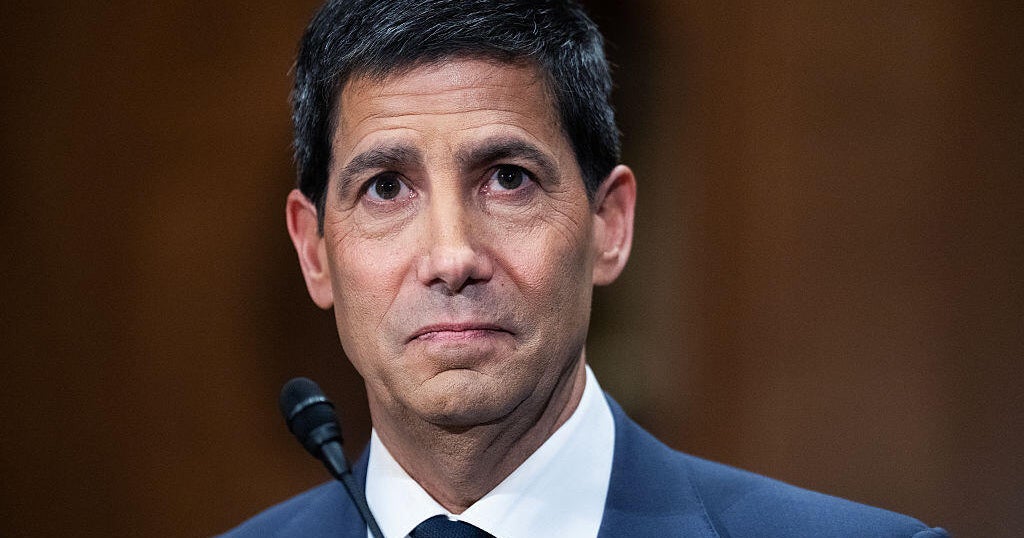

Kevin Warsh’s Path to Federal Reserve Leadership: What You Need to Know
The Critical Vote That Could Shape America’s Economic Future
This Wednesday morning marks a pivotal moment for the Federal Reserve and the American economy. The Senate Banking Committee is gathering to decide whether Kevin Warsh, President Trump’s chosen successor to Jerome Powell, will move one step closer to becoming the 17th chairman of the Federal Reserve since its establishment in 1913. The vote, scheduled for 10 a.m. Eastern Time, requires a simple majority of committee members to advance Warsh’s nomination to the full Senate floor. If he clears both hurdles, Warsh would take the helm of America’s central bank just as Powell’s term expires on May 15, positioning him to lead the Fed’s crucial June meeting where decisions affecting millions of Americans’ financial lives will be made. The timing is particularly significant as it coincides with the Fed’s Wednesday meeting, where officials are expected to maintain current interest rates while the political transition unfolds in the background.
The Republican Roadblock That Almost Derailed Everything
The path to Warsh’s confirmation hasn’t been without its dramatic moments. Senator Thom Tillis, a Republican from North Carolina, initially threw a wrench into what many assumed would be a straightforward confirmation process. In a move that highlighted the complex political dynamics at play, Tillis announced he would block Warsh’s nomination until the Justice Department completed its investigation into Jerome Powell regarding the controversial renovation of the Federal Reserve’s Washington, D.C., headquarters. This wasn’t just political theater – with Republicans holding only a slim majority on the Senate Banking Committee, Tillis’s single vote carried enormous weight. His opposition could have delayed or even derailed Warsh’s confirmation entirely, leaving the Federal Reserve in a state of uncertainty during a critical economic period. However, the situation took a decisive turn on April 24 when U.S. Attorney for the District of Columbia Jeanine Pirro announced her office would end its probe into Powell. With this obstacle removed, Tillis reversed course and indicated his willingness to support advancing Warsh’s nomination, clearing the way for Wednesday’s vote.
Walking the Tightrope: Independence in an Age of Political Pressure
Perhaps the most contentious aspect of Warsh’s nomination centers on questions about the Federal Reserve’s independence from political influence – a cornerstone principle of American monetary policy for generations. During his testimony before the Senate Banking Committee last week, Warsh found himself navigating treacherous political waters as he addressed concerns about President Trump’s very public and repeated calls for the central bank to cut interest rates. Trump’s vocal pressure on the Fed has raised alarm bells among economists, lawmakers, and market observers who worry about the erosion of the institutional independence that has traditionally insulated the Fed from short-term political considerations. Warsh’s response was unequivocal and carefully calibrated to reassure skeptics while avoiding direct criticism of the president who nominated him. “The president never asked me to predetermine, fix or decide on any interest rate decision, nor would I ever do so,” Warsh stated firmly in response to pointed questioning about whether Trump had pressured him to commit to rate cuts. He went further, pledging to remain “strictly independent” in setting monetary policy, a promise that will be closely watched if he assumes the chairmanship.
Understanding What’s at Stake for Everyday Americans
For those not immersed in the world of finance and monetary policy, the significance of this confirmation might seem abstract, but the decisions made by the Federal Reserve chairman directly impact the daily lives of millions of Americans. The Fed’s interest rate decisions influence everything from mortgage rates and car loans to credit card interest and savings account returns. They affect whether businesses expand and hire new workers or contract and lay people off. The chairman’s approach to inflation, employment, and economic stability shapes whether your paycheck goes further or gets squeezed by rising prices. When President Trump calls for rate cuts, he’s pushing for cheaper borrowing costs, which can stimulate economic growth and make him look good politically. However, cutting rates at the wrong time can fuel inflation, making everything from groceries to gas more expensive. This is why the Fed’s independence matters so much – the chairman needs to make decisions based on economic data and long-term stability rather than political calculations or election cycles. Warsh’s ability to resist political pressure while navigating these complex economic challenges will define his potential tenure and affect every American’s financial well-being.
The Man Behind the Nomination: Kevin Warsh’s Background
Kevin Warsh isn’t new to the Federal Reserve or to the pressures of economic policymaking during turbulent times. He previously served on the Fed’s Board of Governors from 2006 to 2011, a period that included the devastating financial crisis of 2008 and its aftermath. This experience gives him firsthand knowledge of how the Fed operates during both normal times and extraordinary emergencies. His supporters point to this background as evidence he’s prepared for the role, while critics examine his past positions and statements for clues about how he might handle future challenges. Warsh’s professional journey also includes time in the private sector and connections to Wall Street, which some view as valuable real-world experience and others see as potential conflicts of interest. His nomination represents President Trump’s vision for the Fed’s future direction, though Warsh has worked to establish his own identity as someone who will make independent judgments. The question facing senators on the Banking Committee is whether his experience, temperament, and stated commitment to independence make him the right person to guide American monetary policy through whatever economic conditions lie ahead.
What Happens Next and Why It Matters
If Wednesday’s Banking Committee vote goes as expected and Warsh receives approval, his nomination will advance to the full Senate floor, where he’ll need a simple majority to be confirmed. Given the Republican majority in the Senate, most observers anticipate he’ll ultimately be confirmed, though the debate and final vote will provide additional opportunities for senators to voice concerns and extract commitments about how he’ll approach the job. The timeline is particularly important because Powell’s term ends on May 15, and having a successor ready to step in immediately helps avoid any leadership vacuum at the Fed. Warsh would then preside over the June 16-17 Fed meeting, one of eight regularly scheduled meetings each year where the Federal Open Market Committee decides on interest rates and discusses economic conditions. These early meetings will set the tone for his chairmanship and provide the first real test of whether he’ll maintain the independence he’s promised or bend to political pressure for rate cuts. Financial markets, international observers, and everyday Americans will all be watching closely to see whether the institution that has guided American monetary policy for over a century can maintain its credibility and independence in an era of unprecedented political pressure and economic uncertainty. The stakes couldn’t be higher, and Wednesday’s vote is just the beginning of a story that will unfold over the coming years with profound implications for the nation’s economic future.