

Face the Nation: A Nation Grapples with War, Security, and Leadership
America Watches as Iran Conflict Escalates Beyond Expectations
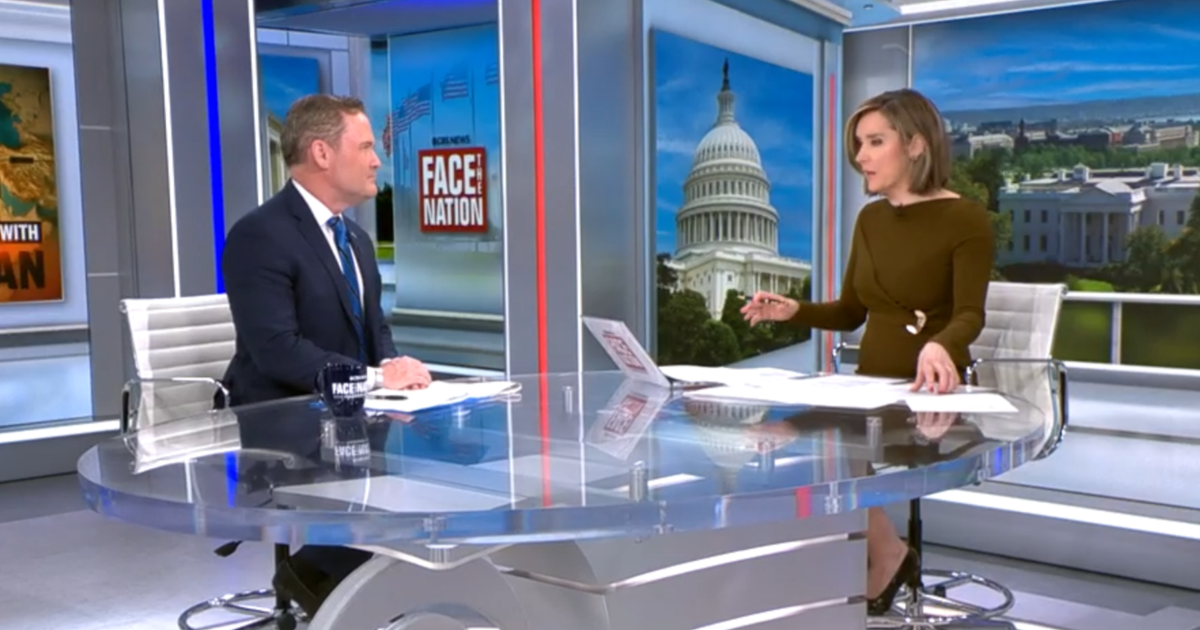
In a gripping episode of “Face the Nation,” host Margaret Brennan navigated through one of the most consequential foreign policy moments in recent American history. The March 22, 2026 broadcast brought together key decision-makers and witnesses to help Americans understand an increasingly complex military engagement with Iran that has raised more questions than answers. The program featured U.S. Ambassador to the United Nations Mike Waltz, NATO Secretary-General Mark Rutte, Colorado Democratic Congressman Jason Crow, International Atomic Energy Agency Director-General Rafael Grossi, and former hostages who shared their harrowing experiences in Iranian custody.
The conversation opened against a backdrop of alarming developments: Iranian ballistic missiles striking Israeli cities, causing nearly 200 injuries and destruction not seen since the conflict began. Perhaps most concerning was Iran’s launch of long-range missiles toward the joint U.S.-U.K. military base at Diego Garcia, roughly 2,000 miles away in the Indian Ocean. This demonstration of missile capability raised serious questions about whether Iran had developed intercontinental ballistic missiles capable of reaching European capitals and additional U.S. military installations—a technological leap that contradicted recent American intelligence assessments. As Charlie D’Agata reported from the ground in Arad, Israel, the physical evidence of Iran’s expanding military capabilities was impossible to ignore, with missile craters and devastation marking residential areas.
The Administration’s Mixed Messages on Military Strategy
Ambassador Mike Waltz’s appearance revealed the administration’s struggle to communicate a coherent strategy to the American people. When pressed by Brennan about President Trump’s seemingly contradictory statements—first suggesting other nations should police the Strait of Hormuz, then threatening to obliterate Iranian power plants within 48 hours if the waterway wasn’t reopened—Waltz attempted to reconcile these positions by suggesting both could happen simultaneously. He emphasized that European allies, Japan, and others were finally stepping up to share the burden of securing this critical shipping lane through which much of the world’s energy supplies flow.
The most troubling aspect of the interview came when Brennan questioned whether the president would bomb civilian energy infrastructure, including potentially the Bushehr nuclear power plant. Waltz refused to take any options off the table, raising serious concerns about potential war crimes and the collective punishment of innocent Iranian civilians. He argued that the Iranian Revolutionary Guard Corps controls much of Iran’s critical infrastructure, making it legitimate military targets, but struggled to articulate how the administration would prevent mass civilian casualties when water desalination and civilian power systems are interconnected with military infrastructure. This ambiguity did little to reassure Americans that the administration had carefully considered the humanitarian implications of its military campaign.
Europe Rallies, But Questions Remain About NATO’s Role
NATO Secretary-General Mark Rutte offered a more optimistic assessment of allied cooperation, announcing that 22 countries—including Italy, Germany, France, Japan, Korea, Australia, and several Middle Eastern nations—had committed to helping secure the Strait of Hormuz. However, Rutte was careful to note that this support would come after active combat operations ended, not during the current fighting. This timeline distinction became a point of tension, as President Trump had expressed frustration with what he called NATO’s delayed response, even calling the alliance “a paper tiger” and accusing European nations of cowardice for benefiting from open shipping lanes while being unwilling to help secure them.
Rutte defended the European response, explaining that the initial U.S. military operation, dubbed “Epic Fury,” had been conducted in secrecy for operational security reasons, preventing allies from planning their own contributions in advance. He praised President Trump’s leadership in pushing NATO members to commit 5 percent of their GDP to defense spending, calling it a historic achievement that equalized American and European defense contributions for the first time since the Eisenhower era. Yet uncomfortable questions remained about whether NATO members were truly prepared to support what many of them viewed as an offensive operation rather than the defensive alliance they had signed up for. The secretary-general’s careful diplomacy couldn’t entirely mask the underlying tensions between American expectations and European commitments.
The Nuclear Question: Can Military Force Destroy Iran’s Program?
Perhaps the most sobering conversation of the broadcast came with Rafael Mariano Grossi, Director-General of the International Atomic Energy Agency, who offered expert insight into what military action could and could not accomplish regarding Iran’s nuclear capabilities. Grossi acknowledged that significant damage had been done to Iranian facilities during the conflict, but he delivered a stark reality check: even extensive military campaigns cannot fully eliminate Iran’s nuclear potential. The enriched uranium, particularly material enriched to 60 percent (close to the 90 percent needed for weapons), would likely survive under rubble or in protected facilities. More importantly, Iran possessed the knowledge, expertise, and sophisticated centrifuge technology that cannot be bombed away.
Grossi explained that while physical infrastructure like centrifuges can be destroyed, they can be relatively reconstructed—he compared them to sophisticated washing machines that, while complex, don’t represent an insurmountable technological barrier. Iran had already mastered the most advanced, efficient centrifuge designs, far beyond the primitive technology that formed the basis of the 2015 nuclear agreement. He noted that military special forces operations to secure enriched uranium would face enormous challenges, as the material is contained in cylinders of highly contaminated uranium hexafluoride gas that is extremely difficult to handle. The conversation underscored a fundamental truth that contradicted the administration’s public messaging: military action alone could not permanently solve the Iranian nuclear challenge. Only diplomatic agreements with robust inspection regimes could provide the visibility and verification necessary to truly understand and constrain Iran’s nuclear ambitions.
Domestic Skepticism and the Cost of Conflict
Back home, the American public remained deeply skeptical about the Iran war, according to CBS News polling presented by Anthony Salvanto. A remarkable 66 percent of Americans viewed the conflict as a war of choice rather than necessity, while 60 percent disapproved of U.S. military action against Iran. Perhaps most damning, 57 percent believed the conflict was going “very or somewhat badly.” These numbers presented a significant political challenge for an administration that had launched military operations without congressional authorization and without clearly articulating achievable objectives.
Democratic Congressman Jason Crow voiced the frustration many in Congress felt about being sidelined from decision-making on a conflict that had already cost $20 billion in its first two weeks—$1.5 billion per day—while Americans were paying an additional $300 million daily in higher energy prices. Crow emphasized that Congress had received no briefings on timelines beyond the president’s vague “four to six weeks” statement and had not been asked to authorize what was clearly becoming a prolonged military engagement. The congressman, himself a veteran, refused to support additional funding for what he called “an unauthorized war” and criticized the Pentagon for sitting on a $150 billion allocation from the previous year while unable to pass a basic audit accounting for its spending.
The domestic political situation was further complicated by an ongoing government shutdown affecting the Department of Homeland Security, now in its 37th day due to Democratic opposition to Republican immigration policy demands. TSA agents were working without paychecks during the busy spring travel season, with some airports asking the public to donate gift cards so security personnel could make ends meet. This juxtaposition—spending $1.5 billion daily on a war abroad while airport security workers couldn’t afford groceries—crystallized the disconnect many Americans felt about their government’s priorities.
The Human Cost: Hostages Caught in Political Crossfire
The broadcast concluded with a poignant reminder of the human beings trapped by larger geopolitical forces. Former hostages Siamak Namazi and Emad Shargi, who had been wrongfully detained in Iran and later released, spoke about the Americans still held in Iranian custody: Reza Valizadeh and Kamran Hekmati. Neda Sharghi, Emad’s sister who had advocated tirelessly for her brother’s release, now worked to help other families navigate the nightmare of having loved ones held as political pawns.
Their message was clear and heartbreaking: innocent Americans detained abroad inevitably become hostages to broader political issues beyond their control. Neda expressed her wish that before engaging in negotiations with Iran, U.S. envoys should have demanded the unconditional release of American citizens as a precondition for talks. Both former hostages praised President Trump’s track record of bringing Americans home from captivity around the world during his previous term and expressed confidence that if he knew the names and cases of those currently detained, he would prioritize their release. Siamak Namazi noted that all wars eventually end with diplomacy, and he implored the president to ensure that whenever those negotiations began, bringing detained Americans home would be part of the discussion. Their testimony served as a reminder that behind every foreign policy debate are real people whose lives hang in the balance, ordinary Americans who traveled to care for family members and found themselves caught in international crises they never could have anticipated.
The episode of “Face the Nation” painted a picture of an America at a crossroads, engaged in a military conflict without clear objectives or an exit strategy, facing skepticism from its own citizens and uncertain support from allies, all while the experts who best understand the central issue—Iran’s nuclear program—warned that military action alone could not achieve the stated goals. As the conflict entered its fourth week with no resolution in sight, the questions that opened the broadcast remained unanswered: Is President Trump seeking an exit from this war, or is he doubling down? And what will it ultimately cost America—in treasure, in lives, in international standing, and in the trust between government and governed?