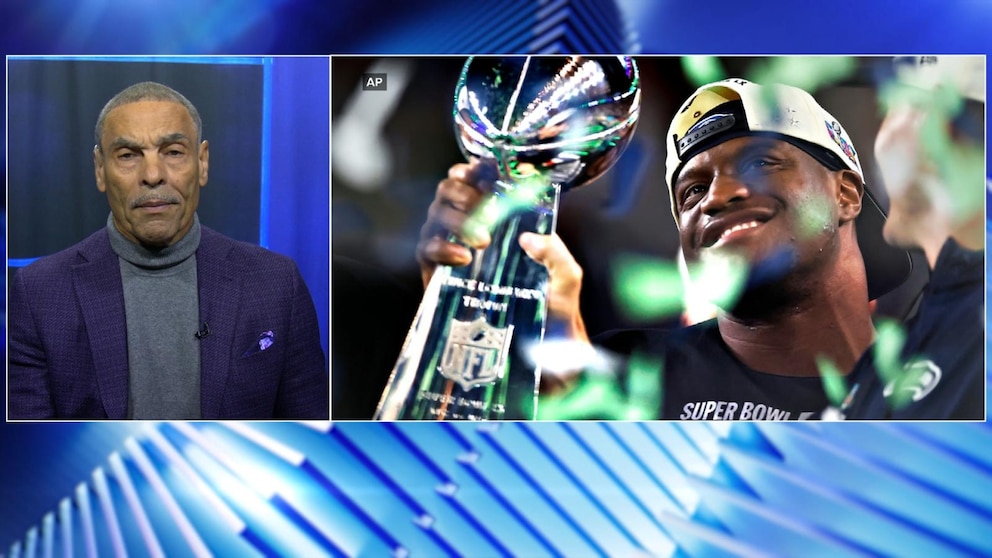

Herm Edwards Breaks Down Seattle’s Super Bowl Win
A Dominant Performance That Defined Championship Football
When the Seattle Seahawks took the field for Super Bowl XLVIII against the Denver Broncos, few could have predicted the absolute demolition that was about to unfold. Former NFL head coach and current ESPN analyst Herm Edwards provided one of the most insightful breakdowns of what turned out to be one of the most lopsided championship games in recent memory. The Seahawks’ 43-8 victory over Peyton Manning and the record-breaking Broncos offense wasn’t just a win—it was a statement that defense still wins championships in the modern NFL. Edwards, known for his passionate analysis and deep understanding of the game’s fundamentals, dissected every aspect of Seattle’s dominant performance, from their suffocating defense to their opportunistic offense and special teams play. The game, played at MetLife Stadium in New Jersey, showcased everything Edwards has long preached about championship football: physical dominance, mental preparation, and the ability to execute a game plan with precision and aggression.
The Legion of Boom’s Masterclass in Defensive Football
Herm Edwards spent considerable time analyzing what many consider the finest defensive performance in Super Bowl history. The Seattle secondary, famously known as the “Legion of Boom,” completely neutralized what had been the highest-scoring offense in NFL history. Edwards pointed out how Seattle’s defensive coordinator Dan Quinn devised a game plan that attacked every weakness in Denver’s offensive scheme while playing to his own team’s considerable strengths. The Seahawks’ defensive backs—Richard Sherman, Earl Thomas, Kam Chancellor, and Byron Maxwell—played with an aggressive physicality that set the tone from the opening snap. Edwards emphasized how Seattle’s defensive philosophy went beyond just talent; it was about attitude, communication, and playing as a cohesive unit. The way they pressed receivers at the line of scrimmage, eliminated timing routes, and made Peyton Manning uncomfortable in the pocket demonstrated textbook defensive football. Edwards noted that the Seahawks didn’t just read and react—they dictated terms to one of the greatest quarterbacks of all time, forcing him into rushed decisions and uncomfortable throws that resulted in two interceptions and countless incompletions.
Preparation and Mental Toughness Made the Difference
One aspect that Edwards highlighted extensively was the mental preparation that separated Seattle from Denver on that February evening. The Seahawks, led by head coach Pete Carroll, came into the game with a confidence that bordered on certainty. Edwards explained how Carroll’s positive coaching philosophy and the team’s youth worked in their favor—they weren’t burdened by the pressure that comes with championship expectations. Meanwhile, the Broncos, despite their experience and regular-season dominance, seemed rattled from the very first play when the snap sailed over Manning’s head for a safety. Edwards discussed how that early mistake—just 12 seconds into the game—set a tone that Denver never recovered from. The psychological impact of falling behind immediately against a defense as ferocious as Seattle’s created a snowball effect that Manning and the Broncos couldn’t stop. Edwards praised Seattle’s ability to capitalize on every Denver mistake while avoiding costly errors themselves, demonstrating the kind of complementary football that championship teams must play. The Seahawks’ preparation was evident in their adjustments, their communication, and their relentless pursuit of perfection on every snap.
Russell Wilson’s Efficient Championship Performance
While the defense rightfully received most of the attention, Herm Edwards made sure to give credit to Seattle’s young quarterback, Russell Wilson. In his breakdown, Edwards highlighted how Wilson didn’t need to be spectacular—he just needed to be smart, efficient, and mistake-free. Wilson completed 18 of 25 passes for 206 yards and two touchdowns, but more importantly, he didn’t turn the ball over. Edwards explained how Wilson’s game management and decision-making exemplified what coaches want from their quarterbacks in championship games. Wilson took what the defense gave him, didn’t force throws into coverage, and made plays with his legs when opportunities presented themselves. His 15-yard scramble on third down in the second quarter, which led to a Seattle touchdown, showcased his dual-threat ability and football intelligence. Edwards also praised Wilson’s leadership and poise, noting how the second-year quarterback handled the Super Bowl stage like a veteran. The play-action passes that Wilson executed to perfection kept Denver’s defense honest and prevented them from teeing off on the run game, creating the balanced offensive attack that kept Seattle in control throughout.
Special Teams Excellence and the Complete Team Victory
Herm Edwards emphasized that championship teams win in all three phases of the game, and Seattle’s special teams performance provided the exclamation point on their dominant victory. Percy Harvin’s 87-yard kickoff return for a touchdown to open the second half essentially ended any hope of a Denver comeback. Edwards broke down how Seattle’s special teams coordinator Brian Schneider had his unit prepared for that exact scenario, with blocking executed perfectly and Harvin displaying the explosive speed that made him such a valuable weapon. Edwards noted that special teams often get overlooked in game analysis, but in championship games, field position and momentum swings created by special teams can be the difference between winning and losing. Seattle’s coverage units also performed admirably, limiting Denver’s return game and consistently forcing the Broncos to start drives deep in their own territory. Edwards praised the complete team effort, noting how contributions came from every position group and every player who stepped on the field, from the stars to the special teams specialists who rarely get recognition.
Legacy and Lessons from a Championship Performance
In concluding his breakdown, Herm Edwards reflected on what Seattle’s Super Bowl victory meant for the franchise, the players involved, and the lessons it provided for the entire NFL. The Seahawks’ win validated their defensive-minded approach in an era increasingly dominated by offensive fireworks. Edwards discussed how Pete Carroll’s philosophy of competition in practice, aggressive defensive schemes, and building a team culture based on positivity and accountability paid the ultimate dividend. For the Legion of Boom, this game cemented their place among the great defenses in NFL history. For Russell Wilson, it validated the Seahawks’ decision to trust a third-round pick with their championship aspirations. Edwards also noted what the loss meant for Denver and Peyton Manning, acknowledging the difficulty of reaching and winning Super Bowls even with transcendent talent. The game served as a reminder that regular-season success doesn’t guarantee playoff results, and that the best-laid plans can crumble against a team that plays with superior physicality, focus, and execution. Edwards’ final takeaway emphasized the timeless football truth that inspired his famous “You play to win the game” philosophy—preparation, execution, and playing as a complete team in all three phases remains the formula for championship success, regardless of era or offensive trends. Seattle’s Super Bowl XLVIII victory stood as a perfect example of these principles in action.