



The Search for Nancy Guthrie: How Cutting-Edge Technology is Being Used to Find a Missing 84-Year-Old
Advanced Signal Detection Technology Enters the Search
The disappearance of Nancy Guthrie, the 84-year-old mother of NBC’s “Today” show co-host Savannah Guthrie, has entered its third week, prompting investigators to deploy sophisticated tracking technology in hopes of locating her. At the heart of this search effort is a specialized device known as a “signal sniffer,” a piece of technology capable of detecting signals emitted from electronic devices. The tool represents a new frontier in search and rescue operations, particularly for missing persons who may be carrying medical devices that emit trackable signals. David Kennedy, a former National Security Agency hacker who invented the signal sniffer being used in this investigation, has been working closely with law enforcement to maximize the technology’s potential in finding Guthrie, who vanished under suspicious circumstances from her Tucson, Arizona home in what authorities believe was an abduction.
The Mysterious Disappearance
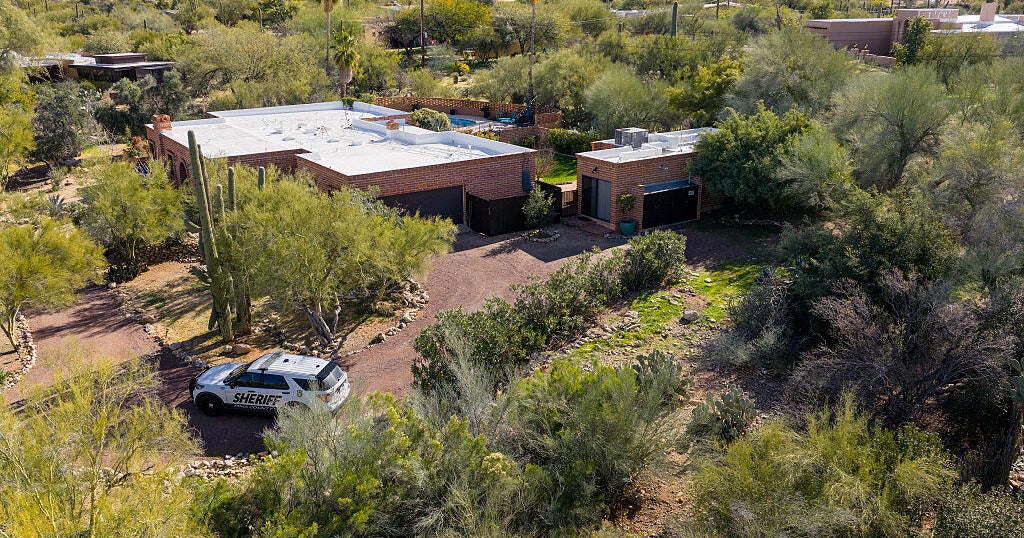
Nancy Guthrie was reported missing after she failed to appear at church services on February 1st, a routine she rarely missed. Investigators believe she disappeared in the middle of the night from her home in Tucson, Arizona, in what appears to be an abduction rather than a voluntary departure. The circumstances surrounding her disappearance became even more troubling when authorities discovered that her pacemaker was disconnected from the pacemaker monitoring app on her cellphone at exactly 2:28 a.m. This disconnection is particularly significant because it provides investigators with a specific timeline and suggests deliberate interference with her medical monitoring system. The fact that the pacemaker was intentionally disconnected from the phone app, rather than simply being out of range, has given investigators valuable information about the technology involved. According to Kennedy, this disconnection indicates that Guthrie’s pacemaker is equipped with Bluetooth Low Energy technology, a specialized power setting designed to allow the device to function for multiple years without requiring battery replacement or maintenance.
How the Signal Sniffer Technology Works
The signal sniffer represents a remarkable application of existing technology adapted for search and rescue purposes. Kennedy explained that while Bluetooth Low Energy typically has a limited range of only 10 to 15 feet under normal circumstances, the technology can be dramatically enhanced using signal amplifiers and high-gain antennas, extending the detection radius to several hundred feet. To demonstrate the technology’s potential, Kennedy conducted tests at his own home using a non-commercial drone modified with off-the-shelf components. Through these experiments, he was able to extend the device’s detection range to approximately 800 feet, a significant improvement that opens up new possibilities for search operations. The key to the technology’s effectiveness lies in the pacemaker’s regular signal emissions. Since the medical device sends out a Bluetooth signal every two to three minutes as part of its normal monitoring function, the signal sniffer can pick up these transmissions and pinpoint their location. Law enforcement officials can then view and trace these signals using Nancy Guthrie’s phone, creating a potential trail that could lead them directly to her location.
Deployment Strategies and Challenges
On Monday, law enforcement sources confirmed that the tracking tool was mounted on a helicopter, which flew slowly at low altitude over areas where investigators hope to find Guthrie. However, Kennedy believes the helicopter deployment was likely used as a quick stopgap measure to get a general sense of the area and identify potential locations of interest rather than as the most efficient search method. He explained that while a signal sniffer can be mounted on various platforms including drones, cars, or helicopters, each method has its advantages and limitations. Drones are generally more efficient for this type of operation because they can cover greater distances more quickly while maintaining the optimal altitude and position for signal detection. Helicopters and cars, while useful, can face interference issues from metal buildings or concrete walls that may block or distort the Bluetooth signals being tracked. The challenge facing law enforcement is that signal sniffers represent a relatively new capability, and most departments don’t yet have extensive fleets of drones equipped with this technology. Building out the necessary infrastructure will take time and resources that many agencies simply don’t have readily available.
The Potential for Expanded Search Capabilities
Kennedy outlined what an ideal search operation using this technology might look like with proper resources. He estimated that if investigators had access to approximately 50 to 60 drones, each equipped with signal sniffers and capable of covering a 300 to 800-foot radius, the search process could be dramatically accelerated. According to his calculations, such a fleet could cover a 120-square-mile radius in a substantially shorter timeframe than current methods allow. Rather than weeks or months of searching, Kennedy believes a properly equipped drone fleet could complete a comprehensive search of such an area in as little as one day to a few days, with a maximum of two weeks in the most challenging scenarios. However, he emphasized that the success of such an operation really comes down to three critical factors: available manpower, the number of trained drone operators, and the drone technology itself. Each of these elements must work in concert to create an effective search grid that maximizes coverage while minimizing gaps where signals might be missed.
Implications for Future Search and Rescue Operations
The use of signal sniffer technology in the search for Nancy Guthrie represents a potential turning point in how law enforcement approaches missing persons cases, particularly those involving elderly individuals with medical devices. As the population ages and more people rely on implanted medical devices with wireless connectivity, the ability to track these signals could become an invaluable tool for locating vulnerable individuals who have wandered off, been abducted, or become lost. The technology also highlights the double-edged nature of our increasingly connected world—while the same Bluetooth connectivity that allows medical professionals to monitor patients remotely can be seen as a privacy concern in some contexts, it may also provide a lifeline in emergency situations. As this search continues into its third week, the Guthrie family, investigators, and the broader public await any breakthrough that might bring Nancy home safely. The deployment of this advanced technology demonstrates the lengths to which authorities are willing to go and the innovative approaches they’re willing to try when a life hangs in the balance. Whether or not the signal sniffer ultimately leads to finding Nancy Guthrie, its use in this case will likely inform future search and rescue protocols and may accelerate the adoption of such technology by law enforcement agencies across the country.