


Airport Chaos: ICE Agents Step In As TSA Officers Walk Out During Government Shutdown
Understanding the Crisis at America’s Airports
Something unprecedented is happening at airports across America. Over this past weekend, travelers found themselves stuck in security lines that stretched from terminal entrances all the way out to parking lots. We’re talking about wait times of up to six hours at some of the nation’s busiest airports. The reason? A growing number of Transportation Security Administration officers have either quit their jobs or called in sick after missing yet another paycheck due to the ongoing partial government shutdown. When over 11.5% of TSA officers nationwide called out on a single Saturday—the highest rate since the shutdown began—it became clear that the situation had reached a breaking point. These are real people with real bills to pay, and after weeks of working without compensation, many simply couldn’t continue. The human toll of political gridlock in Washington has never been more visible than in these endless airport security lines, where exhausted travelers and overwhelmed security personnel are all caught in the crossfire of a budget battle.
The Government’s Controversial Response
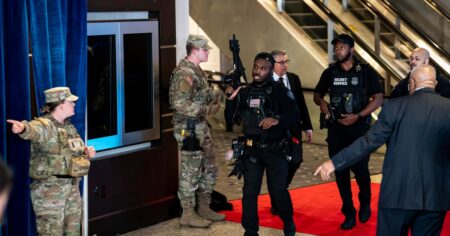
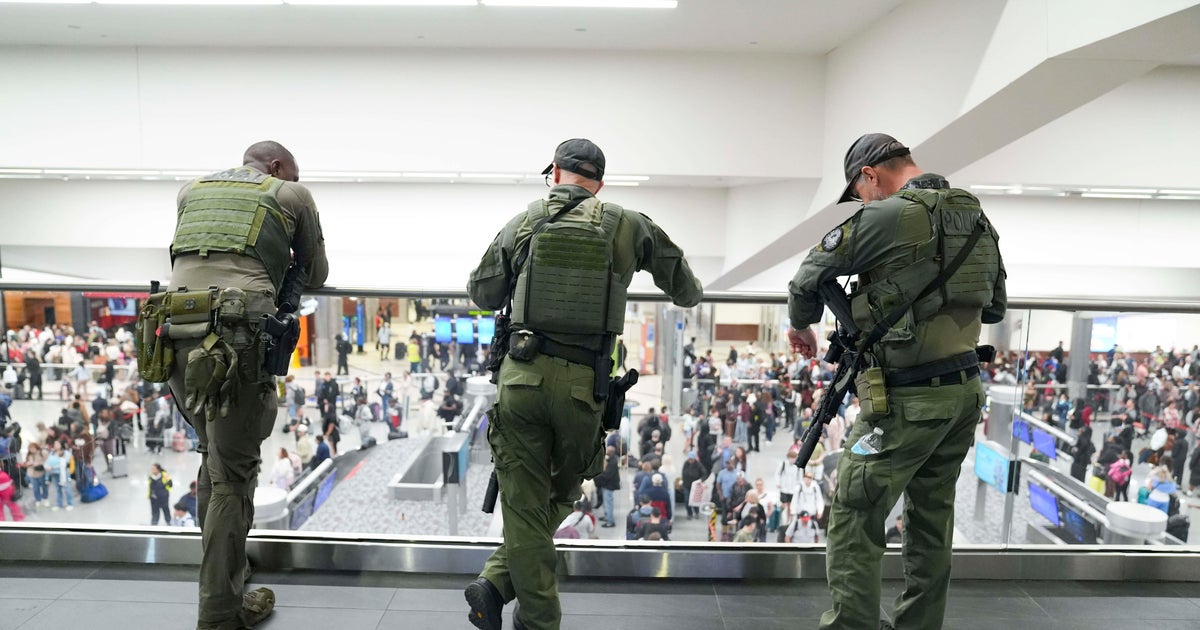
In response to this crisis, President Trump announced over the weekend that his administration would deploy Immigration and Customs Enforcement agents to airports experiencing the worst disruptions. By Monday morning, ICE agents were photographed arriving at some of America’s busiest travel hubs: Atlanta’s Hartsfield-Jackson International Airport, John F. Kennedy International Airport in New York City, O’Hare International Airport in Chicago, and they were expected at Pittsburgh International Airport as well. At Hartsfield-Jackson—the nation’s single busiest airport—these agents were seen patrolling outside security checkpoints, a sight that generated mixed reactions from travelers. The president even posted on Truth Social that he would “greatly appreciate” it if ICE agents didn’t wear masks at airports, adding another layer of controversy to an already contentious decision. This deployment represents an unusual crossover of duties: immigration enforcement officers being asked to help with airport security screening, two very different jobs requiring very different skill sets and training.
Real Stories from Exhausted Travelers
The human impact of this crisis is perhaps best illustrated through the experiences of individual travelers caught in the chaos. Julie Kwurt and her husband arrived at Hartsfield-Jackson four hours before their scheduled departure—following official advice—but still missed their flight despite their best efforts. “We’ve just been standing and standing,” Kwurt told CBS Mornings with obvious exhaustion in her voice. “Our feet are killing us, and my husband has a heart condition on top of that.” Her story is just one among thousands. Airport staff handed out water to crowds of people who had been waiting for hours in lines that seemed never-ending. Some travelers faced waits of up to six hours over the weekend, turning what should have been routine travel into an endurance test. When asked about the presence of ICE agents, travelers expressed divided opinions—some supported the deployment as a necessary measure to get things moving again, while others questioned whether it made sense, suggesting “it would be more beneficial just to have the TSA staff here.” These aren’t abstract policy debates; they’re conversations happening between real people who just want to get home to their families or make it to important business meetings.
The Training Gap and Safety Concerns
While the intention behind deploying ICE agents might be to alleviate the immediate crisis, serious questions have been raised about whether these agents are actually equipped to perform TSA duties. Everett Kelly, president of the American Federation of Government Employees—the union representing TSA officers—didn’t mince words in his assessment. He issued a statement declaring that TSA officers “deserve to be paid, not replaced by untrained, armed agents who have shown how dangerous they can be.” The concern isn’t just theoretical. TSA officers undergo specific, specialized training for airport security screening that ICE agents simply don’t receive. Their jobs are fundamentally different: one focuses on identifying threats to aviation security, the other on immigration enforcement. CBS News reported that ICE agents may actually be quite limited in what they can do to help unless they’ve already been issued Security Identification Display Area (SIDA) badges—special credentials that allow airport security employees to move past checkpoints. Without these badges and proper training, these agents might end up being little more than a visible presence, unable to actually process passengers through security checkpoints effectively.
The Political Dimension of a Human Crisis
The irony of this situation hasn’t been lost on political observers, particularly Democrats who have been vocal in their criticism of the ICE deployment. The very immigration enforcement tactics that these ICE agents typically carry out are among the central points of disagreement that led to the government shutdown in the first place. Now those same agents are being asked to fill in for federal workers who aren’t being paid because of that very same political standoff. It’s a circular problem that highlights how budget battles in Washington have real, immediate consequences for ordinary Americans—both the federal employees missing paychecks and the travelers trying to navigate the resulting chaos. Congress continues to fail to reach a deal on funding the Department of Homeland Security, the parent agency that oversees both TSA and ICE. Meanwhile, the human cost keeps mounting: TSA officers are resigning by the hundreds, not just calling out sick for a day. These are career professionals making the difficult decision to walk away from their jobs because they can’t afford to keep working without pay. They have mortgages, car payments, groceries to buy, and children to feed—bills that don’t stop just because politicians can’t agree on a budget.
Looking Forward: No Easy Solutions in Sight
As this crisis continues to unfold, there are no simple answers on the horizon. The deployment of ICE agents might provide some minimal relief in terms of visible security presence, but it doesn’t address the fundamental problem: trained TSA officers are walking away from their jobs or calling out because they’re not being paid. You can’t run an airport security system on goodwill alone, and federal workers can’t be expected to work indefinitely without compensation, no matter how essential their jobs might be. The longer this shutdown continues, the more officers will likely resign, and the worse the situation will become. The American traveling public is caught in the middle, facing hours-long waits, missed flights, and the stress of not knowing whether they’ll make it through security in time. Airport staff are doing their best to help, handing out water and managing increasingly frustrated crowds. But there’s only so much that can be done when the system itself is breaking down due to lack of funding and staffing. Until Congress and the White House can reach a budget agreement that funds the Department of Homeland Security and ensures these essential workers receive their paychecks, we’re likely to see more scenes of chaos at airports across the country. The question isn’t whether this crisis can continue—it’s how much longer travelers and federal workers will be forced to bear the burden of Washington’s dysfunction before something finally breaks through the political deadlock.