


The Battle for Illinois: A High-Stakes Senate Primary That Could Shape the Democratic Party’s Future
Immigration Enforcement Takes Center Stage in Democratic Primary
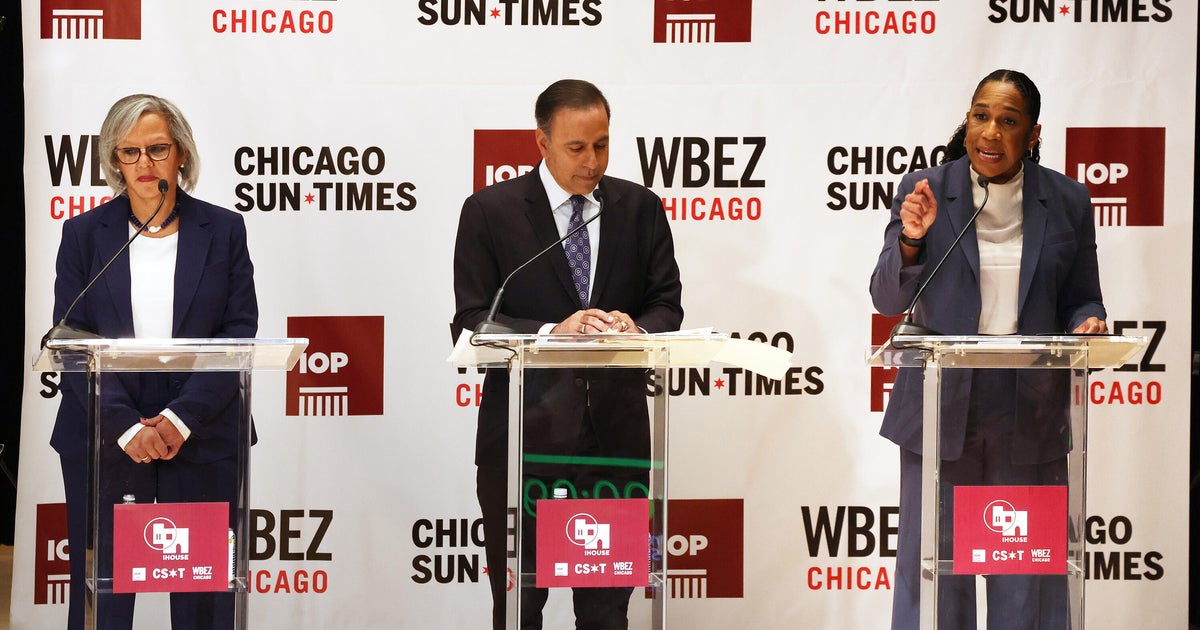
The race to replace longtime Illinois Senator Dick Durbin has become one of the most closely watched contests of the 2026 midterm elections, offering voters a glimpse into the evolving identity of the Democratic Party. With three strong candidates vying for the nomination—Lieutenant Governor Julianna Stratton, Representatives Raja Krishnamoorthi and Robin Kelly—the primary has emerged as a referendum on how Democrats should respond to President Trump’s aggressive immigration enforcement policies. The outcome of Tuesday’s Democratic primary could establish important precedents for how progressive candidates nationwide approach contentious issues like ICE reform and the role of big money in politics.
All three candidates have positioned themselves as fierce opponents of the Trump administration, particularly regarding immigration policy. Their campaigns have been shaped largely by the fallout from “Operation Midway Blitz,” an extended ICE operation in the Chicago area that resulted in controversial arrests and confrontations with protesters. Local leaders condemned the operation as excessive and unwarranted, and the public outcry has forced each candidate to articulate their vision for immigration reform. While all three have called for major changes to ICE, their approaches differ in important ways that reveal the spectrum of thinking within the Democratic Party on this critical issue.
The candidates’ positions on immigration enforcement range from reform to complete abolition. Krishnamoorthi has called for abolishing President Trump’s use of ICE, while Stratton wants to shutter the agency entirely and prosecute agents who have violated the law. Kelly has staked out the most progressive position, advocating for the dismantling of both ICE and the entire Department of Homeland Security. Stratton envisions a “total revamp” of immigration enforcement that would prioritize immigration judges and community-based social services over armed federal agents. She expressed her outrage at seeing CBP officers “marching down Michigan Avenue in Chicago,” arguing that ICE is beyond reform and must be abolished entirely.
When pressed on whether she could persuade a majority of Senate Democrats to support abolishing ICE, Stratton avoided giving a direct answer but insisted that voters are tired of Washington’s status quo. She has called on Democrats to continue blocking DHS funding, a strategy that has resulted in a departmental shutdown since mid-February following the tragic shootings of Renee Good and Alex Pretti in Minnesota. “We have a president who’s not even a normal person,” Stratton said, “and so I don’t think that business as usual is gonna cut it anymore.” Kelly’s position goes even further, as she’s the only candidate calling for DHS to be completely dismantled and rebuilt from scratch, arguing that not just ICE but also Border Patrol and USCIS are fundamentally broken.
Krishnamoorthi maintains there are no substantial differences between his position and Stratton’s on ICE, though his rhetoric is somewhat more measured. He has pledged not to give ICE or CBP “another nickel” and supports requiring agents to wear identification and body cameras while banning them from wearing masks. He also advocates for independent investigations into use-of-force incidents. Krishnamoorthi dismisses concerns that aggressive anti-ICE messaging might hurt Democrats politically, arguing that most Americans recognize that federal immigration enforcement agencies are “acting recklessly, outta control with impunity, illegally and unconstitutionally.” While polling shows that a majority of Democratic and independent voters believe ICE operations should be reduced, the moderate think tank Third Way has warned that calls to abolish ICE could prove “politically lethal” in competitive states, suggesting the agency should be reformed rather than eliminated.
Money, Power, and Influence: The Role of Outside Spending
Beyond immigration policy, the Illinois Senate primary has become a case study in the influence of money in modern politics, with two very different sources of outside funding drawing scrutiny. Krishnamoorthi has significantly outraised and outspent his opponents, maintaining a constant advertising presence across Illinois since last July. According to AdImpact, an advertisement tracking firm, he has outspent Stratton on ads by more than $20 million. Additionally, his campaign has been supported by approximately $10 million in spending from Fairshake, a super PAC funded by prominent Silicon Valley figures including venture capital firm Andreessen Horowitz and executives from Coinbase, the cryptocurrency exchange.
The involvement of crypto-industry money has given Krishnamoorthi’s opponents an opening to question his independence. They’ve highlighted that Andreessen Horowitz’s founders donated to a pro-Trump super PAC during the 2024 election, attempting to create an association between Krishnamoorthi and Trump backers. The congressman has pushed back forcefully against suggestions that he would be beholden to cryptocurrency interests, characterizing himself as supporting “common sense” regulations for digital assets. He has also called for “fundamental change” to the campaign finance system and supports overturning Citizens United, the Supreme Court decision that enabled unlimited corporate and super PAC spending in elections—an ironic position given his benefit from such spending.
While Stratton has criticized the corporate PACs supporting Krishnamoorthi, she faces her own questions about outside money, though from a different source. Governor JB Pritzker, one of America’s wealthiest politicians, gave more than $5 million to the Illinois Future PAC in December to support his lieutenant governor’s Senate bid. That super PAC has now spent over $12 million on the race, and additional Pritzker donations may not yet be publicly disclosed. Krishnamoorthi has characterized Pritzker’s financial intervention as the only reason Stratton has remained competitive, saying “I’m not beholden to one person, one family, one industry or anything.” Stratton defends the distinction between corporate PAC money and Pritzker’s support, arguing that the governor “has been working his entire life, and certainly as governor, to uplift every community across Illinois. That’s not the same.”
Pritzker’s Power Play and Its Implications for 2028
Governor Pritzker’s deep involvement in the Senate primary has added another fascinating dimension to the race. Stratton’s campaign team and the Illinois Future PAC are staffed with Pritzker loyalists, and several of her television advertisements prominently feature the governor’s endorsement. Stratton has embraced this connection, stating she’s “proud to have Governor Pritzker’s support” and crediting her strong working relationship with him. However, Pritzker’s decision to throw his political and financial weight behind Stratton rather than remaining neutral has generated significant controversy, particularly among members of the Congressional Black Caucus.
The CBC has endorsed Kelly, who is also Black like Stratton, and its leaders have not hidden their frustration with Pritzker’s interference. CBC Chair Representative Yvette Clarke called Pritzker’s involvement “beyond frustrating,” telling Punchbowl News that “quite frankly, [Pritzker’s] behavior in this race won’t soon be forgotten by any of us.” Representative Jim Clyburn of South Carolina, a highly influential figure in Democratic politics, traveled to Chicago to raise money for Kelly, signaling the depth of concern among Black Democratic leaders. The tension stems partly from Pritzker’s past decision to remove Kelly as chair of the state Democratic Party, a move that created lasting political animosity.
Pritzker has defended his endorsement by saying, “I would like a Black woman to represent us in the United States Senate. I just want the best person. She happens to be a Black woman”—a statement that acknowledges the historic nature of potentially electing a Black woman to the Senate while sidestepping the concerns about his decision-making process. The governor’s heavy involvement in the primary carries risks that extend beyond this single race. Political strategist Frank Calabrese observed that if Stratton loses despite Pritzker’s millions of dollars in support, “it will make him look ineffective in his own state”—a potentially damaging perception for a governor who may harbor presidential ambitions.
Pritzker has told the New York Times that he’s not currently considering whether to launch a 2028 presidential campaign and remains focused on his own reelection as governor this year. However, political observers view his actions in the Senate primary as potentially testing his influence ahead of a possible White House run. The ability to deliver a Senate seat for his chosen candidate would demonstrate formidable political power and fundraising capability—key assets for any presidential campaign. When asked about Pritzker’s presidential prospects, Stratton enthusiastically said he would be “a fantastic” candidate, while Krishnamoorthi diplomatically declined to speculate, noting that as senator he would need to work with leaders “from any party” including the governor.
What This Race Means for the Democratic Party’s Direction
The Illinois Senate primary represents more than just a competition to fill one seat; it’s a microcosm of larger debates within the Democratic Party about ideology, tactics, and values. The question of how aggressively to confront Trump administration policies, particularly on immigration, divides not just these three candidates but Democrats nationwide. Progressive activists argue that the party must take bold stances and fight Trump with equal intensity, while moderates worry that positions like abolishing ICE or DHS could alienate swing voters in competitive states and districts. The outcome in Illinois may influence which approach other Democratic candidates embrace in upcoming primaries.
The role of money in the race also raises fundamental questions about the party’s values. Democrats have long criticized Republicans for being beholden to wealthy donors and corporate interests, yet this primary features both crypto-industry money and a billionaire governor’s personal wealth playing decisive roles. The philosophical question of whether there’s a meaningful difference between corporate super PAC funding and funding from a wealthy individual—even a progressive Democratic governor—remains unresolved. Both Krishnamoorthi and Stratton have had to defend their reliance on outside spending while simultaneously criticizing the campaign finance system that enables it.
As Illinois Democrats head to the polls on Tuesday, they’ll be making a choice that reverberates far beyond their state’s borders. Will they select the candidate with the most campaign resources and establishment institutional support, the one backed by their powerful governor, or the one championed by influential Black leaders in Congress? Will they reward the most aggressive position on immigration enforcement or opt for a more measured approach? The answers will provide important signals about where the Democratic Party stands as it heads into what promises to be a challenging midterm election cycle under a Republican administration that has already proven willing to test constitutional boundaries and democratic norms in unprecedented ways.