

Iran Conflict Update: Funerals, International Criticism, and Regional Tensions Escalate
Mass Funerals Held Across Tehran for Military Casualties
Iran’s state-controlled media outlets reported massive public funeral processions taking place in central Tehran on Wednesday, honoring high-ranking military commanders and civilians who have lost their lives in the ongoing conflict with the United States and Israel. The somber ceremonies began at Enghelab Square, where state television claimed enormous crowds of Tehran residents gathered to pay their respects to what officials called “fallen heroes.” This marked the second consecutive day of major funeral services for military personnel and officers, highlighting the mounting human cost of the escalating conflict. A CBS News producer stationed in Tehran received an invitation to attend a burial ceremony held Tuesday just outside the Iranian capital, though the tightly controlled media environment made independent reporting challenging.
The Iranian government has maintained strict control over what information reaches the public, refusing to allow media organizations to broadcast any anti-regime perspectives from within the country. Despite promises of complete anonymity, no one willing to speak against either the war or the government would agree to appear on camera during Tuesday’s burial ceremony. This media blackout reflects the authoritarian grip the Iranian leadership maintains over public discourse, particularly during times of national crisis. The funeral processions serve not only as mourning ceremonies but also as carefully orchestrated displays of national unity and resolve, designed to bolster public support for the regime’s military actions and to demonstrate strength in the face of foreign aggression.
Devastating Naval Attack Claims 84 Iranian Lives
In a significant escalation of hostilities, a Sri Lankan court has ordered the return to Iran of 84 bodies of Iranian soldiers killed when a U.S. submarine attacked their warship off Sri Lanka’s southern coast. The Iranian warship IRIS Dena was returning from a naval exercise organized by India when it was struck by a torpedo fired from an American submarine. The attack, which occurred last Wednesday, represents one of the deadliest single incidents in the conflict thus far. The bodies of the deceased have been held in the morgue of Galle National Hospital while diplomatic arrangements were made for their repatriation. Only 32 people survived the devastating attack, according to international news agencies.
Adding to the complexity of the situation, Sri Lankan authorities have issued visas for 208 crew members of a second Iranian vessel that experienced engine problems in the same maritime area where the IRIS Dena was attacked. This development raises questions about whether the engine troubles were coincidental or potentially related to the hostile environment in those waters. The attack on the Iranian warship marks a direct confrontation between U.S. and Iranian military forces, significantly raising the stakes in what has become a widening regional conflict with potentially global implications.
International Criticism Mounts as Italy Questions Legality of Military Actions
In a surprising diplomatic development, Italian Prime Minister Giorgia Meloni, traditionally considered an ally of former President Trump, publicly suggested that both the United States and Israel have violated international law through their ongoing military campaign against Iran. Speaking before Italy’s senate on Wednesday, Meloni placed the American and Israeli intervention within the context of “a crisis of the international system in which threats are becoming increasingly terrifying and unilateral interventions conducted outside the perimeter of international law are multiplying.” Her comments represent a significant break from the expected support of a Western ally and signal growing international discomfort with how the conflict is being conducted.
Meloni was particularly forceful in condemning what she called “the massacre of girls at the school in Minab, southern Iran,” referring to a strike on the first day of the war that Iranian authorities blame on either the U.S. or Israel. According to Iranian state media, at least 168 children were killed in the attack on the girls’ school. The Italian leader demanded that responsibility for this tragedy be “swiftly ascertained,” highlighting the urgent need for accountability. Israel has categorically denied any connection to the strike, while President Trump has blamed Tehran for the attack while also stating that Washington is investigating the incident. A preliminary U.S. assessment shared with CBS News suggests that the United States was “likely” responsible for the deadly attack but did not intentionally target the school, with outdated or faulty intelligence possibly contributing to the tragic error. Meloni emphasized that Italy does not have “a government here that is complicit in other people’s decisions, much less one that is isolated in Europe, or culpable for the economic consequences the crisis may have on citizens and businesses,” attempting to distance her administration from the military actions while acknowledging the severe economic impact the conflict is having on Italian citizens and businesses.
Regional Allies Face Missile Shortages and Continued Attacks
The United Arab Emirates announced Wednesday morning that it was intercepting yet another wave of missiles and drones launched by Iran, with the country’s Ministry of Defense explaining that loud explosions heard across various parts of the nation were “the result of air defense systems intercepting ballistic missiles and fighter jets intercepting drones and other aerial vehicles.” The UAE has endured relentless attacks since the war began on February 28, and the strain on the country’s defensive capabilities is becoming increasingly apparent. Multiple sources have confirmed to CBS News that the White House is aware that America’s Gulf allies are running dangerously low on missile interceptors, forcing military commanders to make difficult choices about which incoming threats to destroy and which to allow through their defenses.
Dubai’s government reported that four people sustained injuries when drones fell in or near Dubai International Airport, with casualties including two Ghanaian nationals, one Bangladeshi national, and one Indian national who suffered moderate injuries. Despite these attacks, authorities insisted that air traffic was operating normally, though the targeting of such a critical piece of civilian infrastructure raises serious concerns about the expanding scope of the conflict. CBS News’ Margaret Brennan first reported on March 5 that Gulf states were experiencing critical shortages of missile interceptors and had requested expedited supplies from the United States. While U.S. allies in the region were told that officials in Washington were creating a task force to provide new supplies, sources indicate the assistance isn’t arriving as quickly as desperately needed, leaving these nations increasingly vulnerable to continued Iranian strikes.
Maritime Threats Intensify Across Strategic Waterways
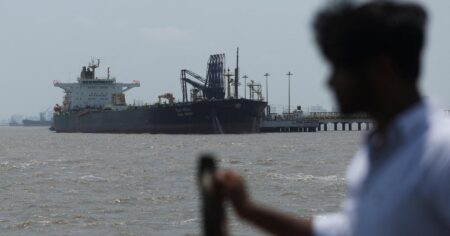
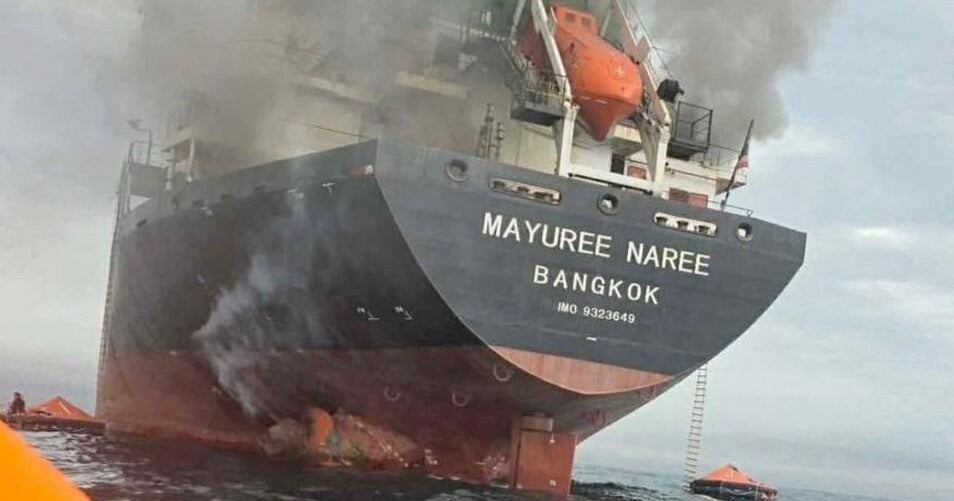
Multiple cargo and container ships were struck by projectiles in and around the strategically vital Strait of Hormuz early Wednesday morning, just hours after President Trump warned Iran to stop interfering with shipping traffic through the critical waterway. The Thai-flagged bulk carrier Mayuree Naree was hit by a projectile just north of Oman in the strait, causing a fire on board that was subsequently extinguished, though significant damage was sustained. British military authorities confirmed that a skeleton crew remained aboard the damaged vessel, and fortunately, there was no environmental impact from the incident.
Additional vessels targeted included the Japanese-flagged container ship ONE Majesty, which was struck about 25 nautical miles northwest of the UAE port of Ra’s al Khaymah, and the Marshall Islands-flagged bulk carrier Star Gwyneth, hit approximately 50 nautical miles northwest of Dubai. While all crew members were reported safe across these incidents, the attacks demonstrate Iran’s willingness to target international shipping as part of its response to U.S. and Israeli military actions. The Strait of Hormuz serves as one of the world’s most important oil transit chokepoints, with roughly one-fifth of global petroleum passing through these narrow waters. Any sustained disruption to shipping in this area could have catastrophic effects on global energy markets and the broader world economy. Iran’s new military threats to target banks across the Middle East linked to the U.S. and Israel, following an alleged attack on an Iranian bank, suggest the conflict may be expanding beyond purely military targets to include economic infrastructure, potentially drawing more nations and institutions into the widening crisis.
Leadership Questions and Humanitarian Concerns Deepen Crisis
Amid the chaos of war, questions have emerged about the condition of Iran’s new supreme leader, Mojtaba Khamenei, following reports that he sustained injuries during the conflict. Yousef Pezeshkian, son of the Iranian president and a government adviser, took to social media to confirm that Khamenei is “safe and sound” despite earlier reports suggesting he had been wounded. Iranian state television had referred to Khamenei as a “wounded veteran of the Ramadan war” but never provided specific details about any injury. The 56-year-old Mojtaba Khamenei assumed the position of supreme leader following the death of his father, Ayatollah Ali Khamenei, who was killed in the U.S.-Israeli strikes on February 28 that triggered this regional war. The younger Khamenei, a notoriously private figure who rarely appears in public or speaks at official events, has not addressed the Iranian nation or issued any written statement since being declared supreme leader on Sunday, raising questions about the stability of Iran’s leadership during this critical period.
The humanitarian dimensions of the conflict continue to expand as Greece announced it would cap profit margins on gasoline and various food products for three months to prevent war-related price increases from devastating ordinary citizens. Prime Minister Kyriakos Mitsotakis warned retailers against “profiteering” during the crisis, implementing state caps that limit how much certain sectors can mark up consumer retail sales. Meanwhile, Reza Pahlavi, an exiled Iranian opposition figure and son of the former shah whose name has been chanted during recent protests across Iran, issued a dramatic statement urging Iranians to prepare essential supplies, stay in their homes, continue striking, and await his “final call” for unspecified action. Six members of the Iranian national women’s soccer team were granted asylum in Australia, though one later changed her mind and decided to return to Iran, highlighting the difficult personal choices individuals face amid national crisis. Israeli military forces issued new evacuation orders for six areas of southern Lebanon, claiming Hezbollah activities were forcing them to take action, while warning that any home used for military purposes would be targeted. As the conflict enters its second week with no clear path toward de-escalation, the human, economic, and diplomatic costs continue mounting across the entire Middle East region.