



Why War in Iran Will Push Up Food Prices
The Critical Junction of Global Food Security and Middle Eastern Conflict
The possibility of war in Iran isn’t just a geopolitical crisis confined to the Middle East—it’s a looming threat to kitchen tables around the world. When we think about international conflicts, our minds typically jump to humanitarian concerns, diplomatic tensions, or military strategy. However, one of the most immediate and tangible impacts of potential war in Iran would be felt by everyday families struggling to afford their weekly groceries. The connection between Middle Eastern stability and food prices might not be immediately obvious, but it’s both direct and devastating. Iran occupies a uniquely strategic position in global food systems, not just as a producer but as a critical link in the supply chains that feed billions of people. Any military conflict in the region would send shockwaves through global markets, triggering price increases that would particularly hurt vulnerable populations already grappling with inflation and economic uncertainty. Understanding this connection is crucial for anyone concerned about food security, economic stability, or the far-reaching consequences of international conflict.
Iran’s Strategic Role in Global Energy and Food Transportation
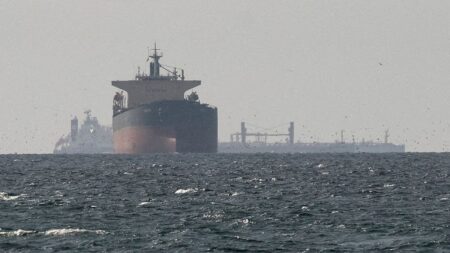
To understand why conflict in Iran would spike food prices, we first need to recognize Iran’s pivotal position in global energy markets and shipping routes. The Strait of Hormuz, a narrow waterway bordering Iran, is one of the world’s most critical maritime chokepoints, with approximately one-fifth of the world’s petroleum passing through it daily. This might seem unrelated to food prices at first glance, but energy costs are intrinsically linked to food production and distribution. Modern agriculture is extraordinarily energy-intensive—from the diesel that powers tractors and harvesters to the natural gas used to produce fertilizers, from the refrigeration that preserves fresh produce to the fuel that transports food across continents. When energy prices spike due to supply disruptions, food prices inevitably follow. A war involving Iran would almost certainly disrupt shipping through the Strait of Hormuz, whether through direct military action, increased insurance costs for vessels, or shipping companies simply avoiding the region altogether. The resulting energy price shock would ripple through the entire food system, increasing costs at every stage from farm to fork. Beyond petroleum, Iran itself is a significant producer of various agricultural products and sits along crucial trade routes that connect Asia, Europe, and Africa. Any conflict would disrupt these established pathways, forcing costly rerouting and delays that would ultimately be passed on to consumers.
The Fertilizer Crisis and Agricultural Input Costs
One of the most immediate ways war in Iran would impact food prices is through the fertilizer market, a sector already experiencing significant volatility in recent years. Iran is a major producer of nitrogen-based fertilizers, and the broader Middle East region is home to substantial fertilizer production capacity that relies on natural gas as both an energy source and a key ingredient. When the Russia-Ukraine conflict disrupted global fertilizer supplies, farmers worldwide faced unprecedented cost increases, and many were forced to reduce fertilizer application, ultimately diminishing crop yields. A conflict involving Iran would trigger a similar or even more severe disruption. The resulting fertilizer shortage and price spike would force farmers everywhere to make difficult choices: either absorb the higher costs (which most cannot afford), reduce fertilizer use and accept lower yields, or pass the costs along to consumers through higher prices for their crops. This isn’t a problem that resolves quickly either—agricultural markets operate on seasonal cycles, meaning that disruptions to planting seasons can impact food availability and prices for months or even years afterward. Small-scale farmers in developing countries, who already operate on razor-thin margins, would be particularly vulnerable. Many might be priced out of fertilizer markets entirely, leading to reduced harvests and potential food shortages in regions already facing food insecurity. The domino effect from fertilizer disruptions alone could push millions more people into hunger while making basic staples unaffordable for countless families.
Regional Wheat Production and Supply Chain Vulnerabilities
The Middle East and Central Asia region, where Iran is located, plays an outsized role in global wheat markets—not necessarily as the world’s largest producer, but as a critical nexus of production, consumption, and trade routes. Iran itself is a significant wheat importer, relying on international markets to feed its population of over 85 million people. In the event of war, Iran would likely increase its wheat purchases dramatically to build strategic reserves, creating sudden additional demand that would push up global prices. More significantly, conflict in Iran would threaten wheat exports from neighboring countries and disrupt the transportation corridors that carry grain from major producers like Russia, Kazakhstan, and other Central Asian nations to international markets. We’ve already witnessed how sensitive wheat markets are to Middle Eastern instability—when Russia invaded Ukraine in 2022, wheat prices soared to record levels because those two countries together account for nearly a quarter of global wheat exports. A war in Iran would create similar supply anxieties, triggering panic buying by governments concerned about food security and speculative trading that drives prices even higher. Countries in North Africa and the Middle East, which import the majority of their wheat, would face the most immediate crisis, but the effects would spread globally. Wheat isn’t just about bread—it’s a staple grain that anchors food security for billions and serves as a benchmark for other grain prices. When wheat prices spike, rice, corn, and other grain prices typically follow, creating a comprehensive food crisis rather than a shortage of a single commodity.
Currency Fluctuations, Speculation, and Market Panic
Beyond the direct physical disruptions to food production and transportation, war in Iran would trigger financial market reactions that would independently drive up food prices. Commodity markets are highly sensitive to geopolitical instability, and traders often respond to crisis signals by bidding up prices in anticipation of future shortages—a self-fulfilling prophecy that creates immediate price increases even before any actual supply disruptions occur. When major conflicts erupt, particularly in strategically important regions like the Middle East, investors typically flee to safe-haven assets, causing currency fluctuations that impact food prices. Many developing countries would see their currencies weaken against the dollar (the currency in which most international food commodities are traded), making imports more expensive even if the underlying commodity price remained stable. This currency effect would compound the direct price increases, creating a double burden for countries least able to afford it. Additionally, war introduces enormous uncertainty into markets, and uncertainty itself carries a cost. Shipping companies increase their rates to compensate for heightened risks. Insurance premiums for cargo traveling through or near conflict zones skyrocket. Banks become more cautious about financing agricultural trade, increasing the cost of the credit that oils the wheels of global commerce. All of these fear-driven cost increases get passed along the supply chain, ultimately landing on consumers. History has repeatedly demonstrated that food price spikes triggered by geopolitical events can persist long after the immediate crisis has passed, as markets remain jittery and systems take time to reestablish equilibrium.
The Human Cost and Long-Term Implications for Global Food Security
While discussing supply chains, commodities, and market mechanisms, it’s crucial to remember that food price increases aren’t abstract economic phenomena—they represent genuine human suffering and can have profound political and social consequences. For families in wealthy nations, food price increases might mean budget adjustments and lifestyle changes. For the estimated two billion people who spend more than half their income on food, price spikes can mean the difference between eating and going hungry, between sending children to school or pulling them out to work, between stability and desperation. History shows that food price shocks are frequently followed by political instability, protests, and even revolutions—the Arab Spring uprisings of 2011 were partly triggered by wheat price increases. A war in Iran that drives up global food prices could destabilize governments far from the Middle East, creating secondary crises that compound the original problem. The long-term implications are equally concerning. Prolonged high food prices discourage the agricultural investments needed to increase production capacity, as uncertainty makes farmers and agricultural businesses reluctant to expand. Countries may respond to food security fears by implementing protectionist policies—export bans, hoarding, and subsidies that distort markets and make the global food system less efficient and more fragile. The poorest countries, already vulnerable to climate change, debt burdens, and weak governance, would find their development progress reversed, potentially losing years or decades of hard-won gains against poverty and malnutrition.
The potential for war in Iran to disrupt global food systems is a stark reminder of how interconnected our world has become and how conflicts in one region can have immediate, tangible impacts on families thousands of miles away. While diplomatic efforts to prevent such a conflict should be pursued for countless reasons, the threat to global food security ranks among the most immediate and widespread consequences. Policymakers, international organizations, and concerned citizens should recognize these vulnerabilities and work toward both conflict prevention and building more resilient food systems that can better withstand shocks. The goal should be a world where a family’s ability to put food on the table isn’t held hostage to geopolitical events beyond their control or comprehension, where food security is treated as the fundamental human right it is, protected from the devastating ripple effects of distant wars.