

The Long Road to Recovery: Why Oil Supply Disruptions Will Persist After Iran Conflict
The Infrastructure Challenge Behind the Strait of Hormuz Crisis
Even if peace negotiations between the United States, Iran, and Israel bear fruit in the coming weeks, the global oil market shouldn’t expect an immediate return to normalcy. According to Henning Gloystein, a leading expert at the geopolitical risk consultancy Eurasia Group, the damage inflicted on critical energy infrastructure throughout the Persian Gulf region means we’re looking at months of recovery time, not weeks. The conflict has taken a significant toll on oil refineries and related facilities that power much of the world’s energy supply. Beyond the physical damage to these installations, there’s the complex matter of shipping operations to consider. Even in the best-case scenario where a ceasefire is declared tomorrow, maritime companies operating the massive oil tankers that ply these waters would need at least two months before they could safely resume their normal routes and schedules. This isn’t simply a matter of flipping a switch – it involves careful risk assessment, insurance considerations, crew safety protocols, and the coordination of an intricate logistics network that spans continents.
A Waterway Brought to a Standstill
The Strait of Hormuz, that narrow passage of water through which roughly a fifth of the world’s oil supply typically flows, has become a virtual no-go zone for commercial shipping. A United Nations panel released sobering statistics that paint a picture of just how dramatically the situation has deteriorated. In February, before the current crisis escalated to its present intensity, approximately 130 ships would transit through the strait each day – a steady stream of commerce connecting the oil-rich nations of the Persian Gulf with energy-hungry markets around the globe. By March, that number had plummeted to just six ships per day, representing a collapse in traffic that has rarely been seen in modern maritime history. The implications of this bottleneck are staggering. The Strait of Hormuz isn’t just another shipping lane; it’s one of the world’s most critical energy chokepoints, a narrow passage where the global economy’s lifeblood must flow. When that artery becomes blocked or severely restricted, the effects ripple outward in every direction, touching everything from the price you pay at the pump to the cost of goods shipped across oceans.
The Singapore Standoff: A Floating Traffic Jam
Perhaps the most striking visual evidence of this disruption can be found thousands of miles away from the conflict zone itself, off the eastern coasts of Singapore and Malaysia. There, at least 70 massive crude oil tankers sit at anchor, empty and waiting. These aren’t small vessels – collectively, they possess the capacity to transport more than 100 million barrels of crude oil, an almost incomprehensible amount of energy potential sitting idle. Under normal circumstances, these tankers would be making their regular runs to the Persian Gulf, loading up with crude oil from the region’s massive production facilities, and then undertaking the four-week journey back to refineries scattered across Asia. But these aren’t normal circumstances. The ships remain anchored, their crews waiting for word that it’s safe to make the voyage, their owners calculating the risks and costs of each passing day. This floating parking lot of tankers represents not just an economic oddity but a real-world symptom of how thoroughly the conflict has disrupted global energy flows. Even once these ships receive the green light to depart, Gloystein points out that the journey itself takes about four weeks each way, meaning that Asian refineries couldn’t expect to receive Middle Eastern crude for roughly eight weeks after the vessels leave their current positions – and that’s only after a ceasefire has been declared and deemed stable enough for commercial shipping to resume.
Diplomatic Efforts and Presidential Priorities
President Trump addressed the situation during a press conference, offering a cautiously optimistic assessment of ongoing negotiations with Iran. He stated that Tehran appears to be negotiating “in good faith” regarding a possible ceasefire, though he was careful to temper expectations given the volatile nature of the situation. When pressed by reporters about whether he would consider accepting a deal that didn’t include the immediate reopening of the Strait of Hormuz, the President was unequivocal: the strait is a “very big priority” for the United States. His comments revealed the delicate balance between military options and diplomatic solutions. Trump noted that the U.S. military capability is overwhelming – “We can bomb the hell out of them. We can knock them out for a loop,” he said bluntly. However, he also acknowledged the asymmetric nature of the threat, pointing out that closing the strait doesn’t require sophisticated military hardware. As he put it, “all you need is one terrorist that somehow has a truck loaded” with mines to plant in the water. This observation underscores why reopening the strait isn’t simply a matter of declaring peace; it requires establishing security conditions that can prevent sabotage and ensure the safety of the massive commercial vessels that must pass through these narrow waters.
Market Volatility and the Price at the Pump
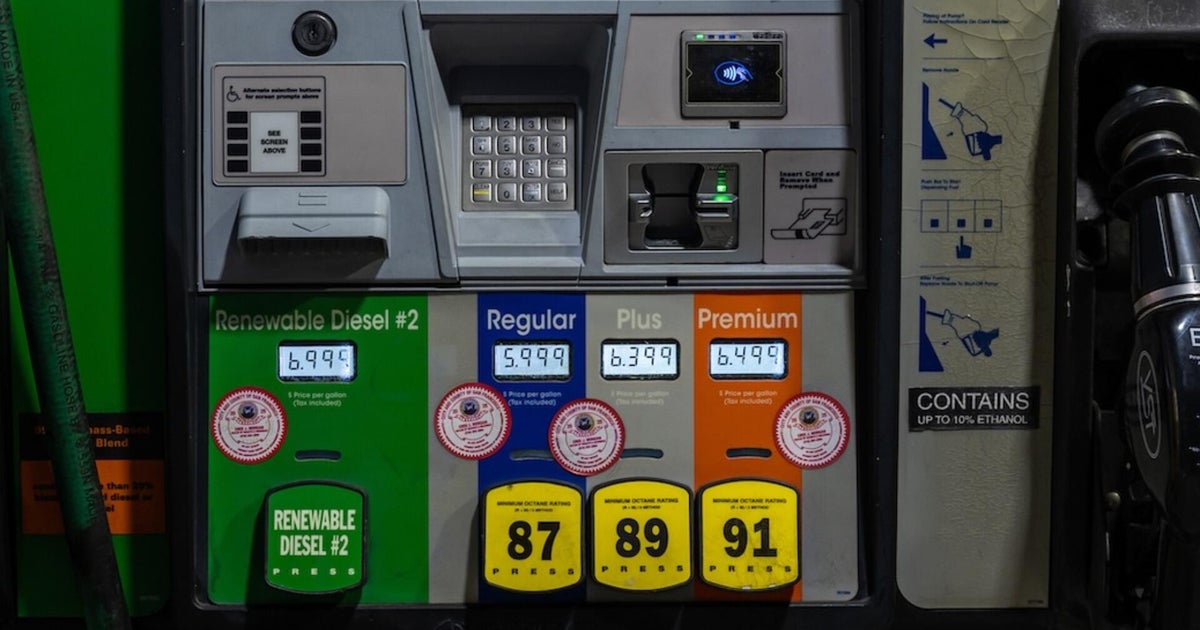
Financial markets have been on a roller coaster as traders and analysts attempt to price in the various possible outcomes of the conflict. On Monday, oil prices demonstrated this uncertainty, initially dipping as hopes for a ceasefire gained traction, before ultimately rising as the reality of prolonged supply disruptions set in. Benchmark U.S. crude oil ended the day up 1.3% at $113.09 per barrel, while Brent crude, which serves as the international pricing standard, climbed 1.2% to $110.37 per barrel. To put these figures in perspective, just before the outbreak of hostilities, Brent crude was trading at around $70 per barrel – meaning prices have increased by more than 50%. For average Americans, these global market dynamics translate into real pain at the gas pump. The national average price for a gallon of gasoline reached $4.12, up sharply from $2.98 just before the conflict began. This represents the highest fuel prices American drivers have faced since 2022, eating into household budgets and raising concerns about broader inflation. But it’s not just gasoline consumers who are feeling the pinch. Gloystein points out that we’re seeing record-high prices for specialized fuels like jet fuel and bunker fuel, which power the aviation and maritime shipping industries respectively. These increases will inevitably work their way through the economy, potentially raising the cost of air travel, shipped goods, and ultimately almost everything consumers purchase.
The Long Shadow of Supply Constraints
Looking ahead, even the most optimistic scenarios suggest continued market tightness for the foreseeable future. Gloystein’s analysis makes it clear that oil markets will remain undersupplied even if we see some improvement in shipping through the Strait of Hormuz in the coming weeks. The combination of damaged infrastructure requiring months of repairs, the cautious resumption of shipping operations, and the time required for empty tankers to make the long voyage to the Gulf and back means that supply chains won’t return to their pre-conflict efficiency anytime soon. This reality has significant implications for global economic recovery and stability. Energy costs affect virtually every sector of the economy, from manufacturing and transportation to agriculture and retail. Sustained high prices could dampen economic growth, contribute to inflationary pressures, and create political challenges for governments around the world. For businesses that depend on predictable energy costs for their planning and operations, the uncertainty is almost as challenging as the high prices themselves. The situation also highlights the continuing vulnerability of the global economy to disruptions in key geographic chokepoints. Despite years of discussion about diversifying energy sources and supply routes, the Strait of Hormuz remains irreplaceable in the current global energy infrastructure. As this crisis demonstrates, when trouble strikes in this critical waterway, the entire world economy feels the impact, from the traders in financial centers to the families filling up their cars on their way to work.