

Japan Remembers: 15 Years After the Triple Disaster That Changed a Nation
A Day That Shook Japan to Its Core
On March 11, 2011, Japan experienced one of the most devastating natural disasters in modern history when a massive 9.0 magnitude earthquake struck off its northeastern coast. What followed was a catastrophic chain of events that would forever change the nation and reshape its energy future. The powerful earthquake triggered towering tsunami waves that crashed into coastal communities with devastating force, obliterating entire towns and claiming the lives of more than 22,000 people. The destruction was so immense that nearly half a million residents were forced to abandon their homes, with most fleeing the relentless waters that swept away everything in their path. But the disaster didn’t end with the natural forces of earthquake and tsunami. The waves struck the Fukushima Daiichi nuclear power plant, setting off a nuclear crisis that would force an additional 160,000 people to evacuate due to radiation concerns. This triple disaster became a defining moment in Japanese history, testing the resilience of its people and forcing the nation to confront difficult questions about safety, preparedness, and the role of nuclear energy in its future.
The Long Shadow of Displacement and Loss
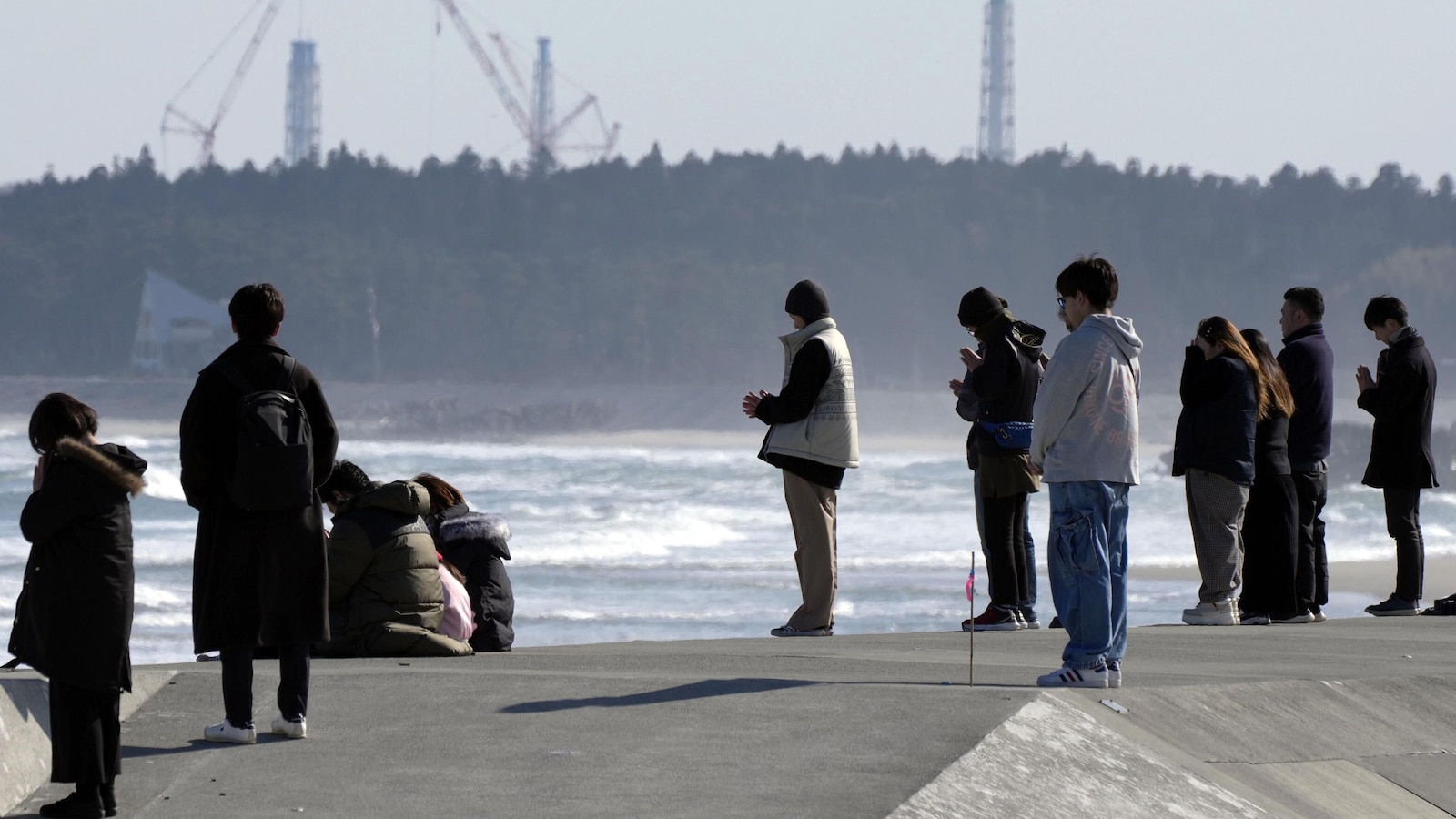
Fifteen years later, the human cost of the disaster continues to reverberate through the affected communities. While many evacuees have returned to their homes over the years, approximately 26,000 people from Fukushima prefecture have never come back. For some, the decision to stay away is practical—they’ve built new lives elsewhere, establishing roots in different communities, finding new jobs, and enrolling their children in new schools. For others, the choice isn’t really theirs to make at all, as certain areas remain designated as off-limits due to persistent radiation levels. Perhaps most poignantly, many former residents harbor lingering fears about radiation exposure that keep them from returning to their ancestral homes, even when official pronouncements declare areas safe. On the anniversary, survivors and family members gathered along the tsunami-ravaged coastline in the early morning hours, walking down to the water’s edge to pray for loved ones lost to the waves. Some prayed for those whose remains have never been found, still missing somewhere in the vast Pacific Ocean. The physical landscape has been transformed—more than 1 million homes, offices, and schools across Iwate, Miyagi, Fukushima, and other coastal areas were damaged or destroyed, leaving scars that concrete and reconstruction can only partially heal.
Rebuilding What Was Lost: Progress and Persistent Challenges
In the years since the disaster, Japan has made significant strides in rebuilding the devastated region’s infrastructure. Roads have been repaired, seawalls constructed, and public facilities restored. The essential bones of modern society—transportation networks, utilities, communication systems—have been painstakingly reconstructed. Yet beneath this veneer of physical recovery lies a more complex reality. While key infrastructure has indeed been rebuilt, the communities themselves and the local economies that once sustained them have been much slower to recover. It’s one thing to reconstruct a building; it’s quite another to restore the vibrant community life, the local businesses, the festivals and traditions, and the sense of place that made these coastal towns home. Many areas struggle with aging populations, as younger residents who evacuated have chosen not to return, preferring opportunities in larger cities. Small businesses that were the lifeblood of local economies have not reopened, their owners either too elderly to start over or unable to secure the financing needed to rebuild. Schools that once buzzed with children sit half-empty or have closed entirely. The physical structures may stand again, but breathing life back into communities has proven to be a far more challenging and lengthy process than anyone initially imagined.
The Ongoing Nuclear Nightmare at Fukushima Daiichi
Perhaps nowhere is the long-term nature of the disaster’s impact more evident than at the Fukushima Daiichi nuclear power plant itself. When the tsunami waves overwhelmed the facility’s defenses on that fateful day in 2011, the plant lost its power supply and cooling capabilities, leading to meltdowns in three of its six nuclear reactors. Today, fifteen years later, those three damaged reactors contain at least 880 tons of melted fuel debris—a toxic, radioactive mass unlike anything the nuclear industry has dealt with before at this scale. The radiation levels inside the damaged reactors remain so dangerously high that detailed information about conditions inside is still limited. Robots and remote-controlled devices have provided glimpses, but a complete picture remains elusive. The monumental task of removing this melted fuel debris has been repeatedly delayed as engineers grapple with unprecedented technical challenges. What was once optimistically scheduled for earlier completion has now been pushed back to 2037 or later for fuller-scale removal to begin. Meanwhile, workers have achieved some progress, recently installing a new roof on Unit 1 and preparing to remove debris from the top floor ahead of planned spent fuel removal from the cooling pool, expected to begin around 2027-2028. Beyond the reactors themselves, decontamination efforts across the surrounding area have generated a massive amount of slightly radioactive soil—enough to fill eleven baseball stadiums. The government has pledged to relocate this contaminated material and has proposed using some of it for road construction and other public works projects, but these plans have faced strong public resistance from communities understandably wary of accepting radioactive waste, even at low levels.
A Nation Remembers and Reflects
As Japan marked the 15th anniversary of the disaster this Wednesday, the nation paused to remember at exactly 2:46 p.m.—the precise moment when the earthquake struck fifteen years earlier. In homes, offices, and schools across the country, people observed a moment of silence, reflecting on the lives lost and the immense challenges overcome. Prime Minister Sanae Takaichi attended a ceremony in Fukushima, where she pledged that her government would “do the utmost to accelerate the region’s recovery within the next five years.” She also spoke of the need to reinforce “the valuable lessons we learned from the huge sacrifice of the disaster,” acknowledging that the tragedy, while devastating, also taught Japan important lessons about disaster preparedness, community resilience, and the importance of transparency in crisis management. These annual commemorations serve multiple purposes: they honor those who died, they provide comfort to survivors and family members still grieving, and they remind the nation that recovery is an ongoing process requiring sustained commitment and resources. They also offer an opportunity for political leaders to reaffirm their commitment to the affected regions and to address the continuing concerns of displaced residents who wonder when—or if—they’ll ever truly be able to go home.
The Nuclear Question: Japan’s Controversial Energy Future
Perhaps the most controversial aspect of the disaster’s legacy is how it has shaped—and continues to shape—Japan’s energy policy. In the immediate aftermath of the Fukushima nuclear crisis, public opinion turned sharply against nuclear power, and the government implemented a nuclear phase-out plan that saw all of the country’s nuclear reactors gradually shut down for safety inspections. For nearly a decade, Japan moved cautiously on nuclear energy, with only a handful of reactors eventually restarting after meeting stringent new safety standards. However, in 2022, the government made a major policy reversal, ending the nuclear phase-out plan and signaling a renewed embrace of atomic energy. Prime Minister Takaichi has been a strong advocate of this shift, pushing to accelerate reactor restarts and promoting nuclear power as a stable energy source crucial for Japan’s energy security and its climate goals. Supporters argue that Japan, lacking domestic fossil fuel resources and committed to reducing carbon emissions, has little choice but to rely on nuclear energy alongside renewable sources. Critics, however, see bitter irony in this renewed nuclear push coming from a nation that experienced both atomic bombings in World War II and the Fukushima disaster. They question whether any amount of safety improvements can truly prevent another catastrophe and whether the still-unresolved crisis at Fukushima Daiichi should serve as a warning rather than merely a lesson. As Japan continues to grapple with the aftermath of March 11, 2011, the debate over its nuclear future remains as contentious as ever, ensuring that the disaster’s impact on national policy and public consciousness will extend far beyond the 15-year mark.