


Federal Court Battle Over Seized Fulton County Election Materials
The Seizure and Legal Challenge
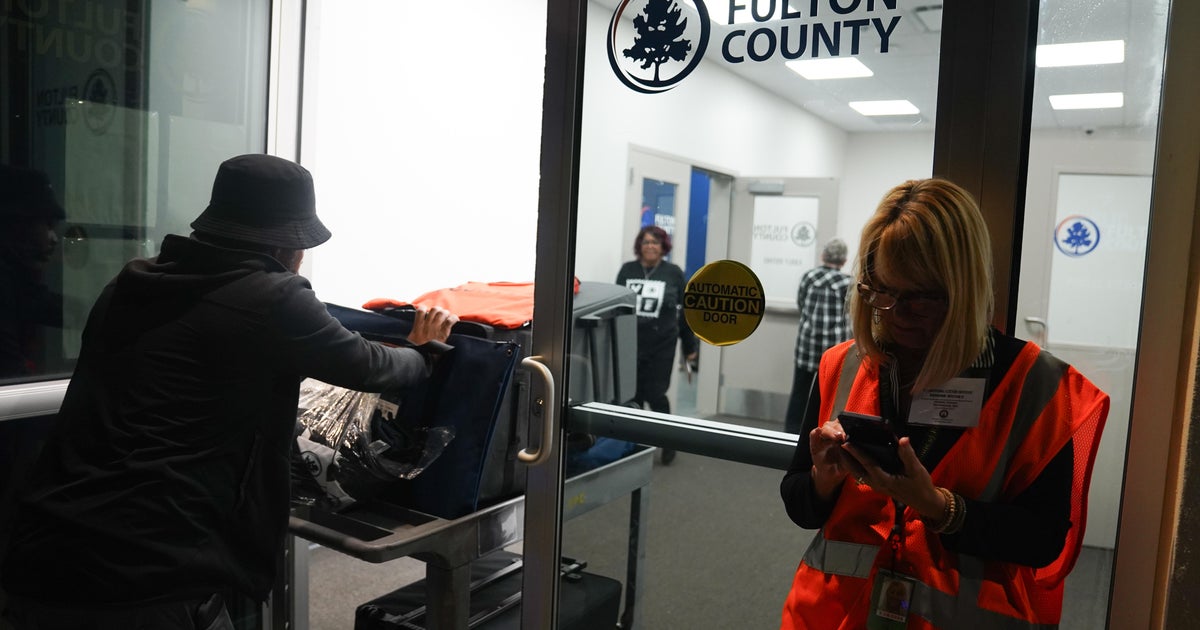
A significant legal showdown is unfolding in federal court as Fulton County, Georgia fights to recover more than 650 boxes of election materials that were seized by the FBI from the county’s elections office. The seizure, which occurred last month under the authority of a federal search warrant, has sparked a constitutional debate about states’ rights, election administration, and the scope of federal investigative powers. The FBI’s search warrant was extraordinarily comprehensive, targeting “all physical ballots” from the 2020 presidential election, along with tapes from vote-tabulating machines, ballot images, and voter registration rolls. In response to what they view as federal overreach, Fulton County Commission Chairman Robb Pitts and the county’s Board of Registration and Elections quickly filed a lawsuit demanding the immediate return of all seized materials. The county’s legal team is scheduled to present their arguments on Friday before U.S. District Judge Jean-Paul Boulee, who was appointed to the federal bench by President Trump in 2019. Beyond simply requesting the return of the original documents, the county has also asked the judge to issue an order that would prevent the government from reviewing any copies of the seized materials until the legal dispute is fully resolved, arguing that the government should maintain but not examine the copied documents.
Constitutional Concerns and State Sovereignty
At the heart of Fulton County’s legal argument is a fundamental question about constitutional rights and the balance of power between federal and state authorities when it comes to election administration. In their court filings, county attorneys have argued forcefully that the Justice Department’s search and seizure represents a blatant violation of multiple Fourth Amendment protections against unreasonable searches and seizures. The county characterizes the federal action as not merely an investigative overreach but as a “callously disregards” approach to constitutional rights that tramples on the protections afforded to both the county government and its citizens. Perhaps even more significantly, the county’s legal team has framed the seizure as a “gross intrusion” into the state’s constitutionally protected role in managing and conducting elections. This argument touches on a sensitive nerve in American federalism—the principle that states, not the federal government, have primary responsibility for administering elections, even federal elections. By seizing the county’s election materials without what the county considers proper justification, the federal government has allegedly stepped beyond its appropriate bounds and interfered with Georgia’s sovereign authority to manage its own electoral processes. The county’s position is that these materials belong to the lawful custodian—Fulton County itself—and that their continued possession by federal authorities represents an ongoing constitutional injury that must be remedied through the courts.
The Justice Department’s Defense and Investigation Details
The Justice Department has mounted a vigorous defense of its actions, pushing back against the county’s characterization of the seizure as unconstitutional or improper. In court filings submitted ahead of Friday’s evidentiary hearing, federal prosecutors have accused Fulton County of attempting to “disrupt an ongoing federal investigation” through their legal maneuvers. The government insists that it was “scrupulously careful” to comply with all Fourth Amendment requirements and procedural safeguards before conducting the search. Federal attorneys emphasize that they obtained a warrant only after presenting evidence to a magistrate judge who made an independent determination that probable cause existed to justify the search. According to the Justice Department’s court filings, the investigation focuses on “irregularities that occurred during the 2020 presidential election in the County.” More specifically, investigators are examining whether election records were properly maintained according to federal law, and whether there were problems in the “procurement, casting, or tabulation” of ballots during the 2020 election—essentially investigating whether fraudulent ballots may have been involved in the election process. The government’s position is that this is a legitimate federal investigation into potential violations of federal election laws, and that the seizure of these materials is a necessary step in conducting that investigation thoroughly and properly.
Questions About Probable Cause and Investigation Origins
A closer examination of the FBI affidavit that justified the search warrant has raised troubling questions in the eyes of Fulton County’s legal team. An FBI agent’s affidavit, which was unsealed earlier this month, revealed that the investigation was initiated following a referral from Kurt Olsen, an attorney who actively worked to overturn the 2020 election results. During the 2020 post-election period, Olsen partnered with Texas Attorney General Ken Paxton in an effort to persuade the Supreme Court to overturn the election results. In 2022, Olsen was subpoenaed by the House January 6th Committee, which was investigating the events surrounding the Capitol attack and the broader efforts to overturn the election. The committee’s subpoena indicated that Olsen had “contacted various high-level officials at the Department of Justice” at President Trump’s direction to discuss filing legal challenges to the election outcome, and that he spoke with Mr. Trump multiple times on January 6, 2021. The FBI described Olsen in their documents as a “Presidentially appointed Director of Election Security and Integrity,” though this characterization has raised eyebrows given his documented efforts to challenge the election results. Fulton County’s attorneys have seized on these details to argue that the search warrant lacks legitimate foundation. “Despite years of investigations of the 2020 election, the Affidavit does not identify facts that establish probable cause that anyone committed a crime,” the county argued in court filings. They contend that the FBI agent “all but admits that the seizure will yield evidence of a crime only if certain hypotheticals are true,” meaning the search is based on speculation rather than concrete evidence. The county’s position is that this warrant, “unsupported by probable cause and dependent on unsubstantiated hypotheticals,” clearly violated the Fourth Amendment’s requirement that searches be based on probable cause of actual criminal activity.
Georgia’s Defended Election Integrity and Political Context
The timing and nature of this investigation stand in stark contrast to years of consistent statements from Georgia officials defending the integrity of the 2020 election. Republican state officials, including Governor Brian Kemp and Secretary of State Brad Raffensperger, have repeatedly and forcefully defended the accuracy and legitimacy of the 2020 election results for years. They have pointed out that Georgia conducted not just one but three separate counts of the ballots, and all three confirmed the same result: Joe Biden defeated Donald Trump in Georgia. These recounts included a hand recount of all ballots, which provided additional assurance of accuracy. Despite this thorough verification process and the consistent defense of the election by Georgia’s top Republican officials, the 2020 Georgia results became a central focus of President Trump’s efforts to overturn the election outcome. Fulton County, which includes the city of Atlanta, is particularly significant in this context because it is a key Democratic stronghold that contributed substantially to Biden’s victory in the state. The county’s large population and strong Democratic lean made it a frequent target of claims about election irregularities, despite the lack of evidence supporting such claims and despite the multiple recounts confirming the original results. This broader political context raises questions about whether the current federal investigation represents a legitimate law enforcement inquiry or whether it is influenced by the political controversies that have swirled around the 2020 election for more than four years.
The Court Proceedings and Path Forward
The legal proceedings have already seen significant developments even before Friday’s main hearing. Judge Boulee made an attempt to resolve the dispute without a full court hearing by ordering Fulton County and the Justice Department to participate in mediation. However, that mediation effort failed to produce an agreement, making Friday’s evidentiary hearing necessary. On Thursday, Judge Boulee also ruled on a preliminary matter, deciding that he would not compel the FBI agent who submitted the sworn affidavit supporting the search warrant to testify at the hearing. Fulton County had sought to force the agent to appear in court to answer questions about the affidavit and the basis for the search, but the judge denied this request. As Friday’s hearing approaches, the fundamental question before the court remains whether the FBI’s seizure of Fulton County’s election materials was constitutionally justified and whether those materials should be returned while any investigation continues. The county maintains that “the government’s conduct has deprived Petitioners of their constitutional rights” and that “the resulting injury will continue if these records are not returned to their lawful custodian.” The outcome of this hearing could have significant implications not only for this specific investigation but also for the broader relationship between federal investigative authority and state control over election administration. Whatever Judge Boulee decides, the losing party will likely appeal, suggesting this legal battle may continue for some time before reaching final resolution.