

Federal Judge Halts Justice Department Investigation Into Federal Reserve’s $2.5 Billion Renovation Project
Investigation Yields No Criminal Evidence Despite Extensive Scrutiny
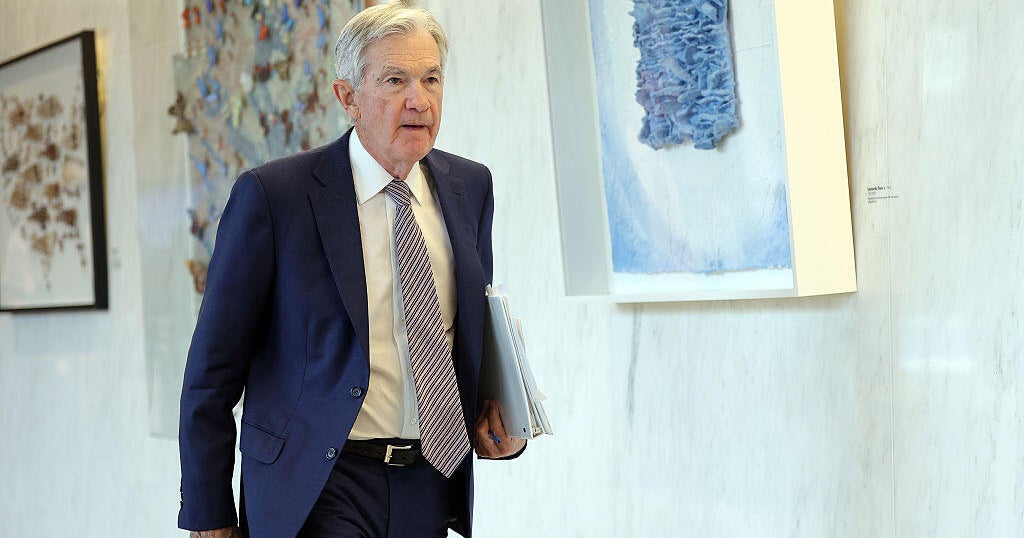
A federal investigation into a massive $2.5 billion renovation project at the Federal Reserve has come to an abrupt halt after prosecutors admitted they found no evidence of criminal wrongdoing. In a sealed hearing earlier this month, Assistant U.S. Attorney Andrew Massucco made the striking admission under persistent questioning from Chief Judge James Boasberg, who appeared increasingly skeptical of the government’s case. The March 3rd hearing, which took place behind closed doors, revealed a troubling pattern: despite issuing subpoenas to one of the nation’s most important financial institutions and targeting its chair, Jerome Powell, prosecutors couldn’t point to any specific criminal conduct. When Judge Boasberg pressed Massucco to identify what false statements Powell had made to Congress or what evidence existed of fraud in the renovation project, the prosecutor’s responses were vague and unconvincing. “We don’t know is my first answer,” Massucco admitted when asked about false statements, later adding that regarding evidence of fraud, “we do not know at this time.” His only concrete justification was pointing to “1.2 billion reasons” to investigate—a reference to the project’s cost overruns. This remarkably weak foundation for such a high-profile investigation raised immediate red flags for the judge.
Judge Delivers Devastating Rebuke to Government’s Case
Judge James Boasberg, who was nominated by President Barack Obama, didn’t mince words in his March 11th ruling that quashed the government subpoenas. He described the government’s evidence as “essentially zero” and characterized the prosecutors’ justification as “thin and unsubstantiated.” These aren’t the kind of mild critiques judges typically offer—they represent a fundamental rejection of the investigation’s legitimacy. In his written decision, Boasberg went even further, stating bluntly: “A mountain of evidence suggests that the Government served these subpoenas on the Board to pressure its Chair into voting for lower interest rates or resigning.” This statement cuts to the heart of what many observers suspected: that this wasn’t a genuine criminal investigation at all, but rather a politically motivated attempt to influence Federal Reserve policy. The judge noted that the Justice Department had even rejected his offer to submit additional evidence privately, which would have allowed them to protect sensitive investigative information while still justifying the subpoenas. Their refusal to do so left the court with “no credible reason to think that the Government is investigating suspicious facts as opposed to targeting a disfavored official.” It’s rare for a federal judge to so explicitly suggest that prosecutors are acting in bad faith, making this ruling all the more remarkable.
Political Pressure and the Federal Reserve’s Independence
The context surrounding this investigation makes Judge Boasberg’s concerns about political interference particularly credible. The investigation originated from the office of U.S. Attorney Jeanine Pirro, President Trump’s controversial pick to lead the nation’s largest prosecutor’s office and a former Fox News host known for her staunch support of Trump. The timing is also significant: the investigation has effectively delayed Senate consideration of Kevin Warsh, Trump’s nominee to replace Powell as Federal Reserve Chair when his term expires on May 15th. Robert Hur, an attorney representing the Federal Reserve’s board of governors, made this connection explicit during the sealed hearing. He told the judge that the subpoenas appeared to be “part of a pressure campaign to support Mr. Trump’s push for lower interest rates,” adding that Trump “clearly has very strong political motives to try to get lower interest rates, but because of the safeguards that have been erected by Congress around the Federal Reserve’s independence when it comes to setting monetary policy, he can’t get it.” The Federal Reserve’s independence from political pressure is considered crucial to its ability to manage the economy effectively. Throughout his presidency, Trump has repeatedly criticized Powell for not lowering interest rates as quickly or dramatically as Trump desired, breaking with the traditional practice of presidents avoiding public commentary on Fed policy.
The Renovation Project at the Center of the Controversy
The actual subject of the investigation—the Federal Reserve’s building renovation project—does involve significant cost increases, though nothing that automatically suggests criminal conduct. The project’s current estimated cost of $2.5 billion represents an increase of approximately $600 million over a 2022 estimate of $1.9 billion. During testimony before the Senate Banking Committee last June, Powell was asked about these cost overruns and provided brief responses. This testimony became the focal point of the Justice Department’s investigation, with prosecutors apparently looking for evidence that Powell had made false statements to Congress. However, as the sealed hearing revealed, prosecutors couldn’t articulate what specific statements were false or even what might have been criminal about the renovation project itself. Cost overruns on large construction projects, while certainly worthy of oversight and scrutiny, are unfortunately common and don’t typically involve fraud. Major government and private sector building projects regularly exceed their initial budgets due to factors like unexpected structural issues, changes in material costs, design modifications, and inflation. Without evidence of kickbacks, bid-rigging, false billing, or other corrupt practices, cost increases alone don’t constitute a crime.
U.S. Attorney Fires Back at “Activist Judge”
Jeanine Pirro responded to Judge Boasberg’s ruling with defiance and sharp criticism. At a news conference, she called him an “activist judge” and claimed he had “neutered the grand jury’s ability to investigate crime.” She vowed to appeal his decision, declaring, “This is wrong and it is without legal authority.” Her characterization of the judge as “activist” echoes common political rhetoric used to dismiss judicial decisions that don’t align with one’s preferred outcome, though Boasberg’s ruling was firmly grounded in legal standards for subpoenas and grand jury investigations. During the sealed hearing, Massucco had defended the investigation, insisting there was no evidence that prosecutors’ motives “is anything other than trying to find the truth of the matter,” adding, “And we have a right to do that.” While prosecutors do indeed have broad investigative authority, judges serve as a check on that power, ensuring that subpoenas are issued based on legitimate evidence of potential wrongdoing rather than fishing expeditions or political harassment. The tension between Pirro’s office and the judge reflects a broader concern about the politicization of the Justice Department and prosecutorial power being used to target political adversaries.
Implications for Federal Reserve Independence and Rule of Law
This case raises profound questions about the boundaries between legitimate oversight and political intimidation. The Federal Reserve was deliberately designed to operate independently from short-term political pressures, allowing it to make economically sound decisions about interest rates and monetary policy even when those decisions are politically unpopular. If prosecutors can launch investigations into Fed officials whenever their policy decisions displease the president, that independence becomes meaningless. Judge Boasberg’s ruling represents an important defense of institutional boundaries, but the fact that such an investigation was launched in the first place is concerning. The implications extend beyond the Federal Reserve to questions about prosecutorial independence more generally. When U.S. Attorneys are seen as doing the bidding of the president who appointed them rather than following the evidence wherever it leads, it undermines public confidence in the justice system and the rule of law. The Federal Reserve spokesperson declined to comment on the matter, which is typical for the institution’s preference to avoid political controversies. However, Powell can remain as chair past the May 15th expiration of his term if no replacement has been confirmed, meaning this investigation may have inadvertently extended his tenure by delaying Warsh’s confirmation process. As this case potentially moves to an appeals court, it will continue to test the resilience of institutional safeguards designed to protect independent agencies from political pressure and ensure that prosecutorial power serves justice rather than political convenience.