


Justice Department Fights to Keep Jan. 6 Pipe Bomb Suspect Behind Bars Despite Trump Pardons
The Case Against Brian Cole Jr. Moves Forward
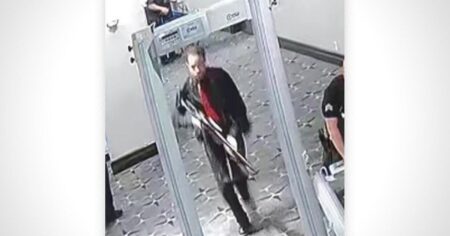
The Justice Department has taken a firm stand against efforts to dismiss charges against Brian Cole Jr., the man accused of planting pipe bombs outside both the Republican and Democratic National Committee headquarters the night before the infamous January 6, 2021 Capitol riot. In legal filings submitted on Friday, federal prosecutors made it crystal clear that they believe Cole’s alleged actions fall outside the scope of President Trump’s controversial blanket pardons for January 6th rioters. Cole’s defense team had argued that their client’s case was so closely connected to the events of that chaotic day that he should receive the same clemency extended to roughly 1,500 others who participated in the Capitol breach. However, the government isn’t buying this argument, setting the stage for what could become a pivotal legal battle over the limits of presidential pardon power and what exactly constitutes a “January 6th offense.”
The core of Cole’s defense strategy revolves around the argument that his alleged criminal activity was “inextricably and demonstrably tethered” to the political unrest that exploded on January 6th. His attorneys have pointed to Cole’s own statements to the FBI, where he reportedly said he traveled to Washington, D.C., to participate in protests related to the 2020 election controversy—the same political grievances that motivated the crowd that stormed the Capitol. Even though the pipe bombs were planted on January 5th, the night before the riot, Cole’s legal team contends that the timing and motivation were close enough to qualify him for Trump’s sweeping pardon. It’s a creative legal argument that essentially asks the courts to look at intent and context rather than the strict calendar date when determining who should benefit from presidential clemency.
The Justice Department’s Counterargument: Timing Is Everything
Federal prosecutors have constructed their opposition around a straightforward interpretation of President Trump’s pardon proclamation. They argue that the language of the pardon is crystal clear: it applies only to individuals who had been “convicted of” or had a “pending indictment” for offenses related to events at or near the Capitol specifically on January 6th. According to the Justice Department’s filing, when Trump issued these pardons on Inauguration Day—January 20, 2025—law enforcement hadn’t even identified Cole as a suspect, much less charged or convicted him of any crime. The pipe bomb investigation was still actively ongoing at that time. Therefore, prosecutors argue, Cole simply doesn’t fit into either category covered by the presidential proclamation, making the entire pardon question irrelevant to his case.
Beyond the timing issue, the Justice Department takes particular issue with the geographic and temporal scope of Cole’s alleged actions. Prosecutors emphasize that Cole’s offenses on January 5th “were not, as the proclamation required, ‘related to’ events at or near the United States Capitol ‘on January 6.'” This distinction might seem technical, but it’s absolutely crucial to the government’s case. They’re drawing a bright line between actions that occurred during the actual riot at the Capitol and Cole’s alleged bomb-planting the night before. The government’s position suggests they’re worried about setting a precedent that could potentially extend pardons to a much broader range of criminal activity simply because it happened around the same time as January 6th or involved similar political motivations. The Justice Department also argues that even if there were some ambiguity in the pardon’s language, their interpretation should be given deference as the executive branch agency specifically tasked with implementing the president’s proclamation.
What Cole Allegedly Did and What He Told Investigators
The charges against Brian Cole Jr. are serious: interstate transportation of explosives and malicious attempt to use explosives. These charges came nearly five years after the bombs were planted, highlighting the lengthy and complex investigation that eventually led authorities to Cole. While the devices never detonated, the FBI has confirmed that they were viable explosive devices—meaning they could have caused real harm if they had gone off. This detail is important because it underscores the potential severity of the threat, regardless of whether the bombs actually exploded. The placement of these devices at both major party headquarters wasn’t random; it suggested someone with grievances against the entire political establishment rather than one particular party.
What makes Cole’s case particularly interesting is what he allegedly told FBI agents during his post-arrest interview. According to prosecutors, Cole admitted to planting the bombs and explained his motivations in revealing detail. He told investigators that he “did not attend a protest at the United States Capitol on January 5 but rather traveled to D.C. to plant the bombs.” This statement is particularly damaging to his defense team’s argument that his actions were connected to the January 6th events, because Cole himself drew a distinction between attending protests and his bomb-planting mission. Even more tellingly, Cole explained that “something just snapped” after “watching everything, just everything getting worse.” He wanted to do something “to the parties” because “they were in charge,” and he expressed disdain for both political parties equally. Perhaps most importantly for the legal arguments at play, prosecutors note that Cole “expressly denied that his actions were directed toward the United States Congress or related to the proceedings scheduled to take place on January 6.” In other words, according to the government’s account, Cole himself said his actions weren’t about the Electoral College certification or the events of January 6th specifically.
The Broader Context of Trump’s January 6th Pardons
To understand why this case matters so much, it’s important to consider the unprecedented scope of President Trump’s January 6th pardons. Issued within the first hours of his return to the White House, these pardons granted relief to approximately 1,500 individuals who had been accused or convicted of offenses ranging from simple trespassing to serious crimes like assaulting police officers. The president essentially wiped away criminal convictions for all but 14 people who had been convicted of January 6th-related offenses. He also directed the Justice Department to seek dismissals of charges against those whose cases were still working their way through the courts. This represented one of the most sweeping uses of presidential pardon power in modern American history.
The official language of the pardon order states that it applies to “offenses related to events that occurred at or near the United States Capitol on January 6, 2021.” This is where the legal battle really gets interesting. Cole’s attorneys have seized on the phrase “related to,” arguing that it should be interpreted broadly to include offenses that didn’t necessarily occur on that specific date, as long as they were connected to the events and political atmosphere surrounding January 6th. It’s not an unreasonable reading on its face—after all, “related to” is pretty vague language. However, the Justice Department is pushing back hard against this expansive interpretation, worried about where such reasoning might lead. If planting bombs the night before counts as “related to” January 6th, what else might qualify? Could someone who committed a politically motivated crime weeks or months before January 6th claim coverage? The government clearly wants to draw strict boundaries around the pardon’s applicability.
What Happens Next and Why It Matters
As of the latest court filings, U.S. District Judge Amir Ali hasn’t scheduled a specific hearing to consider Cole’s motion to dismiss the charges, though a status hearing is on the books for April 21st. How Judge Ali rules on this motion could have significant implications not just for Cole’s case, but potentially for how presidential pardons are interpreted in politically charged situations going forward. If the judge sides with Cole’s defense team and accepts their broader interpretation of “related to,” it could open the door for others to claim pardon coverage for actions that weren’t strictly part of the January 6th riot itself. On the other hand, if the judge accepts the Justice Department’s more restrictive reading, it would establish clearer boundaries around the pardon’s scope and reaffirm that presidential clemency, even when broadly granted, has limits.
This case also highlights the ongoing tensions within the executive branch itself over how to handle January 6th-related matters. While President Trump issued sweeping pardons that many of his supporters celebrated as righting a wrong against political prisoners, the Justice Department—part of Trump’s own executive branch—is now arguing for a narrow interpretation that would exclude someone like Cole. The government’s assertion that their interpretation deserves deference because they’re the agency “expressly charged with administering the proclamation” adds another layer of complexity. It raises questions about who ultimately gets to decide what a presidential pardon means when its language is ambiguous. For Brian Cole Jr., these legal arguments aren’t academic exercises—they’re the difference between potentially going free or facing serious federal prison time for allegedly planting viable explosive devices at the headquarters of America’s two major political parties. As this case moves forward, it will be watched closely by legal experts, political observers, and anyone interested in the lasting legal consequences of January 6th and its aftermath.