
Major U.S.-Israeli Strike on Iran: A Comprehensive Overview
The Scale and Scope of the Military Operation
In a dramatic escalation of Middle Eastern tensions, the United States and Israel launched a coordinated large-scale military strike against Iran on Saturday, marking one of the most significant direct confrontations between these nations in recent history. President Trump characterized the operation as a decisive move aimed at dismantling Iran’s military infrastructure and permanently eliminating the Islamic Republic’s capacity to develop nuclear weapons. The unprecedented nature of this assault represents a major shift in the regional power dynamics that have defined Middle Eastern geopolitics for decades. According to detailed mapping created by the CBS News data team, the strikes targeted numerous locations throughout Iranian territory, suggesting a comprehensive military campaign rather than a limited surgical strike. The coordinated nature of the attack, involving both American and Israeli forces, demonstrates an extraordinary level of military cooperation between the two allies and signals their shared determination to address what they perceive as an existential threat from Iran’s nuclear ambitions and military capabilities.
Targeting Leadership and Critical Infrastructure
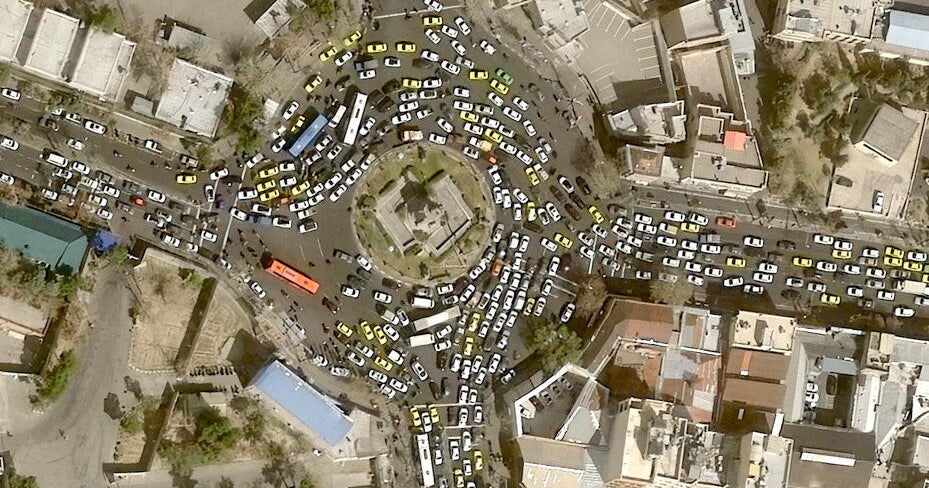
Perhaps the most striking aspect of this military operation was its apparent attempt to strike at the very heart of Iran’s leadership structure. A source with direct knowledge of the Israeli component of the strikes revealed to CBS News that among the primary targets in the initial wave were Iran’s supreme leader, Ayatollah Ali Khamenei, and President Masoud Pezeshkian—the two most powerful figures in the Iranian government. According to reporting from The Associated Press, the opening salvo appeared to focus on Khamenei’s residence located in downtown Tehran, representing an audacious attempt to decapitate the Iranian regime’s leadership. The success or failure of these particular strikes remained unclear in the immediate aftermath, with no confirmation available regarding whether the targeted leaders were present at the locations during the attacks or if they sustained any injuries. The decision to target the supreme leader’s home represents a significant escalation in the conflict, as Khamenei has been the ultimate authority in Iran since 1989 and is considered the country’s most powerful political and religious figure. Such a direct attempt on his life, if confirmed, would mark an unprecedented move that fundamentally changes the nature of the conflict between Israel and Iran.
Geographic Distribution of the Attacks
The military strikes demonstrated remarkable breadth, spreading across Iran’s vast territory and targeting sites of strategic, military, and potentially symbolic importance. Iranian state-controlled news outlets reported attacks on multiple cities and regions throughout the country, painting a picture of a coordinated campaign designed to cripple Iran’s military and nuclear infrastructure simultaneously. Among the locations struck was Isfahan, home to one of Iran’s most significant nuclear facilities, which has long been a source of international concern regarding the country’s nuclear program. The holy city of Qom, which holds enormous religious significance for Shia Muslims and is also reportedly home to nuclear-related facilities, was also among the targeted areas. Additional strikes hit Karaj, a major city near Tehran; Kermanshah in western Iran; the Lorestan province; and Tabriz in the northwest. This geographic spread suggests the operation was designed not only to inflict maximum damage on Iran’s military capabilities but also to demonstrate that no location within the country was beyond the reach of American and Israeli military power. The targeting of such diverse locations simultaneously would have required extensive intelligence gathering, careful planning, and significant military resources.
Israeli Statements and Strategic Objectives
Israeli Prime Minister Benjamin Netanyahu publicly addressed the operation in a video statement, providing some clarity on the strategic objectives behind the massive assault. Netanyahu specified that Israeli forces were focusing on military targets, with particular emphasis on missile installations that have previously been used to threaten Israeli territory and regional allies. His statement that the attacks would continue “as long as necessary” suggested that Saturday’s strikes were not a one-time event but rather the beginning of a sustained campaign against Iranian military infrastructure. This open-ended commitment signals Israel’s determination to fundamentally alter the military balance of power with Iran, regardless of how long such an effort might require. The Israel Defense Forces took the unusual step of issuing direct warnings to Iranian civilians, cautioning “all individuals located inside or near military industrial factories and military infrastructure” that they were in dangerous proximity to legitimate military targets. The IDF urged Iranian citizens to immediately evacuate such areas “until a new announcement” was issued, with notices explicitly stating that “your presence in these locations puts your life at risk.” This civilian warning system, while potentially motivated by humanitarian concerns, also serves a tactical purpose by potentially creating chaos and confusion around targeted sites and demonstrating the precision and foreknowledge possessed by Israeli intelligence.
American Military Involvement and Capabilities
The United States military played a crucial role in the operation, contributing significant firepower and advanced weapons systems to the coordinated assault. According to two U.S. officials who spoke with CBS News, American forces deployed Tomahawk Land Attack Missiles—commonly referred to as TLAMs—specifically to suppress Iranian air defense systems. These cruise missiles, which can be launched from ships or submarines and are capable of striking targets with remarkable precision from distances of over a thousand miles, would have been essential in creating safe corridors for subsequent waves of strikes by disabling Iran’s ability to defend its airspace. The use of Tomahawks suggests the American military was tasked primarily with the dangerous initial phase of the operation: neutralizing the sophisticated Russian and domestically-produced air defense systems that Iran has deployed to protect its most sensitive sites. In addition to cruise missiles, the operation also employed one-way attack drones, representing the modern face of warfare where unmanned systems can loiter over target areas, identify specific objectives, and strike with minimal risk to attacking forces. The combination of these weapons systems—long-range cruise missiles and disposable attack drones—reflects a carefully calibrated military strategy designed to overwhelm Iranian defenses while minimizing casualties among American and Israeli personnel.
Regional and Global Implications
This massive military operation against Iran carries profound implications that extend far beyond the immediate tactical objectives of destroying military infrastructure or disrupting nuclear development programs. The strikes represent a fundamental reshaping of Middle Eastern security dynamics and could potentially trigger a wider regional conflict involving Iran’s numerous proxy forces and allied militias throughout Iraq, Syria, Lebanon, and Yemen. Iran has spent decades developing what it calls its “axis of resistance”—a network of allied groups that could potentially retaliate against American and Israeli interests across the region and beyond. The targeting of Iran’s supreme leader, in particular, crosses a threshold that may make diplomatic resolution of the underlying conflicts significantly more difficult. International reactions will likely divide along existing geopolitical fault lines, with some nations supporting the American-Israeli action as a necessary response to Iranian nuclear ambitions and regional destabilization, while others condemn it as an illegal act of aggression against a sovereign nation. The operation also raises serious questions about the future of nuclear non-proliferation efforts, the role of preventive military action in international relations, and whether such strikes will achieve their stated objectives or instead strengthen hardline elements within Iran who advocate for accelerated nuclear weapons development and increased regional confrontation. As the situation continues to develop, the world watches anxiously to see whether this dramatic escalation leads to a broader war or somehow creates conditions for a fundamental restructuring of Middle Eastern security arrangements.