

Understanding the Recent Surge in Measles Cases Across America
A Concerning Rise in Infections
The United States is facing a troubling resurgence of measles, a disease that was once considered nearly eliminated in this country. Just in the past week alone, health officials have documented 177 new cases, bringing the total number of confirmed infections to 910 across 24 states. This isn’t just a number on a spreadsheet—these are real people, real families, and real communities being affected by a highly contagious virus that we have the tools to prevent. The Centers for Disease Control and Prevention has been tracking these cases closely, and what they’re finding paints a concerning picture of where we stand with public health in 2025. From the sunny shores of California to the rural communities of South Dakota, from the bustling cities of New York to the suburban neighborhoods of Ohio, measles has found its way into communities that haven’t seen this disease in significant numbers for decades. The geographic spread is wide, touching states like Arizona, Colorado, Florida, Georgia, Idaho, Kentucky, Maine, Minnesota, Nebraska, North Carolina, North Dakota, Oklahoma, Oregon, Pennsylvania, South Carolina, Utah, Vermont, Virginia, Washington, and Wisconsin. What makes this particularly alarming is that this isn’t primarily an imported problem—only six cases this year came from international visitors, meaning the virus is spreading within our own communities, among our neighbors, friends, and family members.
The Vaccination Gap: Understanding Who’s Getting Sick
When we dig into the data, a clear pattern emerges that tells us exactly why this is happening. An overwhelming 94% of measles cases are occurring among people who either haven’t been vaccinated at all or whose vaccination status cannot be confirmed. This statistic is both heartbreaking and preventable. The measles, mumps, and rubella (MMR) vaccine has been proven safe and effective for decades, yet we’re seeing a growing number of people—often children whose parents have made the choice for them—going without this crucial protection. About 2% of cases are among those who received just one dose of the MMR vaccine, which provides good but not optimal protection, while only 3% of cases are occurring in people who received both recommended doses. This data actually demonstrates how well the vaccine works when people complete the full series—those two doses provide 97% protection against this highly contagious disease. The majority of patients are under 19 years old, meaning our children are bearing the brunt of these preventable infections. While the hospitalization rate stands at about 3%, we need to remember that behind that percentage are children and young people suffering from a disease that can lead to serious complications, including brain damage and death in rare cases.
Hot Spots and Outbreaks: Where the Crisis is Most Acute
Certain areas of the country are experiencing particularly severe outbreaks that deserve our attention and concern. South Carolina has become a focal point, with an outbreak that began last year continuing to spread and contributing significantly to the national numbers. As of this week, the state has confirmed 933 cases—a staggering number that exceeds the total for the entire country in most recent years. Spartanburg County, which sits right on the North Carolina border, has been hit especially hard, with health officials working around the clock to contain the spread. The good news, if we can call it that, is that most cases appear to be among close contacts of known patients, meaning health workers have been able to trace the transmission chains. This allows for targeted intervention, though it also shows how quickly measles can spread through a community when vaccination rates drop below the threshold needed for “herd immunity.” Meanwhile, down in southern Florida, Ave Maria University has been dealing with its own outbreak, with dozens of students affected. In West Texas, an outbreak that began a year ago has proven particularly stubborn, spreading to neighboring counties and even jumping to other states. Public health experts have raised serious concerns that if the Texas outbreak is proven to be connected to cases in other states, it could mean the virus has been circulating continuously for an entire year—a scenario that could lead to the United States losing its “measles elimination status,” a designation we achieved back in 2000 after years of successful vaccination campaigns.
Historical Context: Why This Matters So Much
To truly understand the significance of what we’re facing, we need to look at recent history. Last year, the United States recorded 2,280 measles cases—the highest number we’ve seen in 33 years. Think about that for a moment: three decades of progress, of keeping our children safe from a disease that once routinely killed and disabled young people, potentially being reversed. For those of us old enough to remember, or for those who’ve heard stories from parents and grandparents, measles used to be considered just a normal part of childhood—something nearly every kid got. But “normal” didn’t mean harmless. Before the vaccine became widely available in the 1960s, measles infected 3 to 4 million people in the United States every year, leading to approximately 48,000 hospitalizations and 400 to 500 deaths annually. The development and widespread use of the MMR vaccine changed all that, making measles rare enough that many young parents today have never seen a case. This unfamiliarity may be contributing to vaccine hesitancy—when you’ve never witnessed a child struggling to breathe with measles-related pneumonia or known a family devastated by measles encephalitis, the disease can seem abstract, a relic of the past rather than a present danger.
The Vaccination Decline: Understanding the Trend
The CDC recommends a specific vaccination schedule that has been developed based on decades of research and real-world evidence: children should receive their first MMR dose between 12 and 15 months of age, when their immune systems are ready to respond well to the vaccine, and a second dose between 4 and 6 years old, just before starting school. This two-dose series provides 97% protection against measles—not perfect, but remarkably effective for any medical intervention. Yet despite this proven track record, vaccination rates have been steadily declining, particularly since the COVID-19 pandemic disrupted normal healthcare routines and, perhaps, fueled broader skepticism about vaccines in general. During the 2024-2025 school year, only 92.5% of kindergartners received the MMR vaccine, down from 92.7% the previous year and a more significant drop from the 95.2% coverage we saw in the 2019-2020 school year, before COVID-19 turned our world upside down. These might seem like small percentage changes, but when you’re talking about millions of children, every percentage point represents thousands of unprotected kids. Public health experts generally agree that we need vaccination rates above 95% to maintain “herd immunity”—the phenomenon where enough people are immune that the disease can’t easily find new hosts and spread, which protects even those who can’t be vaccinated for medical reasons, like babies too young for the vaccine or people with compromised immune systems.
Looking Forward: What This Means for Our Communities
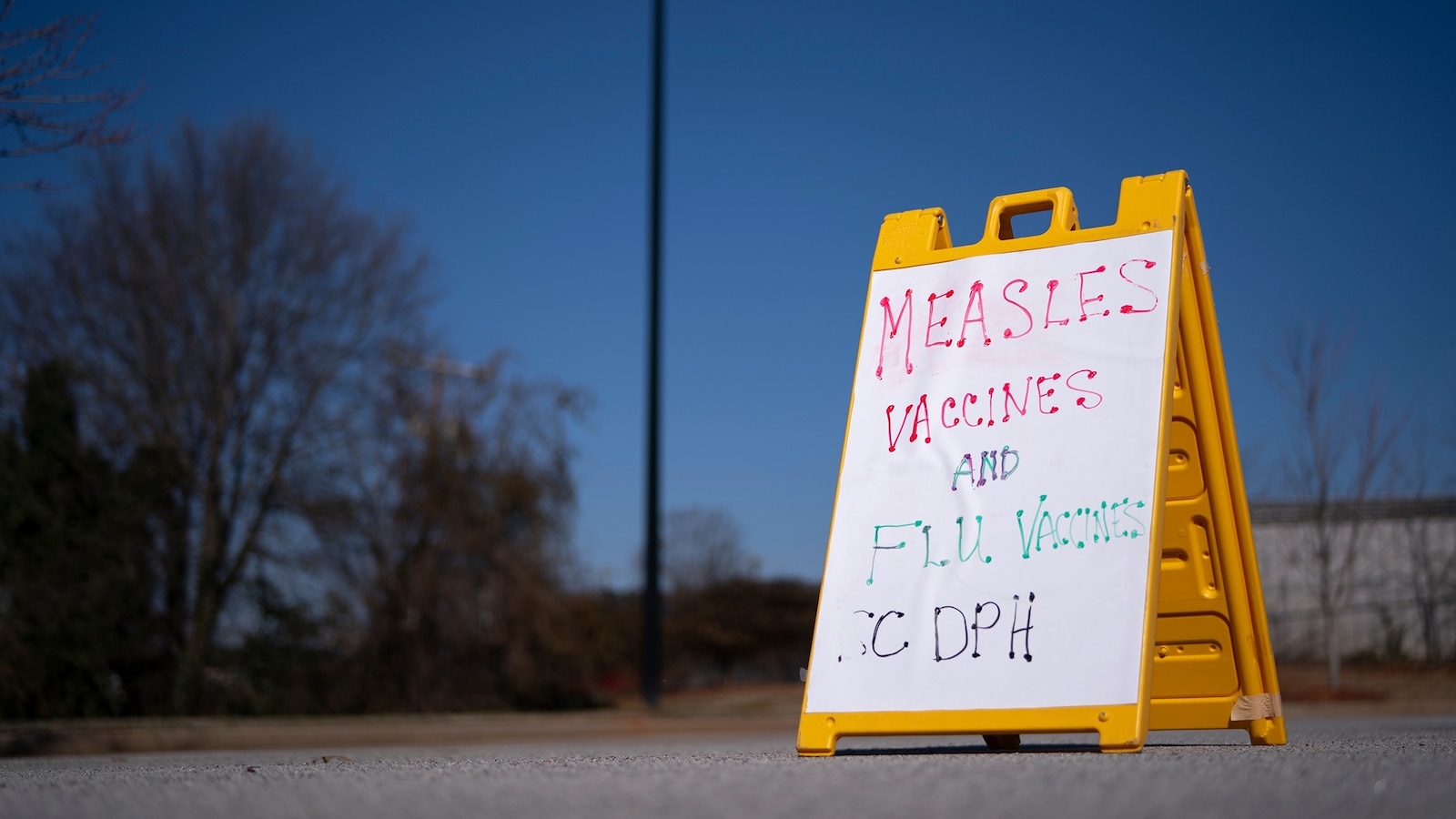
As we face this growing measles crisis, it’s important to understand that this is a choice we’re making as a society, not an inevitable outcome. We have safe, effective vaccines that can prevent virtually all of these cases. We have a healthcare infrastructure capable of reaching nearly every child in America. What we’re lacking isn’t the tools to solve this problem—it’s the collective will to use them. For parents weighing the decision about whether to vaccinate their children, the data is clear: the risks of the disease far outweigh the risks of the vaccine, which are minimal and well-documented. For communities, especially those experiencing outbreaks, this is a moment that calls for both individual responsibility and collective action. Health departments are setting up mobile vaccination clinics, like the one photographed in Spartanburg, South Carolina, making vaccines as accessible as possible. Schools, universities, and community organizations have a role to play in education and outreach, helping people understand both the disease and the protection available against it. The path forward requires us to have honest, compassionate conversations about vaccines—acknowledging concerns while also clearly communicating the science. It requires healthcare providers to take the time to answer questions and build trust with hesitant families. It requires community leaders to speak up about the importance of vaccination. And it requires all of us to remember that in a connected society, our health choices don’t just affect ourselves and our own families—they ripple outward, impacting the most vulnerable members of our communities. The question now is whether we’ll act decisively to reverse this trend before even more children suffer from a disease we know how to prevent.