



Mexico Faces Potential Loss of Measles-Free Status Amid Alarming Outbreak
A Growing Public Health Crisis South of the Border
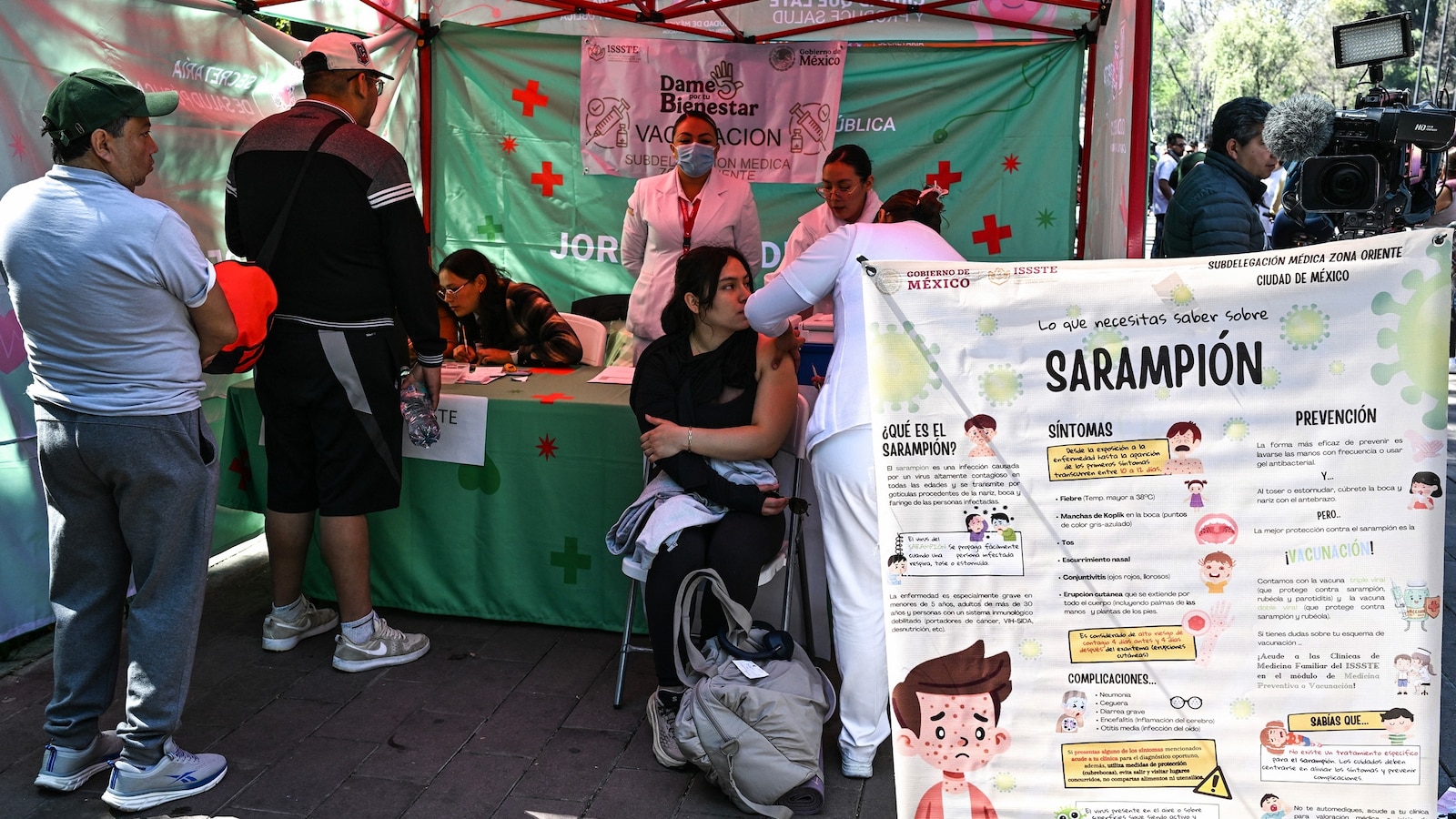
Mexico is confronting a serious public health emergency that threatens to undo nearly three decades of progress against a preventable disease. The country, which proudly achieved measles elimination status in 1996, now finds itself on the brink of losing that designation as a devastating outbreak continues to sweep across its territory. Since the beginning of last year, Mexican health authorities have confirmed more than 9,100 measles cases, resulting in at least 28 deaths—a sobering reminder of just how dangerous this highly contagious virus can be when vaccination rates drop and communities become vulnerable. The Mexico Secretariat of Health has been tracking this outbreak closely, and the numbers paint a concerning picture of a disease that many had hoped was relegated to the history books making an unwelcome comeback in communities throughout the nation.
The demographics of this outbreak are particularly heartbreaking, as the virus has disproportionately affected the country’s youngest and most vulnerable population. Children between the ages of 1 and 9 have borne the brunt of this health crisis, accounting for more than 2,400 confirmed infections according to data compiled by Mexican health agencies. These are children who should be playing, learning, and growing—instead, they’re fighting a potentially deadly disease that we have safe and effective vaccines to prevent. The outbreak’s official starting point has been traced back to February 1st in Chihuahua, a northwestern state that became ground zero for what would become a nationwide health emergency. Health officials are now working to determine whether cases identified in other states are epidemiologically linked to those initial Chihuahua infections, a determination that carries significant implications for how this outbreak is classified and what it means for Mexico’s international health status.
The Threat to Mexico’s Hard-Won Elimination Status
The stakes couldn’t be higher when it comes to the potential reclassification of Mexico’s measles status. If investigators confirm that the cases spreading across different Mexican states are indeed connected to the original Chihuahua outbreak, it would establish that Mexico has experienced a full year of continuous measles transmission—a benchmark that triggers a formal review of the country’s elimination status. Measles elimination doesn’t mean zero cases; rather, it means that any cases that do occur are imported from other countries and don’t result in sustained transmission within the population for more than 12 months. Once a country experiences a year of continuous domestic transmission, the disease is no longer considered eliminated but rather endemic—meaning it’s constantly circulating within the population without needing to be reintroduced from outside sources. This distinction matters tremendously, not just symbolically but in terms of public health infrastructure, international cooperation, and the credibility of vaccination programs.
The determination of whether Mexico loses its elimination status rests with the Pan American Health Organization (PAHO), a United Nations agency responsible for coordinating international health efforts throughout the Americas. PAHO has established a specialized independent body of experts—the Measles, Rubella, and Congenital Rubella Syndrome Elimination Regional Monitoring and Re-Verification Commission—that convenes at least annually to evaluate the measles and rubella elimination status of countries in the region. This isn’t a rubber-stamp process; the commission carefully examines epidemiological data, vaccination coverage rates, surveillance systems, and transmission patterns before making determinations that can have far-reaching consequences for countries’ public health programs and international standings. Recently, PAHO took the significant step of inviting both Mexico and the United States to participate in a virtual meeting scheduled for April 13th to formally review their respective elimination statuses, a clear signal that both nations are at serious risk of losing the measles-free designation they’ve held for years.
A Regional Wake-Up Call and Vaccination Gaps
The measles resurgence isn’t limited to Mexico alone—it’s part of a troubling regional pattern that has prompted PAHO to issue an epidemiological alert warning that measles is spreading throughout the Americas. In language that reflects the gravity of the situation, PAHO stated that “the sharp increase in measles cases is a warning sign that requires immediate and coordinated action by Member States.” The agency has urged member countries to treat this as the emergency it is, prioritizing the strengthening of regular surveillance systems that can quickly identify new cases and vaccination efforts that can close dangerous immunity gaps in communities. PAHO’s recommendations go beyond routine measures, calling for active community, institutional, and laboratory searches for early case identification, as well as complementary vaccination activities specifically designed to reach populations that have been missed by standard immunization programs.
Perhaps the most revealing and concerning statistic from Mexico’s outbreak relates to the vaccination status of those who’ve contracted measles. Out of approximately 7,000 measles patients whose vaccination history was known, a staggering 91.2% had never received any measles vaccine at all. An additional 6.2% had received only one dose of the MMR (measles, mumps, rubella) vaccine, while just 2.65% had received the recommended two or more doses. These numbers tell a clear story: the measles virus is finding and exploiting pockets of unvaccinated or undervaccinated individuals, spreading through communities where it should have no opportunity to gain a foothold. The reasons behind these low vaccination rates are complex and varied, ranging from access issues in remote or underserved areas to vaccine hesitancy fueled by misinformation, to disruptions in routine healthcare services that may have been exacerbated by the COVID-19 pandemic’s impact on health systems worldwide.
The United States Faces Its Own Measles Crisis
The United States, long considered a global leader in disease prevention, is experiencing its own alarming measles resurgence that mirrors the crisis unfolding in Mexico. According to the Centers for Disease Control and Prevention (CDC), the U.S. recorded 2,276 measles cases in the previous year—the highest number the country has seen in more than three decades. Even more tragically, the nation experienced its first measles deaths in over a decade, including two unvaccinated school-aged children in Texas and one unvaccinated adult in New Mexico, bringing home the devastating reality that measles is not just a rash and fever but a potentially fatal disease. The trend has continued into the current year, with 733 cases already confirmed in just the first few months—a rate that means four times as many infections have been recorded in a matter of weeks compared to what the country typically sees in an entire calendar year.
The geographical pattern of the U.S. outbreak bears an unsettling similarity to Mexico’s situation. On January 20th, the calendar marked one year since a measles outbreak began in West Texas, with infections subsequently spreading to neighboring counties and eventually jumping to other states, with Utah and South Carolina reporting their own distinct outbreaks. Public health experts have expressed concerns that if genomic sequencing and epidemiological investigation determine that cases in these various states are linked back to the original Texas cases, it would constitute evidence of continuous transmission for a full year—precisely the threshold that could result in the United States losing its measles elimination status just as Mexico might. This would be a devastating blow to American public health, representing the loss of a status achieved in 2000 and maintained for more than two decades through robust vaccination programs and disease surveillance systems.
A Hemispheric Warning: Learning from Canada’s Loss
The Americas have already witnessed what happens when measles elimination status is lost, with Canada serving as a cautionary tale for its neighbors. In November, the Public Health Agency of Canada received official notification from PAHO that the country had lost its measles elimination status following more than 12 months of continuous measles transmission. Canada’s outbreak began in late October 2024, and the country has since confirmed more than 5,200 probable and confirmed cases—a dramatic illustration of how quickly measles can spread through populations when vaccination coverage drops below the threshold needed for community protection. Canada’s experience demonstrates that no country, regardless of its healthcare infrastructure or economic resources, is immune to the threat of vaccine-preventable disease resurgence when immunization rates decline and pockets of susceptibility develop within the population.
The interconnected nature of measles outbreaks across North America underscores a fundamental truth about infectious disease control: viruses don’t respect borders, and public health is only as strong as its weakest link. The measles virus is among the most contagious pathogens known to humanity, with each infected person capable of spreading the disease to 12 to 18 unvaccinated individuals in settings where the virus can linger in the air for up to two hours after an infected person has left. This extraordinary transmissibility means that maintaining elimination status requires vaccination coverage rates of approximately 95% in communities—a threshold that many areas across Mexico, the United States, and Canada have failed to maintain. The current crisis serves as a powerful reminder that the victories of vaccination programs are never permanent; they require constant vigilance, sustained investment in public health infrastructure, community education to counter misinformation, and political will to prioritize prevention over reaction. As health officials across the hemisphere work to contain current outbreaks and prevent future ones, the measles resurgence of 2025 may ultimately be remembered as either a wake-up call that reinvigorated commitment to immunization or a turning point when hard-won progress against vaccine-preventable diseases began to unravel.