


Nasdaq Sees New Era of Innovation as Crypto Regulations Shift Gears
A Fresh Wind Blowing Through Wall Street
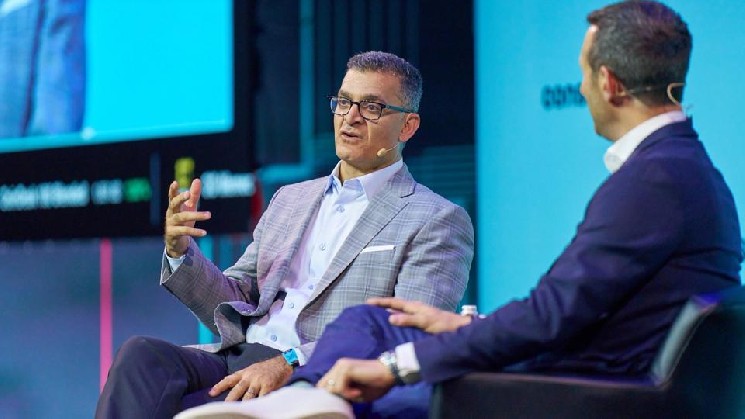
The financial world is experiencing a significant shift in how regulators approach cryptocurrency and blockchain technology, and it’s creating exciting new possibilities for innovation. Tal Cohen, President of Nasdaq, recently shared his optimistic outlook at the Consensus conference in Miami, painting a picture of an industry that’s finally ready to build without constantly looking over its shoulder. After years of walking on eggshells, unsure of what might trigger regulatory backlash, financial institutions are now finding themselves with the breathing room they need to experiment, develop, and scale new technologies. Cohen’s message was clear: the days of regulatory paralysis are giving way to an era of constructive collaboration between innovators and regulators. This transformation represents more than just a change in policy—it signals a fundamental evolution in how America’s financial infrastructure might operate in the coming decades.
The change Cohen described isn’t subtle. Just four years ago, anything that fell into a regulatory gray area was essentially off-limits for major financial institutions like Nasdaq. Companies couldn’t risk investing resources into projects that might suddenly be deemed illegal or face enforcement actions from the Securities and Exchange Commission. That cautious environment stifled innovation and pushed many blockchain projects overseas or into the hands of smaller, less regulated entities. Now, according to Cohen, that same gray zone has transformed into a sandbox for experimentation. Financial institutions can build prototypes, test new systems, and even begin scaling operations without the constant fear of immediate regulatory pushback. This doesn’t mean regulations have disappeared—far from it. Rather, the approach has shifted from enforcement-first to collaboration-first, creating a partnership between regulators and innovators rather than an adversarial relationship.
Building the Financial System of Tomorrow
Nasdaq isn’t just talking about change—they’re actively investing in the technologies that will define the next generation of financial markets. Cohen outlined how the company is focusing on three key technological pillars: blockchain infrastructure, tokenization of assets, and artificial intelligence systems. These aren’t separate initiatives but interconnected pieces of a larger vision for what Cohen calls “always on” market infrastructure. Traditional stock markets operate during specific hours, typically closing overnight and on weekends. This creates inefficiencies, delays in settlement, and missed opportunities for global traders operating across time zones. The vision Cohen articulated involves financial markets that operate continuously, moving money, securities, and collateral at speeds that would have been impossible with traditional infrastructure. This transformation isn’t happening in isolation at Nasdaq alone—it represents a broader industry trend toward modernization that could fundamentally change how ordinary people interact with investments, savings, and financial services.
Nasdaq’s global footprint makes this transformation particularly significant. The company doesn’t just operate its own exchange—it provides trading technology to more than 130 markets worldwide. When Nasdaq invests in blockchain and tokenization infrastructure, the ripple effects extend across the global financial system. Cohen emphasized that this isn’t about replacing traditional finance but rather creating convergence between the old and new systems. The goal is seamless integration where a trader, investor, or financial institution can work with traditional securities and tokenized digital assets through the same interface, using the same infrastructure. This convergence addresses one of the industry’s most persistent challenges: firms don’t want to maintain separate, parallel systems for conventional and digital assets. The cost and complexity of running dual infrastructures would be prohibitive for many institutions and would slow adoption of new technologies. Nasdaq’s approach aims to build bridges rather than islands, creating pathways between the established financial world and emerging blockchain-based systems.
Breaking Down Barriers Between Old and New Finance
One of the most significant obstacles facing the financial industry’s digital transformation is interoperability—the ability of different systems to work together seamlessly. Cohen identified this as perhaps the largest hurdle the industry must overcome. In practical terms, a bank or brokerage firm doesn’t want its traditional stock trading system to be completely separate from its cryptocurrency or tokenized asset platform. Customers expect to manage all their investments through one account, one interface, one experience. Behind the scenes, this requires complex technical integration between systems built on fundamentally different architectures. Blockchain-based systems operate on distributed ledgers using cryptographic verification, while traditional financial systems rely on centralized databases and established clearinghouse mechanisms. Making these systems talk to each other isn’t just a technical challenge—it requires new standards, protocols, and industry-wide cooperation.
Cohen’s vision addresses this directly. Rather than forcing firms to choose between traditional and digital infrastructure, Nasdaq aims to provide integrated solutions that deliver the benefits of both approaches. Traditional financial systems offer regulatory compliance, established legal frameworks, and decades of reliability testing. Blockchain systems offer transparency, faster settlement times, reduced intermediary costs, and programmability through smart contracts. An ideal system would combine these strengths while minimizing the weaknesses of each approach. For everyday investors, this could mean faster access to funds after selling investments, lower transaction fees, and the ability to trade assets that were previously illiquid or accessible only to wealthy investors. For financial institutions, it could mean reduced operational costs, better risk management, and the ability to offer new services that weren’t previously feasible. The convergence Cohen described isn’t just about technology—it’s about reimagining what’s possible in financial markets.
A New Relationship with Regulators
Perhaps the most striking aspect of Cohen’s comments was his characterization of the SEC’s evolving approach to crypto and blockchain technology. He didn’t merely describe regulators as “open-minded”—he went further, calling them “proactive.” This represents a dramatic shift from the enforcement-heavy approach that characterized much of the previous administration’s tenure at the SEC. Under that regime, many companies felt they were navigating a minefield, where any misstep could result in costly enforcement actions, fines, or legal battles. Innovation slowed as companies adopted a wait-and-see approach, unwilling to invest resources into projects that might be shut down. The new approach, according to Cohen, involves regulators who are willing to engage with industry participants, provide guidance before problems arise, and work collaboratively to ensure that innovation happens within appropriate guardrails rather than being blocked entirely.
This regulatory thaw has significant implications for the pace of innovation in American financial markets. When companies can have productive conversations with regulators during the development phase rather than only during enforcement actions, they can design systems that meet regulatory requirements from the ground up. This reduces waste, accelerates time to market, and ultimately serves consumers better by ensuring that new products and services are both innovative and compliant. Cohen’s optimism suggests that the SEC under current leadership views its role not as preventing all risk or blocking new technology, but rather as ensuring that innovation happens in ways that protect investors and maintain market integrity. This more nuanced approach acknowledges that overly restrictive regulations can drive innovation offshore, depriving American companies and consumers of the benefits while doing little to actually protect anyone. By engaging constructively with industry, regulators can shape the development of new technologies rather than simply reacting to them after the fact.
Tokenization: Putting Assets in Motion
Cohen described tokenization—the process of representing real-world assets as digital tokens on a blockchain—as a transformative technology that will “take an asset and put it in motion.” This seemingly simple phrase captures something profound about how blockchain technology could change finance. Traditional assets like real estate, art, private company shares, or even portions of high-value assets are often difficult to trade. They require intermediaries, paperwork, long settlement times, and significant transaction costs. Many assets remain illiquid not because people don’t want to buy or sell them, but because the infrastructure for doing so efficiently doesn’t exist. Tokenization changes this equation by creating digital representations of assets that can be easily transferred, divided into smaller portions, and traded on blockchain-based platforms. A piece of commercial real estate that might have taken months to sell through traditional channels could potentially be tokenized and traded in fractions, allowing smaller investors to participate in markets previously reserved for institutions and the wealthy.
Beyond making assets more liquid and tradeable, tokenization offers other benefits that Cohen highlighted. Issuers of tokenized assets gain better visibility into who owns their securities, how they’re being traded, and where they’re held. This transparency could reduce fraud, simplify compliance with regulations, and make it easier to communicate with shareholders or asset holders. For investors, tokenized assets could offer fractional ownership opportunities, lower minimum investments, and the ability to quickly rebalance portfolios by trading assets that would traditionally be locked up for long periods. The technology also enables programmable features through smart contracts—automatically distributing dividends, enforcing transfer restrictions, or executing other functions without human intervention. As this technology matures and gains regulatory clarity, we could see tokenization extend to an increasingly wide range of assets, from traditional stocks and bonds to real estate, intellectual property, commodities, and beyond. Nasdaq’s investment in this infrastructure positions the company at the forefront of this transformation, potentially reshaping how assets are created, distributed, and traded in the decades ahead.
Testing the Future with Artificial Intelligence
The third pillar of Nasdaq’s technological strategy involves artificial intelligence, specifically systems designed to simulate trading activity in digital replicas of the exchange’s matching engine. This might sound highly technical, but it addresses a very practical challenge: as markets move toward extended or continuous trading hours, ensuring system reliability becomes even more critical. Traditional exchanges could perform maintenance and testing during overnight hours when markets were closed. An “always on” market doesn’t offer that luxury. AI-powered simulation environments allow Nasdaq to test how systems will perform under various stress scenarios without risking actual trading operations. These digital twins can simulate extreme market volatility, technical failures, cyber attacks, or unprecedented trading volumes to identify weaknesses before they can affect real markets. This proactive approach to reliability and risk management becomes essential as financial infrastructure becomes more complex and operates continuously.
The combination of blockchain infrastructure, tokenization, and AI represents Nasdaq’s comprehensive vision for the future of financial markets. These technologies aren’t independent initiatives but interconnected components of a larger transformation. Blockchain provides the foundational infrastructure for tokenized assets; tokenization creates new tradable instruments and makes existing ones more efficient; AI ensures that the increasingly complex systems remain reliable, secure, and performant even under stress. Together, they point toward a financial system that operates faster, more efficiently, with lower costs and greater accessibility than what we have today. Cohen’s optimistic tone at the Consensus conference wasn’t just about celebrating regulatory changes—it was about recognizing that the combination of technological capability and regulatory clarity has created a unique moment for innovation. After years of uncertainty and cautious development, major financial institutions like Nasdaq are now positioned to build the infrastructure that will define how the next generation interacts with markets, investments, and financial services. The transformation won’t happen overnight, but the foundation is being laid today for a financial system that would have seemed like science fiction just a decade ago.