


States Challenge Trump’s Tariff Authority in Federal Court
Twelve States Unite Against Controversial Trade Policy
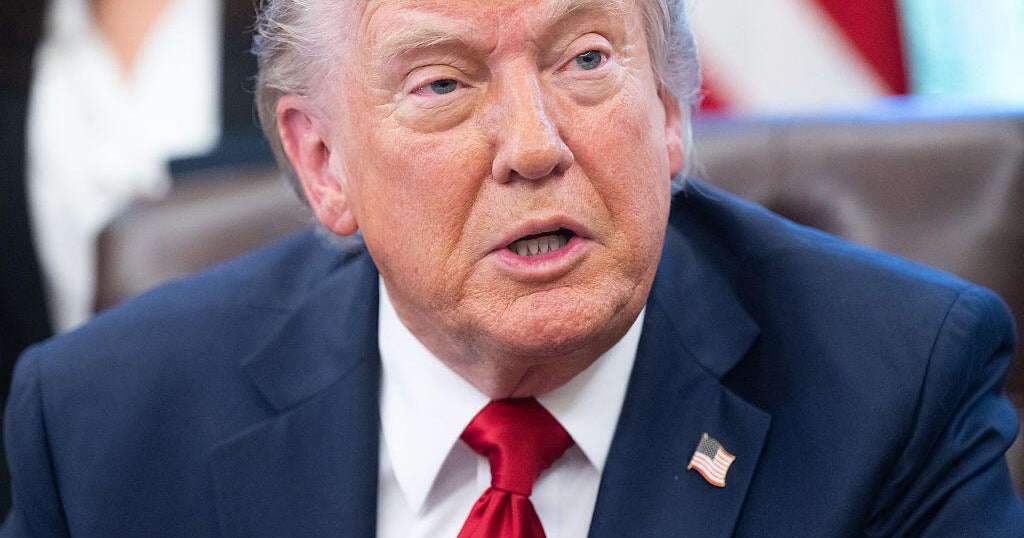
In a significant legal challenge to the Trump administration’s trade policies, twelve states have filed a lawsuit in the U.S. Court of International Trade in New York, arguing that the president’s sweeping tariff program violates constitutional boundaries and has created unprecedented economic turmoil across America. The coalition of states—Oregon, Arizona, Colorado, Connecticut, Delaware, Illinois, Maine, Minnesota, Nevada, New Mexico, New York, and Vermont—contends that President Trump has overstepped his executive authority by imposing tariffs based on personal preference rather than legitimate legal grounds. At the heart of their complaint is the assertion that these tariffs represent an unconstitutional seizure of power that rightfully belongs to Congress, and that the administration has misused the International Emergency Economic Powers Act to justify what they characterize as arbitrary and economically damaging trade restrictions.
The lawsuit paints a picture of an administration acting on impulse rather than following established legal procedures. According to the filing, Trump’s tariff policy has been subject to his “whims rather than the sound exercise of lawful authority,” creating an unpredictable business environment that makes long-term planning nearly impossible for American companies and consumers. The states are asking the court to make a clear declaration that these tariffs are illegal and to issue orders preventing government agencies and their officers from continuing to enforce them. This legal action represents more than just a policy disagreement—it’s a fundamental challenge to how much power a president can wield when it comes to reshaping America’s economic relationships with the rest of the world. The Justice Department did not immediately respond to requests for comment on the lawsuit, leaving many questions unanswered about how the administration plans to defend its controversial trade policies in court.
State Leaders Sound Alarm on Economic Consequences
State attorneys general involved in the lawsuit have been remarkably blunt in their criticism of the administration’s approach to trade policy. Arizona Attorney General Kris Mayes didn’t mince words, calling Trump’s tariff scheme “insane” and declaring it “not only economically reckless—it is illegal.” Her comments reflect the growing frustration among state leaders who feel they’re being forced to deal with economic fallout from federal policies they had no role in shaping. These aren’t just abstract legal concerns—states are genuinely worried about real-world impacts on their economies, their businesses, and the families who live within their borders. Connecticut Attorney General William Tong echoed these concerns, describing the situation as “Trump’s lawless and chaotic tariffs” that amount to “a massive tax on Connecticut families and a disaster for Connecticut businesses and jobs.” This characterization of tariffs as taxes is particularly significant because it frames the issue in terms that resonate with everyday Americans who may not understand the complexities of international trade law but certainly understand what it means when their cost of living goes up.
The economic ripple effects of these tariffs extend far beyond simple price increases at the checkout counter. Businesses that depend on imported materials or components are struggling to maintain their operations when costs can change dramatically based on presidential announcements that seem to come without warning or clear rationale. Workers are worried about job security when their employers face uncertain cost structures. State governments are concerned about revenue shortfalls and the potential need to cut services or raise state taxes to compensate for economic disruptions caused by federal trade policy. The attorneys general bringing this lawsuit represent states with diverse economies—from the tech-heavy West Coast to manufacturing-dependent Midwest states to service-oriented economies in the Northeast—suggesting that the perceived harm from these tariffs crosses regional and economic boundaries.
Constitutional Questions at the Center of Legal Challenge
The legal argument presented by the twelve states goes to the very foundation of American government structure and the separation of powers between different branches. According to the lawsuit, only Congress possesses the constitutional authority to impose tariffs, a power explicitly granted in Article I of the Constitution. The president, the states argue, can only invoke the International Emergency Economic Powers Act under very specific circumstances—when an emergency presents an “unusual and extraordinary threat” originating from outside the United States. The states contend that the Trump administration has stretched this emergency authority far beyond its intended purpose, using it as a blank check to reshape American trade policy without the congressional input and deliberation that the Constitution requires for such significant economic decisions. This isn’t just technical legal hairsplitting—it represents a fundamental question about whether we live under a system where one person can make sweeping economic decisions affecting hundreds of millions of people, or whether such decisions require the broader consensus that congressional action demands.
The lawsuit explicitly states that “by claiming the authority to impose immense and ever-changing tariffs on whatever goods entering the United States he chooses, for whatever reason he finds convenient to declare an emergency, the President has upended the constitutional order and brought chaos to the American economy.” This language is deliberately strong, framing the issue not as a mere policy disagreement but as a constitutional crisis that threatens the fundamental balance of powers that has governed American democracy for more than two centuries. If the president can unilaterally impose tariffs by simply declaring an emergency—without clear evidence of an actual threat that rises to the level of an “unusual and extraordinary” danger from abroad—then what other economic powers might future presidents claim under similarly broad interpretations of emergency authority? These are the kinds of questions that extend far beyond this particular administration or these specific tariffs, potentially setting precedents that could affect American governance for generations to come.
California Adds Weight to Legal Opposition
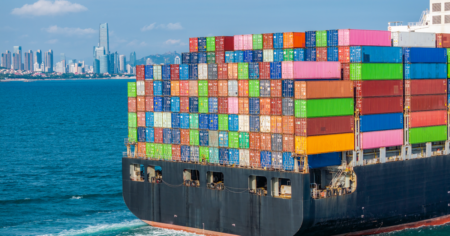
The multi-state lawsuit isn’t the only legal challenge facing the Trump administration’s tariff policies. Last week, California Governor Gavin Newsom, a Democrat who has become one of Trump’s most vocal critics, filed a separate lawsuit in U.S. District Court in the Northern District of California specifically addressing how the tariff policy affects his state. Given that California is the largest importer in the country, with massive ports in Los Angeles and Long Beach serving as gateways for goods from across the Pacific, the potential economic impact is staggering. Newsom’s lawsuit argues that California could lose billions of dollars in revenue as these tariffs disrupt trade flows, potentially forcing the state to make difficult choices about funding for education, infrastructure, healthcare, and other essential services that Californians depend on. The fact that America’s most populous state, with an economy that would rank among the largest in the world if it were an independent country, is taking such strong legal action underscores just how significant the perceived threat from these tariffs has become.
California’s legal challenge adds considerable weight to the growing opposition because of the state’s unique position in the American economy and its relationship with international trade. The state’s ports don’t just serve California—they’re critical infrastructure for the entire American economy, with goods flowing through them destined for all fifty states. Disruptions to California’s trade operations ripple outward, affecting supply chains, employment, and prices across the country. Moreover, California’s large, diverse economy means that tariff impacts are felt across numerous sectors simultaneously—from agriculture to technology, from entertainment to manufacturing, from tourism to retail. When a state with this much economic heft says it’s being harmed by federal trade policy, the argument carries weight that goes beyond partisan politics. It represents a concrete challenge to the administration’s claim that its tariff policies are good for America when one of America’s most economically successful states is saying exactly the opposite.
White House Pushes Back Against Legal Challenges
The Trump administration has not remained silent in the face of these legal challenges. White House spokesperson Kush Desai has responded to both the multi-state lawsuit and California’s separate action with vigorous defenses of the president’s tariff policies. Responding to the twelve-state lawsuit, Desai accused Democratic attorneys general of “prioritizing a witch hunt against President Trump,” framing the legal challenge not as a legitimate constitutional concern but as partisan political theater. He stated that “the Trump Administration remains committed to using its full legal authority to confront the distinct national emergencies our country is currently facing—both the scourge of illegal migration and fentanyl flows across our border and the exploding annual U.S. goods trade deficit.” This response is particularly interesting because it attempts to connect the tariff policy to issues like immigration and drug trafficking that might not seem obviously related to trade policy, suggesting an administration strategy of painting a broad picture of interconnected crises that justify exceptional executive action.
In response to Governor Newsom’s California lawsuit, Desai struck a similar tone, saying the administration “remains committed to addressing this national emergency that’s decimating America’s industries and leaving our workers behind with every tool at our disposal, from tariffs to negotiations.” The administration’s consistent use of emergency language is clearly strategic—if these situations genuinely constitute national emergencies, then the legal justification for presidential action under the International Emergency Economic Powers Act becomes stronger. However, this is exactly the claim that the states are challenging. They argue that calling something an emergency doesn’t make it one, at least not in the legal sense that would justify bypassing normal constitutional processes. The administration faces the challenge of convincing federal judges that situations that have developed over years or decades—like trade deficits or immigration patterns—suddenly constitute the kind of urgent, unexpected threats from abroad that emergency powers were designed to address. How courts ultimately answer this question will likely determine not just the fate of these specific tariffs, but potentially the scope of presidential power for years to come.
Broader Implications for American Democracy and Economy
This legal battle over tariffs represents something much larger than a dispute about trade policy—it’s a test of fundamental principles about how American democracy functions and who has the power to make decisions that affect everyone’s daily lives. If the courts side with the states, it would represent a significant check on presidential power and a reaffirmation that Congress must play a central role in major economic policy decisions. Such a ruling might force future presidents to work more collaboratively with the legislative branch on trade issues rather than acting unilaterally. On the other hand, if the courts side with the Trump administration, it could set a precedent that significantly expands what presidents can do by declaring emergencies, potentially opening the door to executive actions on numerous issues that have traditionally required congressional involvement. The economic stakes are equally significant. Businesses across America are watching these cases closely because the outcomes will determine whether they can count on stable, predictable trade policies or whether they’ll need to prepare for potential dramatic shifts whenever a president decides to invoke emergency powers.
For ordinary Americans, these lawsuits matter because they’re ultimately about who pays for tariffs and how economic decisions get made in our democracy. Despite political rhetoric that sometimes suggests otherwise, tariffs are generally paid by importers and ultimately passed along to consumers through higher prices, functioning essentially as a tax increase that doesn’t require congressional approval if the president can impose them unilaterally. The states bringing these lawsuits are arguing that this represents taxation without proper representation—that major economic decisions affecting millions of people shouldn’t be made by one person operating without meaningful checks and balances. As these cases work their way through the federal court system, they’ll provide important answers about the relationship between presidential power and economic policy, between emergency authority and everyday governance, and ultimately about whether America’s constitutional system of separated powers can adapt to modern challenges while still maintaining the fundamental protections that prevent any single branch of government from becoming too powerful. Whatever the courts decide, these cases will be studied for years as important moments in the ongoing negotiation of how American democracy actually works in practice.