


Karen Read Retrial: First Day of Testimony in High-Profile Case Examining Police Officer’s Death
The Case Returns to Court After a Controversial First Trial
The courtroom drama surrounding Karen Read has captured national attention once again as the first full day of testimony began in her retrial on April 23, 2025. The Massachusetts woman faces serious allegations in connection with the death of her boyfriend, John O’Keefe, a Boston police officer whose body was found outside a home in Canton, Massachusetts, in January 2022. This second trial comes after a jury in the initial proceedings last year was unable to reach a unanimous verdict, resulting in a mistrial. The case has divided public opinion sharply, with passionate supporters insisting Read is being framed while prosecutors maintain she killed O’Keefe in a drunken rage. The circumstances surrounding O’Keefe’s death have raised numerous questions about what really happened that snowy winter night, and the retrial promises to scrutinize the evidence once more under intense public scrutiny.
The resumption of this trial represents more than just another legal proceeding—it symbolizes the ongoing quest for justice in a case that has exposed deep divisions within the community and raised troubling questions about police conduct, investigative procedures, and the possibility of a cover-up. As witnesses take the stand and evidence is presented anew, both the prosecution and defense will attempt to convince a fresh jury of their competing narratives about what transpired on that fateful night.
Understanding the Allegations and What Prosecutors Claim Happened
According to the prosecution’s theory, Karen Read and John O’Keefe had been out drinking on the night of January 28, 2022, before driving to a party at the home of Brian Albert, a fellow police officer. Prosecutors allege that following an argument, Read struck O’Keefe with her SUV and left him to die in the freezing cold outside the Albert residence. They contend that her actions were deliberate or at minimum demonstrated such reckless disregard for human life that they constitute criminal behavior warranting serious charges. The prosecution points to physical evidence including damage to Read’s vehicle, testimony about her behavior that night, and statements she allegedly made as evidence of her guilt.
However, the defense has constructed an entirely different narrative that has resonated powerfully with a segment of the public. Read’s attorneys argue that she is the victim of an elaborate frame-up orchestrated by law enforcement officers determined to protect one of their own. They suggest that O’Keefe was actually killed inside the Albert home, possibly during an altercation with other party attendees, and that his body was then placed outside to make it appear as though Read had struck him with her vehicle. This alternative theory has gained traction among Read’s supporters, who have organized rallies and social media campaigns proclaiming her innocence and demanding accountability for what they view as police corruption. The defense has raised questions about the integrity of the investigation, pointing to allegedly mishandled evidence, conflicts of interest among the investigating officers, and suspicious circumstances surrounding the case.
The First Trial and Why It Ended Without Resolution
The initial trial of Karen Read became a media sensation, drawing crowds of supporters to the courthouse and generating extensive coverage both locally and nationally. After weeks of testimony that included dramatic moments, conflicting expert opinions, and emotional testimony from witnesses on both sides, the jury deliberated for days before ultimately informing the judge that they were hopelessly deadlocked. Despite the judge’s instructions to continue their efforts to reach a unanimous verdict, the jurors remained divided, resulting in a mistrial declaration. This outcome satisfied neither the prosecution, which had sought a conviction, nor the defense, which had hoped for acquittal.
The hung jury reflected the deeply polarized views about the case that had developed throughout the proceedings. Some jurors apparently found the prosecution’s evidence compelling, while others harbored reasonable doubt or found the defense’s alternative narrative credible. Following the mistrial, prosecutors faced a decision about whether to retry the case, ultimately deciding that the interests of justice required a second attempt to hold Read accountable for O’Keefe’s death. The defense, meanwhile, maintained that the decision to retry Read constituted harassment and that she should be allowed to move forward with her life. As the retrial commenced, both legal teams faced the challenge of presenting their cases to a new jury while being acutely aware of how the first trial had unfolded and where their arguments had succeeded or failed to persuade.
What the First Full Day of Testimony Revealed
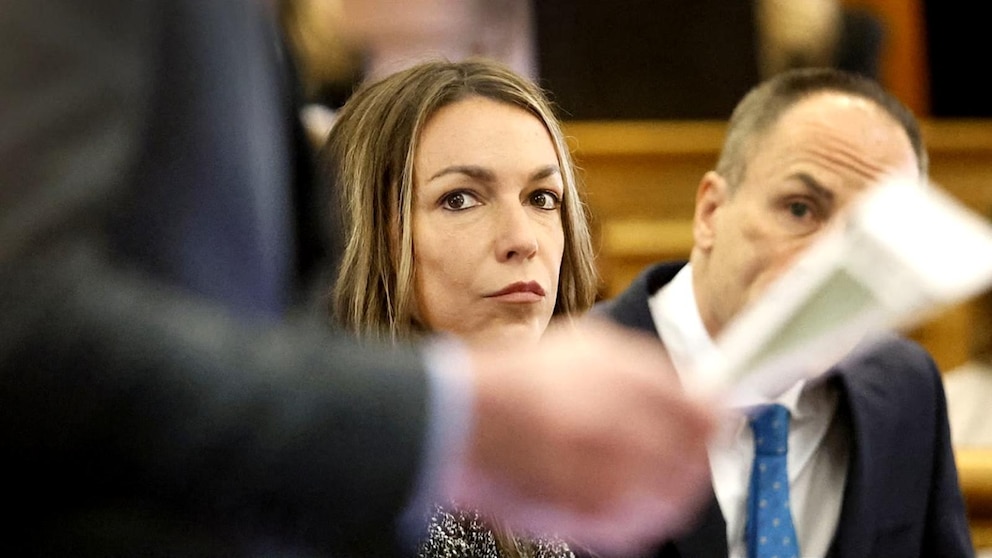
As testimony began in earnest on this first full day of the retrial, observers got their first substantive look at how this second trial might differ from the first. Prosecutors began laying the groundwork for their case by calling witnesses who could establish the timeline of events on the night O’Keefe died and the condition in which his body was found. The testimony aimed to paint a picture of the circumstances that led to the tragic discovery of the police officer’s body in the snow, severely injured and ultimately dying from hypothermia and his injuries. Early witnesses included first responders who arrived at the scene and individuals who had been present at or near the events of that evening.
The defense, during cross-examination, began implementing their strategy of raising doubts about the investigation’s integrity and highlighting inconsistencies or questionable aspects of the evidence. Defense attorneys questioned witnesses closely about the details of their observations, attempting to expose gaps in the prosecution’s narrative or to suggest alternative explanations for the physical evidence. The courtroom atmosphere was notably tense, with Read’s supporters filling available seats and watching proceedings carefully for any indication of how the case might be unfolding. Outside the courthouse, media trucks and protesters created a circus-like atmosphere, demonstrating the continuing public fascination with this case. Legal analysts observing the proceedings noted both similarities to and departures from how the first trial had begun, speculating about whether either side had adjusted their strategy based on lessons learned from the previous proceedings.
The Broader Implications and Public Interest in This Case
The Karen Read case has transcended the specifics of one woman’s trial to become a cultural flashpoint that speaks to larger issues of public trust in law enforcement, the challenges of seeking justice when police are involved as both victims and potential suspects, and the power of social media to shape public perception of legal proceedings. Read’s supporters have organized under the rallying cry that she is being framed, creating a movement that has drawn comparisons to other cases where public advocacy has played a significant role. They have questioned whether someone can receive a fair trial when the alleged victim is a police officer and when other officers are involved in the investigation, raising concerns about potential conflicts of interest and the blue wall of silence that can protect law enforcement from accountability.
Conversely, O’Keefe’s family and supporters view the defense’s narrative as a cruel distortion that adds to their suffering by implicating other officers without solid evidence and by portraying their loved one’s death as part of a conspiracy rather than as the tragic result of his girlfriend’s actions. They argue that the evidence clearly points to Read’s guilt and that the alternative theories are desperate attempts to avoid responsibility. This tension between competing narratives has made the case particularly contentious, with emotions running high on both sides. The retrial offers another opportunity for the justice system to weigh the evidence and reach a conclusion, but regardless of the outcome, it seems unlikely that this verdict will satisfy everyone invested in the case. The proceedings also raise important questions about how high-profile cases should be handled, whether extensive media coverage and public advocacy help or hinder the pursuit of justice, and what reforms might be necessary to ensure truly impartial investigations when law enforcement officers are involved as victims, witnesses, or potential suspects.
Looking Ahead: What Comes Next in This Legal Drama
As the retrial continues beyond this first full day of testimony, both the prosecution and defense face the challenge of presenting their strongest possible cases to a jury that will ultimately decide Karen Read’s fate. The prosecution must prove beyond a reasonable doubt that Read caused O’Keefe’s death through criminal conduct, while the defense need only create sufficient doubt in jurors’ minds to secure an acquittal. The coming weeks will likely feature expert testimony about the physical evidence, including forensic analysis of Read’s vehicle, medical examiner reports about O’Keefe’s injuries, and possibly digital evidence from phones and other devices. Character witnesses may testify about the relationship between Read and O’Keefe, potentially offering insights into whether their relationship was troubled enough to support the prosecution’s theory or loving enough to make the defense’s claim that she’s being framed more plausible.
The outcome of this retrial will have profound implications not just for Karen Read personally but potentially for how similar cases are handled in the future. If she is convicted, it may validate the prosecution’s approach and the investigation’s integrity, though her supporters will likely continue to maintain her innocence. If she is acquitted, it could fuel further scrutiny of the police officers involved and potentially lead to calls for additional investigations into what really happened to John O’Keefe. Another hung jury seems less likely but remains possible if this jury, like the last, finds itself unable to reconcile the competing narratives. Whatever the outcome, this case has already secured its place in the annals of controversial American trials, joining other proceedings where questions about law enforcement conduct, investigative integrity, and the search for truth in complex circumstances have captured public attention. As testimony continues, observers will be watching closely for any developments that might tip the scales toward conviction or acquittal in this fascinating and tragic case.