


Tensions Flare as House Democrats Walk Out of Epstein Briefing with Attorney General Bondi
A Dramatic Confrontation on Capitol Hill
The ongoing controversy surrounding the Jeffrey Epstein case took another heated turn this week when a group of House Democrats staged a dramatic walkout from a closed-door briefing with Attorney General Pam Bondi. The confrontation, which occurred late Wednesday evening, highlighted the deepening frustrations and partisan divide over how the Justice Department has been handling the sensitive investigation into the notorious financier. The briefing, which lasted less than an hour before Democrats departed, revealed the raw tensions simmering between lawmakers and the administration over transparency and accountability in one of the most scrutinized cases in recent American history. The incident came just one day after House Oversight Committee Chairman James Comer, a Republican from Kentucky, issued a subpoena compelling Bondi to testify about the Epstein investigation next month, setting the stage for what promises to be a contentious showdown.
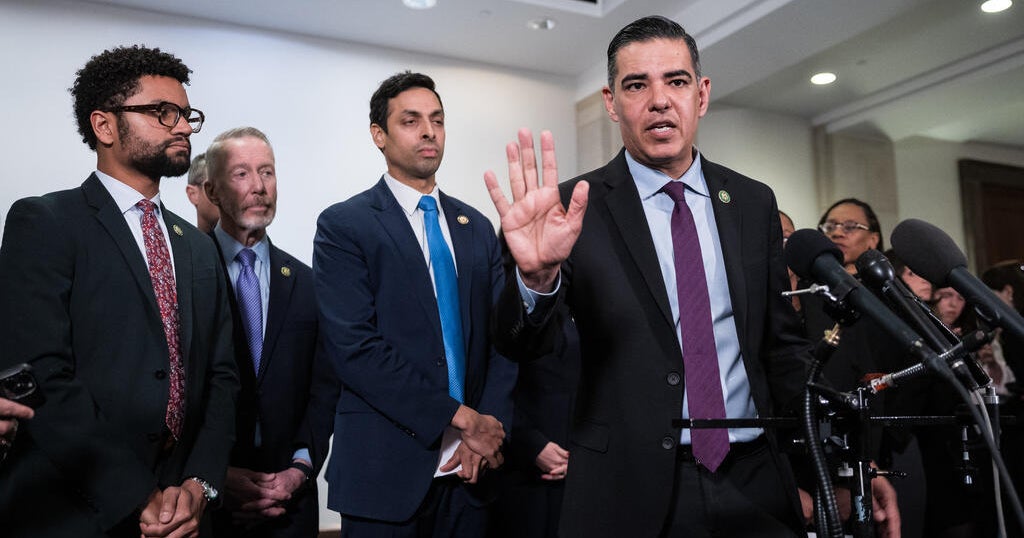
Attorney General Bondi and Deputy Attorney General Todd Blanche had traveled to Capitol Hill specifically to meet with members of the oversight panel, but the session quickly deteriorated into partisan bickering and accusations of bad faith. Democrats emerged from the room visibly frustrated, with California Representative Robert Garcia, the committee’s ranking Democrat, characterizing the entire session as a “fake hearing.” He emphasized that Bondi had not been placed under oath and had failed to deliver an opening statement, two procedural elements that Democrats view as essential for any legitimate congressional testimony. Most troubling to the Democratic members was Bondi’s apparent refusal to commit to honoring the subpoena for public testimony, a stance they interpreted as part of a broader pattern of stonewalling and evasion by the administration on matters related to Epstein.
Democrats Cry Cover-Up, Republicans Cry Political Theater
The walkout sparked immediate partisan finger-pointing, with each side accusing the other of playing politics with a serious investigation. Representative Garcia didn’t mince words when addressing reporters after leaving the briefing room, declaring the situation “outrageous” and “infuriating.” He framed the administration’s approach as a deliberate “White House coverup of the Epstein files,” warning that Democrats would no longer tolerate what they see as deliberate obstruction. Florida Representative Maxwell Frost echoed these sentiments, criticizing the closed-door format as a “fake deposition where no one can see what’s going on.” He specifically noted the absence of C-SPAN cameras, suggesting that the lack of public transparency was intentional and designed to shield Bondi from accountability. For Democrats, the entire episode reinforced their suspicions that the Justice Department under Bondi’s leadership has something to hide about the government’s past and present handling of the Epstein case.
Chairman Comer, however, painted an entirely different picture of events, suggesting that the Democratic walkout had been planned in advance as a calculated political stunt. He characterized it as a “political game,” implying that Democrats were more interested in creating a media spectacle than in genuinely seeking answers about the Epstein investigation. According to Comer’s account, the Democrats who did ask questions during the brief time they remained in the room spent their time complaining about the format rather than substantively engaging with the material. “They came out, clutching their pearls, complaining that she wasn’t answering questions,” Comer told reporters, adding that “the first three people to ask questions, all they did was complain.” This partisan back-and-forth highlighted how the Epstein case has become yet another flashpoint in the ongoing battles between Democrats and Republicans over executive branch accountability and congressional oversight powers.
A Personal Confrontation Turns Ugly
The briefing apparently included at least one heated personal exchange that both participants acknowledged to reporters afterward. Pennsylvania Representative Summer Lee, a Democrat, told journalists that she had asked Chairman Comer directly whether he would take action to compel Bondi’s compliance with the subpoena, including initiating contempt of Congress proceedings if the Attorney General failed to appear for public testimony. According to Lee’s account, rather than responding to her substantive question, Comer dismissed her concerns by saying she was “bitching.” Lee characterized this response as childish and unprofessional, suggesting it reflected the chairman’s unwillingness to hold the administration accountable. Comer confirmed the interaction but framed it differently, saying that Lee “was just complaining about the format” and later doubling down on social media, writing on X (formerly Twitter): “I said Democrats were bitching and wasting everyone’s time because Democrats were bitching and wasting everyone’s time.”
This personal clash between Lee and Comer captured in microcosm the broader dysfunction that has come to characterize congressional oversight efforts in recent years. What should have been a serious inquiry into how federal law enforcement handled one of the most notorious criminal cases in recent memory instead devolved into partisan accusations and personal insults. The incident also revealed how gender dynamics sometimes play into congressional confrontations, with Lee’s experience as a woman being dismissed with language that many would consider inappropriate in a professional setting. The verbal sparring between these two members of Congress demonstrated how difficult it has become for lawmakers to find common ground even on issues—like getting answers about Epstein—that theoretically should transcend partisan divisions.
The Question of Compliance and Transparency
When reporters pressed Attorney General Bondi after the briefing about whether she would comply with the subpoena to testify publicly next month, her response was carefully worded but ultimately noncommittal. “I made it crystal clear, I will follow the law,” Bondi stated, a formulation that Representative Garcia quickly dismissed as inadequate. The phrase “follow the law” could mean many things, including potentially fighting the subpoena in court, claiming executive privilege, or sending subordinates in her place—all tactics that would fall short of the personal, public testimony that Democrats are demanding. Bondi also took the opportunity to criticize the Democrats who walked out, pointing out what she saw as hypocrisy in their approach. She noted that one congresswoman had complained about the absence of C-SPAN cameras and therefore refused to ask questions, yet these same members had been “on social media all day saying they had all these questions.” This comment suggested that Democrats were more interested in the optics and publicity of confronting her than in actually obtaining information.
The Justice Department has not yet provided an official comment on the contentious briefing or clarified the Attorney General’s position on compliance with the subpoena. This silence has only fueled Democratic suspicions that the administration is trying to run out the clock or find procedural ways to avoid full transparency. The standoff over whether Bondi will actually appear for public testimony next month now becomes a test of congressional oversight power in an era when executive branch officials have become increasingly resistant to appearing before hostile congressional panels. If Bondi refuses to comply with the subpoena, Democrats will face a decision about whether to pursue contempt proceedings, which could further escalate the confrontation and potentially end up in lengthy court battles that might not be resolved for months or even years.
The Broader Context of the Epstein Investigation
The intensity of Wednesday’s confrontation can only be understood in the context of the Justice Department’s long and deeply problematic history with Jeffrey Epstein. The disgraced financier managed to avoid serious federal consequences for child sex crimes for more than a decade, benefiting from a controversial 2008 plea deal that allowed him to plead guilty to state charges in Florida while avoiding federal prosecution. It wasn’t until 2019 that federal prosecutors in New York finally indicted Epstein on sex trafficking charges, but he died by suicide in his Manhattan jail cell just weeks later, under circumstances that sparked widespread public fascination and numerous conspiracy theories. The case has raised profound questions about whether Epstein received special treatment because of his wealth, connections to powerful figures, or potential role as an informant, and the government has faced intense pressure from both parties to provide complete transparency about every aspect of its dealings with him.
In response to bipartisan demands for answers, Congress passed legislation late last year requiring the Justice Department to release its files on Epstein and his convicted associate Ghislaine Maxwell. The department has since made millions of pages of documents public, spanning multiple federal investigations conducted over the years. However, both Democrats and Republicans have criticized how these releases have been handled, arguing that some files were inappropriately withheld from the public, while others were so heavily redacted that they provided little useful information. Adding another layer of complexity, some survivors of sexual abuse have complained that their personal information was inadvertently exposed in the document releases, despite the department’s claims that hundreds of lawyers carefully reviewed the materials to protect victim identities. The Justice Department has defended its process and stated that it has taken documents down when redaction mistakes were identified, but these missteps have only deepened congressional skepticism about whether the agency can be trusted to police itself on this sensitive matter. The Epstein case has thus become a symbol of broader concerns about accountability, transparency, and whether the justice system treats the wealthy and connected differently than ordinary Americans.