
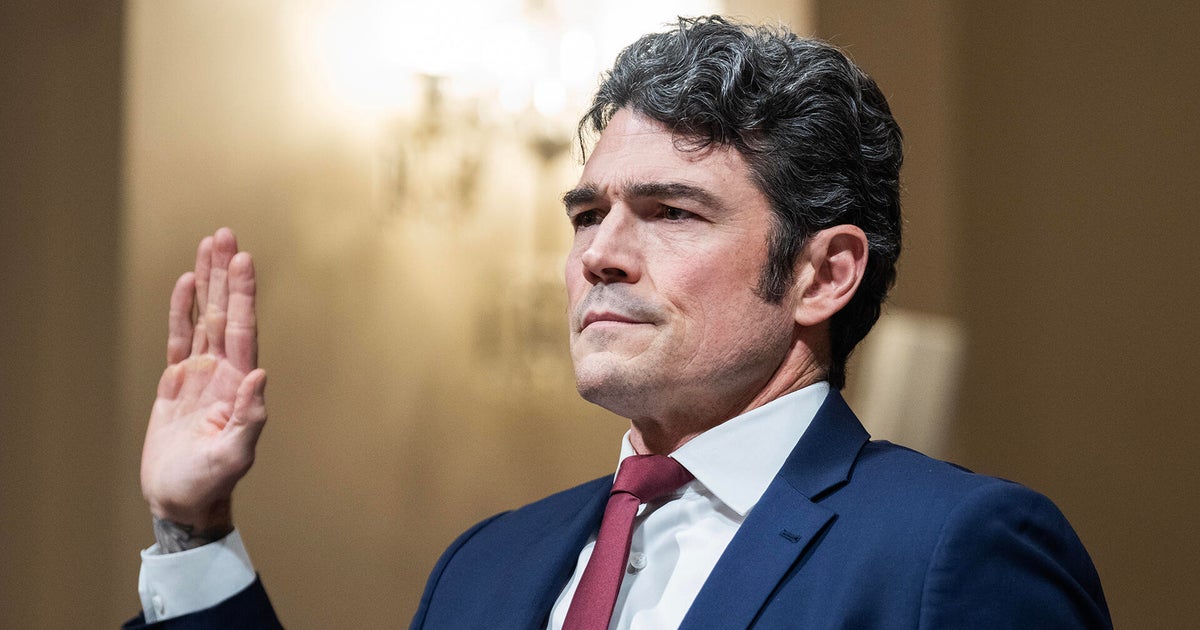

Joe Kent’s Controversial Resignation: A Trump Loyalist’s Breaking Point
A Loyal Supporter’s Unexpected Departure
Joe Kent’s political journey reads like a roadmap of unwavering Trump loyalty—until it suddenly didn’t. The former National Counterterrorism Center director, who stepped down from his position this Tuesday, had been one of President Trump’s most dedicated supporters since the very beginning of his political rise in 2016. Kent stood by Trump through the contentious 2020 election defeat, remained supportive during the aftermath of the January 6 Capitol riots, advocated for conservative causes through various media platforms, and even launched two unsuccessful congressional campaigns aligned with Trump’s agenda. But the 45-year-old special forces veteran found his breaking point when Trump launched military operations against Iran, actions Kent believed were driven not by genuine national security concerns but by pressure from Israel and its American supporters.
In a resignation letter that sent shockwaves through Washington’s political establishment, Kent boldly challenged the president’s narrative about the Iranian threat. He wrote that Iran “posed no imminent threat to our nation” and went further to assert that “we started this war due to pressure from Israel and its powerful American lobby.” This statement directly contradicted Trump’s own justification for the airstrikes announced on February 28, when the president claimed his objective was “eliminating imminent threats from the Iranian regime” that he said directly endangered the United States, American troops stationed overseas, military bases abroad, and allies around the world. Kent suggested in his letter to the president that Trump had been deceived, claiming that “high-ranking Israeli officials and influential members of the American media deployed a misinformation campaign” designed to push America toward war with Iran. The resignation immediately sparked fierce political debate, with Kentucky Republican Senator Mitch McConnell condemning what he called the “virulent anti-Semitism of his resignation letter” and questioning whether Kent had ever been capable of leading with the integrity and accountability he had promised senators during his confirmation process.
A Controversial Figure with Far-Right Connections
Kent’s background and associations had raised eyebrows long before his resignation made headlines. During his Senate confirmation hearings, he was forced to acknowledge that during one of his failed congressional campaigns, a political consultant had arranged a call that included Nick Fuentes, a notorious white nationalist figure who has made openly antisemitic statements, including claiming that Jews hold America “hostage” and even praising Hitler. When Kent ran for a House seat in 2022, he hired Graham Jorgensen, a member of the far-right Proud Boys organization, as a consultant. He also maintained close working relationships with Joey Gibson, founder of the Christian nationalist group Patriot Prayer, and received endorsements and support from various other figures on the extreme right of the political spectrum.
Beyond his troubling associations, Kent had built a reputation for promoting conspiracy theories and making inflammatory statements that placed him firmly in the most controversial corners of conservative politics. He claimed the COVID vaccine wasn’t actually a vaccine but “an experimental gene therapy,” and suggested that Dr. Anthony Fauci, the respected former director of the National Institute of Allergy and Infectious Diseases, should face murder charges. Kent publicly stated his belief that the 2020 election had been stolen from Trump and referred to those arrested for participating in the January 6, 2021, Capitol attack as “political prisoners.” He echoed unfounded conspiracy theories suggesting federal agents had somehow instigated the Capitol attack, called for President Biden’s impeachment, demanded investigations into the 2020 election, and even called for defunding the FBI following its search of Mar-a-Lago for classified documents. Though Kent later attempted to distance himself from some of his right-wing connections and stated he rejected “racism and bigotry,” he notably refused to back away from his election denialism claims during his Senate hearings. Despite opposition from every Democratic senator and one Republican, North Carolina’s Thom Tillis, Kent was confirmed in July by a 52-44 vote that fell largely along party lines to lead the National Counterterrorism Center, an intelligence agency created after 9/11 to analyze terrorist threats and maintain the government’s database of known and suspected terrorists.
Military Service and Personal Loss Shape Worldview
Understanding Joe Kent requires understanding the experiences that shaped him. Before entering the political spotlight, Kent served as a Green Beret in the Army for 20 years, deploying on 11 combat missions, predominantly in Iraq. After retiring from military service in 2018, he transitioned to working as a paramilitary officer with the CIA and later served as a counterterrorism adviser to Trump’s 2020 presidential reelection campaign. He became a familiar face on conservative cable news programs and podcasts, using these platforms to build his profile before and during his congressional campaigns in 2022 and 2024.
The most profound and tragic event in Kent’s life came in 2019 when his first wife, Shannon Kent, was killed by a suicide bomber while fighting the Islamic State group in Syria. Shannon was a Navy cryptologist with extraordinary skills—she was fluent in seven languages and had become a pioneering figure in breaking down barriers for women in Special Operations Forces. Throughout multiple tours in Iraq, she participated in numerous special operations that led to the capture of hundreds of enemy insurgents, earning recognition from the Navy for her exceptional service. Her death fundamentally altered Joe Kent’s perspective on America’s military interventions abroad. In the aftermath of this devastating personal loss, he became an outspoken critic of U.S. foreign policy, expressing deep skepticism toward the federal government and accusing both Republicans and Democrats of consistently lying to the American people to justify continued military engagement in foreign conflicts. “That is why I have a skepticism of our federal government,” he explained, adding that Shannon had died because of these political deceptions that kept America entangled in wars overseas.
An Anti-Interventionist Voice in a Hawkish Administration
Kent’s criticism of American military intervention intensified during the chaotic U.S. withdrawal from Afghanistan in 2021. He didn’t hold back in attacking the defense industry and what he called the “permanent ruling class” in Washington, suggesting that some advocates of nation-building abroad were either dangerously naïve or driven by profit motives rather than genuine national security concerns. “It speaks to our hubris,” Kent told reporters while campaigning for Congress. “For us not to have learned from all this just shows that there are people making money and making their careers at the other end of it. They’ve been doing it on the backs and dead bodies of U.S. soldiers.” This anti-interventionist stance made his appointment to lead the National Counterterrorism Center somewhat surprising to observers who understood his views.
When Trump nominated Kent in February 2025, the president praised him on social media, saying Kent “will help us keep America safe by eradicating all terrorism, from the jihadists around the World, to the cartels in our backyard.” Interestingly, during his Senate confirmation hearings, Kent focused his testimony heavily on Latin American drug cartels rather than Middle Eastern threats. “President Trump is committed to identifying these cartels and these violent gang members and making sure that we locate them and that we get them out of our country,” Kent told the Senate Intelligence Committee. His nomination faced additional scrutiny when emails surfaced showing that while serving as Director of National Intelligence Tulsi Gabbard’s chief of staff, he had pressured senior intelligence analysts to modify an assessment about connections between the Venezuelan government and the criminal gang Tren de Aragua. The emails revealed Kent pushing analysts to align their assessment more closely with Trump administration policies and to include language criticizing Biden-era immigration programs. Kent’s suggested revisions supported Trump’s claims that Tren de Aragua members could be removed under the wartime Alien Enemies Act, raising concerns about the politicization of intelligence assessments.
Security Lapses and Signal Chat Controversy
Kent’s brief tenure as National Counterterrorism Center director was marked by controversy even before his dramatic resignation. During his confirmation hearing, Democratic senators aggressively questioned him about his participation in a Signal group chat used by Trump’s national security team to discuss highly sensitive military operations. The chat became a national embarrassment for the administration when it was discovered that the editor-in-chief of The Atlantic magazine had inadvertently been included in the group. Through this chat, Defense Secretary Pete Hegseth shared information about the precise timing of warplane launches and airstrikes against Houthi forces in Yemen in March 2025—information that is typically classified and closely guarded. Perhaps most alarmingly, this sensitive operational information was disclosed before the men and women who would actually be flying those dangerous missions were even airborne, potentially putting their lives at additional risk.
The incident raised serious questions about security protocols and judgment at the highest levels of the Trump administration’s national security apparatus. Despite the severity of the breach and the potential consequences, top Trump administration officials denied that any classified information had been improperly divulged, and neither Hegseth, Kent, nor others involved in the chat faced any consequences from the president. Following Kent’s resignation over the Iran strikes, Gabbard, whose office oversaw Kent’s work at the National Counterterrorism Center, defended the president’s decision-making process. “After carefully reviewing all the information before him, President Trump concluded that the terrorist Islamist regime in Iran posed an imminent threat and he took action based on that conclusion,” Gabbard wrote in a social media post. However, an administration official told CBS News that Kent had not actually been involved in briefings on Iran, raising questions about whether his exclusion from those discussions may have contributed to his perception that the strikes were unjustified and driven by outside pressures rather than legitimate intelligence assessments.
The Broader Questions Kent’s Resignation Raises
Joe Kent’s resignation represents more than just one official’s disagreement with a specific policy decision—it highlights deeper tensions within the Trump administration and the broader conservative movement about America’s role in the world, the influence of foreign governments on U.S. policy, and the boundaries of acceptable political discourse. Kent’s claim that Israel and its American supporters pressured the United States into an unnecessary war with Iran touches on one of the most sensitive and divisive issues in American foreign policy. His resignation letter has been characterized by critics like Senator McConnell as antisemitic, while others might view it as a legitimate, if controversial, critique of how foreign policy decisions are made and which interests are prioritized.
The question posed by The Free Press—”Will others follow?”—takes on significant weight in this context. Kent’s departure could represent an isolated incident, the reaction of someone whose personal experiences with loss in America’s foreign wars created an insurmountable philosophical barrier to supporting the Iran strikes. Alternatively, it could signal broader discontent within the administration and among Trump supporters who came to his movement partly because of his “America First” rhetoric and promises to end endless wars. The fact that Kent, despite his controversial views and associations, was such a loyal Trump supporter for so many years makes his break with the president all the more noteworthy. If someone with Kent’s background and commitment to Trump’s agenda felt compelled to resign over this issue, it raises questions about whether others in the administration harbor similar doubts but have chosen to remain silent. The incident also underscores the complex coalition Trump has assembled, bringing together traditional foreign policy hawks who support strong action against Iran with non-interventionists who believed Trump would avoid exactly these kinds of military engagements. As the situation with Iran continues to develop, Kent’s resignation may be remembered as either a principled stand based on genuine intelligence concerns or as a controversial moment when legitimate policy disagreement crossed into territory that many found troubling. What remains clear is that his departure has opened a conversation about the direction of American foreign policy, the influences shaping it, and the costs of military intervention that will likely continue long after this particular news cycle fades.