


Federal Officials Face Mounting Criticism Over Rushed Statements Following Immigration Enforcement Shootings
Growing Concerns About Premature Conclusions
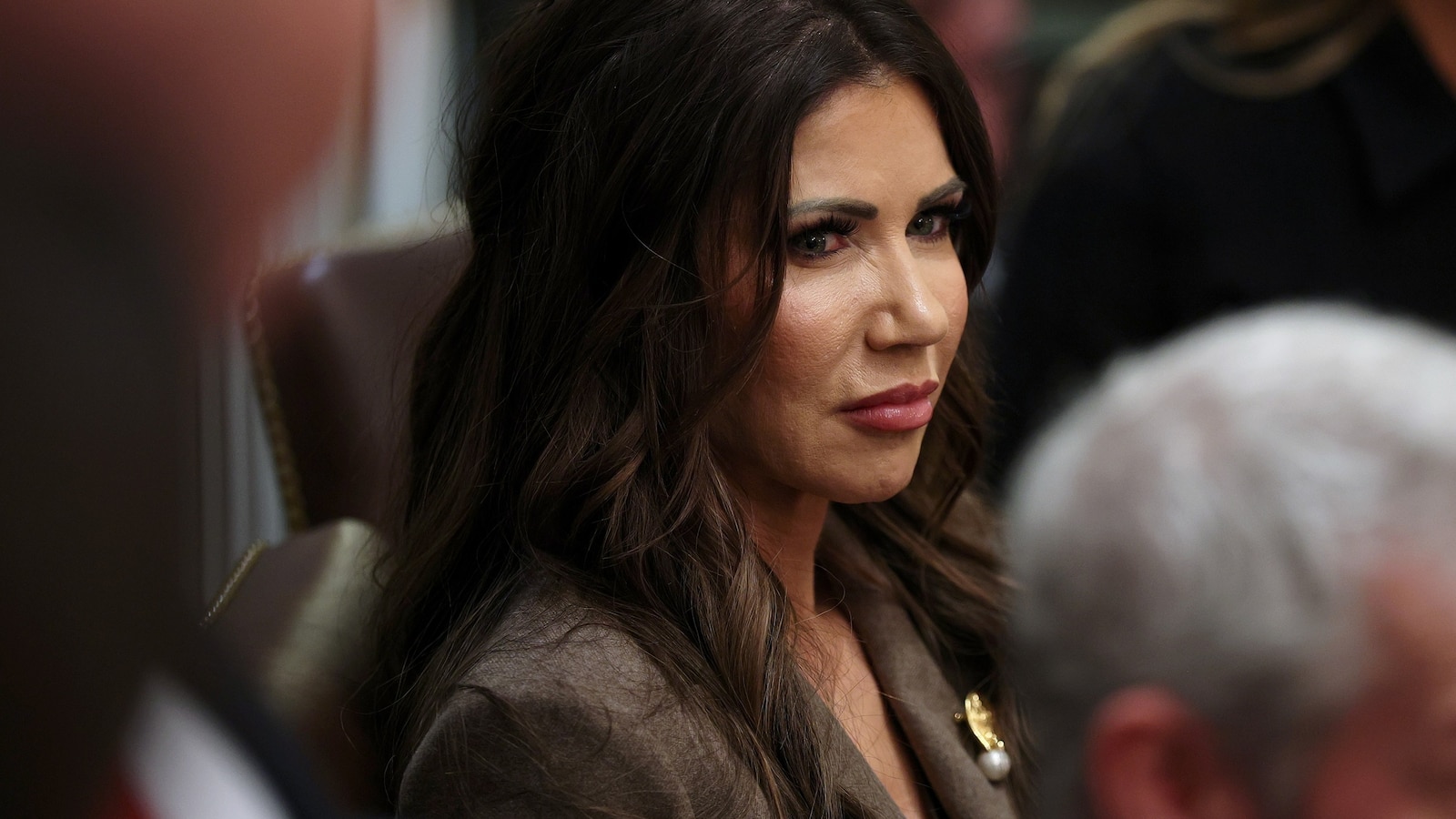
The fatal shooting of Alex Pretti in Minneapolis has sparked intense debate about how quickly federal officials are drawing conclusions about incidents involving immigration enforcement agents. Homeland Security Secretary Kristi Noem is now defending her department’s initial characterization of the shooting, which occurred on a Saturday and resulted in immediate, definitive public statements from government officials. In the days following the incident, Noem claimed that federal officials based their statements on “the best information” available at the time and “what we knew to be true on the ground.” However, this explanation has done little to quell growing concerns from both current and former law enforcement officials who warn that rushing to judgment in these cases could undermine public trust in federal agencies for years to come.
What makes this situation particularly troubling is the apparent pattern emerging across multiple incidents. Initially, on the day of Pretti’s shooting, Noem suggested during a press briefing that the agents’ actions were clearly justified, stating that Pretti had “attacked” officers and was “wishing to inflict harm” on them. Yet when she appeared on Fox News days later, she offered no concrete evidence to support these serious claims, instead describing the scene as simply “chaotic.” This dramatic shift in tone came after Minnesota officials quickly challenged her initial statements, pointing to multiple witness videos that appeared to tell a completely different story than the federal government’s narrative. Adding to the confusion, Noem stated that the FBI is now leading the investigation, even though officials had previously said the Department of Homeland Security was handling it with FBI assistance.
The Danger of Labeling and Premature Declarations
Former law enforcement officials who spoke to ABC News expressed deep concern about the practice of issuing definitive conclusions immediately following immigration enforcement shootings. John Sandweg, who served as acting director of Immigration and Customs Enforcement during the Obama administration, didn’t mince words about the implications. “It’s just incredibly irresponsible to rush to conclusions,” Sandweg explained. “When you have a senior adviser to the president and the cabinet secretary saying, ‘These are the facts, this is what happened’… you’ve now undermined all the credibility and really made it impossible for the public to have confidence in that investigation.” The concern extends beyond just this single incident – critics point to a troubling pattern of officials, including White House adviser Stephen Miller and Secretary Noem, rushing to label suspects as “domestic terrorists” or declaring shootings justified before evidence has been properly reviewed.
This represents what many see as a significant departure from standard law enforcement protocol. Jason Houser, a former ICE chief of staff under the Biden administration, suggested that the rush to conclusions indicates a shift away from public safety concerns toward political messaging. “It just shows that this is about the political debate. It’s not about actually arresting the most convicted criminals,” Houser told ABC News. “It should create a lot of distrust that can tear at the core trust in law enforcement, especially federal law enforcement.” The criticism highlights a fundamental tension in modern law enforcement: the public’s desire for immediate information must be balanced against the need for thorough, accurate investigations that preserve the integrity of both the legal process and public institutions.
What the Evidence Actually Shows
The details that have emerged about the Pretti shooting paint a picture significantly different from the initial government narrative. Federal officials released their first statement just two and a half hours after the incident, claiming that Pretti “approached” officers with a handgun. Within four hours, Stephen Miller had taken to social media to label Pretti a “domestic terrorist” and a “would-be assassin.” However, video evidence analyzed by ABC News told a starkly different story. The footage showed federal agents pinning Pretti to the ground and removing a weapon from his waist before the fatal shooting occurred – directly contradicting the claims made by officials that he had approached them in a threatening manner. This discrepancy between the official account and the visual evidence captured by witnesses has become a central point of controversy.
Three days after the shooting, Miller issued a follow-up statement that seemed to walk back some of the certainty of the initial claims. He acknowledged that the original DHS account had been based on “reports from CBP on the ground” and suggested that proper protocol may not have been followed. John Cohen, an ABC News contributor who previously served as acting DHS undersecretary for intelligence and analysis, offered some context for how these situations typically unfold: “Any experienced law enforcement professional will understand that initial information coming from the scene of a major incident is usually flawed, so you have to sort of take it with a grain of salt.” Yet this professional understanding of the limitations of initial reports makes the rush to definitive public statements all the more puzzling. When Deputy Attorney General Todd Blanche announced a Justice Department civil rights investigation into the shooting, he cautioned that “a single video should not determine an entire investigation,” though critics might argue that early official statements shouldn’t determine public perception either.
A Pattern Across Multiple Incidents
An investigation by ABC News revealed that the Pretti shooting wasn’t an isolated case of premature official statements. The review found a consistent pattern across at least five major incidents involving federal immigration agents: high-level officials made public declarations within hours of gunfire, only for those accounts to be challenged later by body camera footage, witness videos, or court filings. The shooting of Renee Good in Minneapolis on January 7th followed a similar trajectory. Within two hours, DHS released a statement declaring that a “violent rioter” had “weaponized her vehicle” in an “act of domestic terrorism.” However, verified video analyzed by ABC News showed Good turning her steering wheel to the right – away from the ICE agent – just over one second before shots were fired, raising questions about whether she was actually trying to harm the officer.
The October shooting of Marimar Martinez in Chicago provides perhaps the most dramatic example of how initial official statements can diverge from later evidence. Less than four hours after Martinez was shot five times by a Border Patrol agent, a DHS assistant secretary posted that law enforcement was “forced” to fire defensive shots. Secretary Noem later characterized the incident as involving a “ten-car caravan” that “ambushed” and “stalked” agents. Yet during court hearings, Martinez’s attorney told the court that body-worn camera footage didn’t align with the government’s allegations. The case took a stunning turn when a federal judge dismissed the indictment against Martinez after the Department of Justice abruptly filed a motion to withdraw the case entirely – a highly unusual move that raised questions about what the complete evidence actually showed.
Additional Cases Raise Similar Questions
The pattern continued in other incidents throughout 2025. In California that same October, DHS issued a statement claiming that during a vehicle stop, an “unknown individual” attempted to “run officers over by reversing directly at them without stopping,” and that an ICE officer, “fearing for his life, fired defensive shots.” However, a lawyer for Carlos Jimenez offered a very different account, stating that after an agent pulled out pepper spray, Jimenez began to maneuver his vehicle “to get around” the situation and was shot in his back shoulder through the back passenger window – a detail that raises questions about whether he was actually driving toward officers in a threatening manner. In September, an ICE officer shot and killed Silverio Villegas-Gonzalez outside Chicago. The 38-year-old father had just dropped his three-year-old son at daycare and was driving home. A DHS statement issued hours after the shooting claimed an officer “fearing for his life” was “seriously injured.”
However, a lawsuit filed by the state of Illinois and body camera video obtained by a local ABC station revealed significant discrepancies. According to the Illinois complaint, the agent who fired the weapon described his own injuries as “nothing major” – a far cry from the “seriously injured” characterization in the official statement. The lawsuit directly challenged the federal narrative: “Videos of the incident did not corroborate DHS’s assertion that the shooting officer was ‘seriously injured’ by a ‘criminal illegal alien.'” These cases collectively suggest a systematic problem with how information is being released to the public in the immediate aftermath of these shootings, with initial statements consistently painting the incidents in terms most favorable to federal agents, only for contradictory evidence to emerge later.
The Stakes for Public Trust and Institutional Credibility
Former officials emphasized that the consequences of these premature and potentially inaccurate statements extend far beyond individual cases. “Public trust is everything to these agencies, and it just destroys them when you tell something that is so visibly and obviously contradicted by the video evidence,” Sandweg explained, highlighting how each discrepancy chips away at the foundation of credibility that law enforcement agencies depend upon to function effectively. John Cohen pointed out an additional legal concern: describing incidents as domestic terrorism before an investigation is complete could later be viewed in court as prejudicial, potentially undermining prosecutions or civil cases. “When you make commentary on these types of incidents to advance an ideological or political narrative or objective, you run the risk of putting out inaccurate information and as a result, losing the public’s confidence,” Cohen said.
The solution, according to these experienced law enforcement professionals, is straightforward but requires discipline and restraint. “The only approach is… ‘We’re aware, we are conducting a full investigation,'” Sandweg emphasized. “Public trust… is everything to these agencies. Once you destroy that, it bleeds over into everything else they do.” This measured approach may frustrate a public hungry for immediate answers and a political environment that rewards quick, decisive statements, but it represents the standard that has traditionally governed how responsible law enforcement agencies communicate about ongoing incidents. As these cases continue to unfold and investigations proceed, the tension between political messaging and careful law enforcement procedure remains unresolved, with potentially lasting implications for how the public views federal agencies and their use of force.