
Pentagon Makeup Studio Controversy: Pete Hegseth’s Green Room Renovation Sparks Debate
A Television-Ready Defense Secretary
Defense Secretary Pete Hegseth’s transition from Fox News anchor to Pentagon chief has brought some Hollywood-style changes to the nation’s military headquarters. Recent reports reveal that Hegseth ordered renovations to a room adjacent to the Pentagon’s press briefing area, transforming it into a television-ready makeup studio. The modification, which cost several thousand dollars according to multiple sources, has raised eyebrows particularly because it comes at a time when the Trump administration has made cost-cutting a central theme of its governance. The irony isn’t lost on critics: while the Department of Defense searches for ways to trim budgets and streamline operations, its leader is apparently investing in better lighting for his TV appearances. However, the story isn’t quite as simple as it initially appears, and Hegseth himself has pushed back hard against the characterization of events, calling the report “totally fake” and denying that he gave orders for a makeup room or makeup itself.
From Bare Bones to Broadcast Ready
The room in question wasn’t always destined for glamour. Previously functioning as a simple green room, the space was minimally furnished with basic necessities: a table, some chairs, a television, photographs of former defense secretaries adorning the walls, and a single mirror hanging on the back of the door. It was functional but certainly not designed for the television age we live in. The transformation that took place earlier this year changed all that. An in-house construction crew removed the table and brought in a new chair along with a large mirror equipped with professional makeup lighting—the kind you’d expect to find backstage at a television studio rather than in the halls of military power. According to a defense official, Hegseth applies his own makeup before television appearances rather than hiring a professional makeup artist, which does represent some cost consciousness. The initial renovation plans were actually much more ambitious, with estimates exceeding $40,000, but those ideas were scaled back significantly, suggesting at least some sensitivity to the optics of lavish spending.
The Fox News Connection
Understanding this controversy requires acknowledging Pete Hegseth’s professional background. Before taking the reins at the Defense Department, Hegseth spent years as a co-host on “Fox & Friends Weekend,” the popular Fox News morning show. Television wasn’t just his job—it was his world, and the skills and expectations that come with that world have apparently followed him to the Pentagon. The suggestion to upgrade the green room came from Tami Radabaugh, the deputy assistant to the secretary for strategic engagement, who previously worked as a producer for both Fox News and CBS News. The chief Pentagon spokesman, Sean Parnell, and Hegseth’s wife, Jennifer Hegseth—also a former Fox producer—both gave their approval before the work began. This circle of former television professionals now working in defense leadership positions explains much about why transforming a basic waiting room into a broadcast-ready space seemed like a reasonable priority. The Defense Department’s official position is that the green room will be available to senior leaders and VIPs before press engagements, not just the secretary himself, and that they were “deliberately conservative” in their approach, using items from existing inventories and having facilities services staff construct a new countertop.
Using the Studio But Not the Press
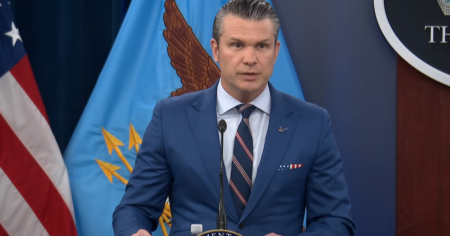
Here’s where the situation becomes particularly interesting: Hegseth hasn’t actually used the Pentagon press room for its traditional purpose—briefing reporters. Instead, the room has become a backdrop for his television appearances, essentially turning a space meant for transparency and accountability into a personal TV studio. This week, he appeared on Fox from that very location to address a separate controversy involving his communication practices. In that appearance, he blamed the media and former Defense Department employees for revealing that he had shared sensitive details about military strikes in a Signal group chat he created. The controversy centers on reports that Hegseth shared real-time operational information about strikes in Yemen with family members before those strikes were carried out. He didn’t deny these reports during his Fox appearance, nor did he explain why his wife—who is not a Defense Department employee—was included in the text chat. This was actually the second Signal group with whom Hegseth shared planning details about Houthi airstrikes that took place in mid-March. The first chat, comprising top national security officials, was created by national security adviser Michael Waltz and was accidentally exposed when Atlantic editor-in-chief Jeffrey Goldberg was mistakenly added to the group.
Security Concerns and Investigations
The Signal chat revelations raise serious questions about operational security and the handling of sensitive military information. While Hegseth claims he did not disclose classified information in either chat group, the Defense Department’s acting inspector general is now reviewing his disclosures to determine whether protocols were violated. The fact that family members—including his wife, who has no official role in defense operations—were receiving real-time updates about military strikes against the Houthis represents exactly the kind of information control breach that military procedures are designed to prevent. The entire situation highlights a broader tension in Hegseth’s leadership: he came into the role promising to emphasize improvements in warfighting abilities and military readiness, yet his early tenure has been marked by controversies over communication practices and facility upgrades that seem far removed from those core military priorities. During his Fox appearance addressing these concerns, Hegseth attempted to redirect attention to what he considers his real work: “We’re focused on recruiting, on rooting out DEI, on securing our southwest border, on the president’s agenda, and it’s going very well at the Pentagon, and I’m proud of it.” The mention of DEI (Diversity, Equity, and Inclusion) programs and the southwest border reflects the administration’s broader political priorities rather than traditional defense concerns.
Controlling Access and Information
Perhaps the most troubling aspect of these controversies is the Pentagon’s decision on February 21st to restrict access to its briefing room, barring reporters unless officials are actively speaking. Previously, journalists could use the room—one of the few places in the secure building where they could connect to Wi-Fi—to file stories and conduct on-camera reports. This restriction represents a significant reduction in press access and transparency at a time when questions about the defense secretary’s judgment and practices are mounting. The pattern that emerges is one of a defense secretary who is comfortable appearing on friendly television outlets like Fox News but less willing to engage with the broader press corps in traditional formats. He’s invested in the infrastructure for television appearances—the lighting, the mirrors, the camera-ready spaces—while simultaneously limiting the access that would enable substantive questioning and accountability. The Defense Department’s insistence that green room upgrades are “nothing new and routinely happen during changes in an administration” may be technically accurate, but it misses the larger point: the optics of spending on television production capabilities while cutting press access and facing questions about information security create a troubling impression. As the inspector general’s review continues and scrutiny of Hegseth’s leadership intensifies, the makeup studio controversy may seem minor, but it symbolizes larger questions about priorities, transparency, and whether the nation’s defense chief is more focused on managing his television image than managing the world’s most powerful military.