

NYPD Sergeant Testifies in Fatal Cooler-Throwing Case: “I Was Trying to Protect My Fellow Officers”
The Incident That Led to Tragedy
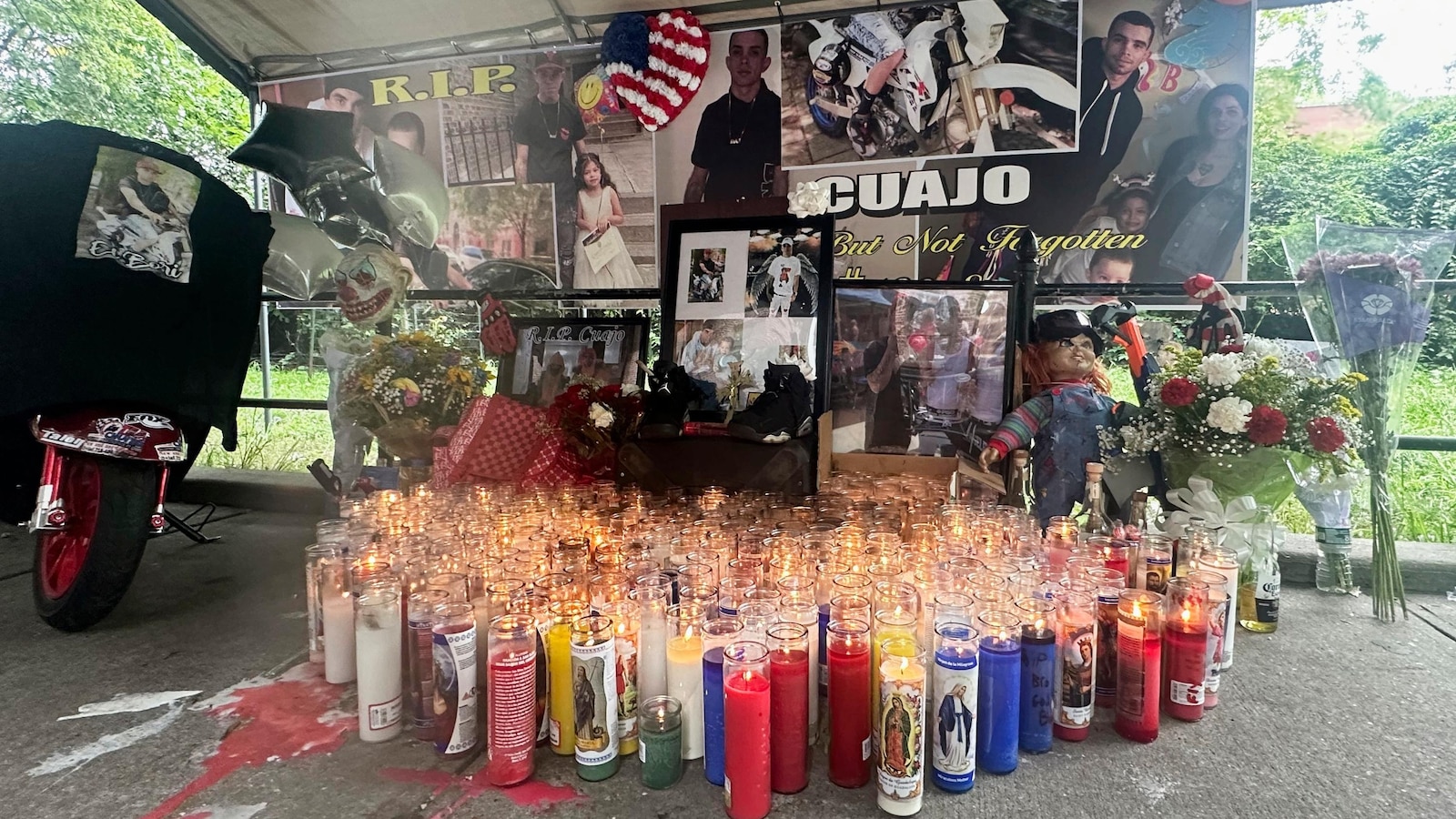
A tragic encounter between New York City police and a man on a motorized scooter has resulted in a manslaughter trial that raises difficult questions about split-second decisions and the use of force by law enforcement. In August 2023, Eric Duprey, a 30-year-old father of three, lost his life after NYPD Sergeant Erik Duran threw a plastic cooler at him during a narcotics operation. According to authorities, Duprey had just completed a drug sale with an undercover officer and was attempting to flee the scene on his scooter when Duran made the fateful decision to hurl a cooler filled with ice, water, and sodas in his direction. The impact caused Duprey, who wasn’t wearing a helmet, to lose control of his vehicle. He crashed into a tree before falling to the pavement, sustaining catastrophic head injuries that killed him almost immediately. Now, more than a year later, Sergeant Duran is fighting serious criminal charges that could send him to prison for up to 25 years, while maintaining that he was simply trying to protect his fellow officers from harm.
The Sergeant’s Defense: A Matter of Instinct and Protection
Taking the stand in his own defense on Monday, 38-year-old Sergeant Erik Duran provided his account of those critical moments, painting a picture of a chaotic situation where he had mere seconds to react. According to his testimony, his actions weren’t motivated by a desire to hurt Duprey but rather by an instinctive need to protect other officers who were in the path of the fleeing suspect. “He was gonna crash into us,” Duran told the court, his voice reflecting the urgency of that moment. “I mean, I didn’t have time. All I had time for was to try again to stop or to try to get him to change directions. That’s all I had the time to think of.” In Duran’s recounting, the situation unfolded so rapidly that calculated thought was impossible—instead, he relied on instinct and training, reaching for the nearest object that might alter Duprey’s trajectory and prevent what he perceived as an imminent collision with his colleagues. The sergeant’s testimony emphasized the chaotic nature of law enforcement operations, where officers must sometimes make instantaneous decisions with life-altering consequences, decisions made without the luxury of time for deliberation or consideration of alternatives.
Prosecutors Challenge the Narrative: Was There Really No Other Option?
The prosecution, led by the state attorney general’s office—which handles investigations into civilian deaths during encounters with law enforcement—presented a sharply different interpretation of events. During cross-examination, prosecutor Joseph Bianco methodically challenged Duran’s assertion that he had no time to consider alternatives, instead suggesting that the sergeant had made a conscious choice to use potentially deadly force when safer options were available. Bianco pointed out that rather than simply warning his fellow officers to move out of the way with a verbal command, Duran took the time to move forward, position himself, and lift what prosecutors described as a heavy cooler with both hands before launching it at Duprey. “Did you warn your colleagues about the approaching scooter?” Bianco asked, to which Duran responded that he didn’t have time. The prosecutor then noted the contradiction: “What you did have time to do is to take two steps forward down that sidewalk” and pick up the cooler. This line of questioning aimed to establish that Duran had more time and more options than his testimony suggested, and that his choice to throw a heavy object at someone on a motorized vehicle represented an excessive and reckless response to the situation.
Disputed Details and Immediate Aftermath
The trial has highlighted how dramatically perspectives can differ on seemingly objective facts. While prosecutors characterized the cooler as heavy—a detail that would support their argument that Duran used excessive force—the sergeant himself disputed this characterization during his testimony, suggesting it wasn’t particularly burdensome. This disagreement over something as simple as the weight of a cooler underscores the broader disagreement about whether Duran’s actions were reasonable under the circumstances. Beyond the question of what happened before the fatal crash, Duran’s testimony also addressed his response in the immediate aftermath. According to the sergeant, as soon as Duprey crashed and fell, he rushed to provide assistance, recognizing immediately the severity of the situation. “I said, ‘Can you hear me? Can you hear me?'” Duran testified, describing his attempts to check on the injured man. “And then I started to notice his injury, and he was in bad shape.” This portion of his testimony appeared designed to show that despite the prosecution’s portrayal of recklessness, Duran acted with humanity and concern once the consequences of his actions became apparent, demonstrating that he never intended for Duprey to suffer serious harm, let alone death.
The Legal Framework and What’s at Stake
Sergeant Duran faces three serious criminal charges in this non-jury trial: manslaughter, criminally negligent homicide, and assault. The most serious of these, the manslaughter charge, carries a potential sentence of up to 25 years in prison if he’s convicted. The case is being handled by the state attorney general’s office rather than local prosecutors, reflecting New York’s protocol for investigating deaths that occur during interactions with law enforcement—a system designed to provide greater independence and public confidence in the investigation of police-involved fatalities. The judge presiding over the case will ultimately determine whether Duran’s split-second decision to throw the cooler constituted a criminal act or a reasonable, if tragic, response to a perceived threat. The legal question centers on whether Duran’s perception of danger was reasonable and whether his response was proportionate to that threat. Did he recklessly cause Duprey’s death through actions that showed a depraved indifference to human life, as the manslaughter charge suggests? Or did he make a reasonable decision under pressure that had an unintended and tragic outcome? These questions don’t have easy answers, and they reflect the broader tensions in American society about police use of force, accountability, and the difficult circumstances officers sometimes face.
A Tragedy with No Winners and Broader Implications
As closing arguments were scheduled to begin Tuesday, this case stands as yet another example of how a single moment can destroy multiple lives and families. Eric Duprey, whatever his alleged involvement in drug sales that day, was a father of three who will never see his children grow up, killed in an encounter that lasted mere seconds. His family has lost a loved one in circumstances that, regardless of the trial’s outcome, seem preventable in hindsight. Meanwhile, Erik Duran, a police sergeant who presumably joined law enforcement to serve and protect his community, faces the possibility of spending decades in prison for an action he maintains was meant to protect his colleagues. His testimony describing his attempts to help Duprey after the crash—calling out to him, recognizing the severity of his injuries—paints a picture of a man confronting the terrible consequences of his actions in real time. Beyond the individual tragedy, this case contributes to ongoing national conversations about police tactics, training, and accountability. It raises uncomfortable questions: When officers pursue suspects for non-violent offenses, what level of risk is acceptable? How should officers be trained to respond when suspects flee? And when those split-second decisions result in death, where is the line between a tragic mistake and criminal conduct? As the legal system works toward a verdict in this case, these broader questions remain unanswered, ensuring that regardless of the outcome, the conversation about policing, force, and accountability will continue.