

Trump Signals Potential Diplomatic Shift with Cuba Amid Oil Embargo Pressure
Administration Opens Communication Channels as Economic Squeeze Tightens
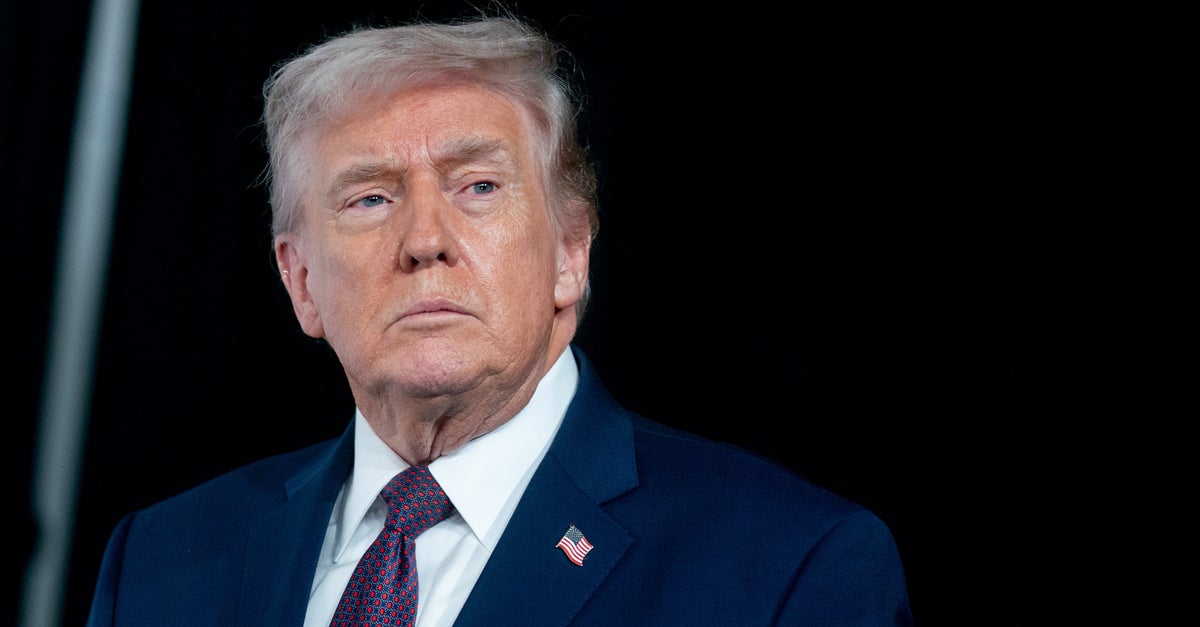
In a revelation that could mark a significant shift in U.S.-Cuba relations, President Donald Trump disclosed that his administration has begun preliminary discussions with Cuban leadership. Speaking to reporters aboard Air Force One while traveling to Florida on Saturday night, the Republican president confirmed these early diplomatic contacts, though he remained characteristically vague about the specifics. “We’re starting to talk to Cuba,” Trump stated simply, without elaborating on the nature, timing, or level of these conversations. This acknowledgment comes at a time when his administration has dramatically escalated economic pressure on the communist-run island nation, implementing a comprehensive strategy designed to cut off Cuba’s vital oil supplies and, according to Trump’s assessment, force Havana’s hand at the negotiating table.
The timing of this diplomatic outreach is particularly noteworthy, following a series of aggressive moves by the Trump administration that have fundamentally altered the regional dynamics in the Caribbean and Latin America. Earlier in January, the administration achieved what it considered a major foreign policy victory with the capture of Venezuela’s then-President Nicolás Maduro, a development that sent shockwaves throughout the hemisphere. Since that watershed moment, Trump has taken an increasingly confrontational stance toward nations his administration considers adversaries of the United States, with Cuba emerging as a primary focus. The president has gone so far as to predict the imminent collapse of the Cuban government, suggesting that the economic pressure his policies have created will prove unsustainable for the island’s leadership. This bold prediction reflects the administration’s confidence that its strategy of economic strangulation will yield results, though critics question both the humanitarian implications and the ultimate effectiveness of such an approach.
The Oil Embargo Strategy: A Multi-Pronged Economic Assault
The centerpiece of Trump’s renewed Cuba policy has been a systematic effort to deny the island access to the petroleum products essential for its economy and daily life. The campaign began with cutting off oil shipments from Venezuela, traditionally Cuba’s primary supplier and closest regional ally. For decades, Venezuela provided Cuba with heavily subsidized oil, a relationship that helped keep the Cuban economy afloat despite the longstanding U.S. embargo. However, with Maduro’s ouster and the subsequent chaos in Venezuela, Trump moved swiftly to terminate this lifeline. Faced with this sudden loss, Cuba scrambled to find alternative suppliers and turned to Mexico, which stepped in to provide at least some of the oil needed to keep Cuban society functioning. This shift, however, proved temporary, as the Trump administration had already anticipated such a move and was prepared with a response that would close this escape route as well.
This past week, Trump signed a sweeping executive order that represents perhaps the most aggressive economic measure yet in his Cuba policy. The order imposes tariffs on any goods imported to the United States from countries that sell or provide oil to Cuba, effectively threatening any nation that might consider helping the island with economic consequences. This extraterritorial application of American economic power puts countries in a difficult position: continue assisting Cuba and face potential trade penalties from the world’s largest economy, or comply with U.S. demands and cut off the island. The policy particularly targeted Mexico, which had become Cuba’s primary oil supplier after the Venezuelan shipments ended. For Mexican President Claudia Sheinbaum, this created an immediate diplomatic and humanitarian dilemma, forcing her government to choose between maintaining its assistance to a neighboring nation in crisis and preserving its crucial economic relationship with the United States.
International Concerns and the Humanitarian Dimension
The humanitarian implications of Trump’s oil embargo strategy have drawn sharp criticism from international observers and regional leaders alike. Mexican President Sheinbaum issued a pointed warning that the policy could precipitate a humanitarian crisis on the island, where ordinary Cubans would bear the brunt of the economic pressure. Without adequate fuel supplies, Cuba faces potential widespread shortages affecting everything from transportation and electricity generation to agricultural production and medical services. Sheinbaum, speaking on Friday, made clear that her government would actively seek alternative ways to continue providing humanitarian assistance to Cuba, reflecting Mexico’s historical relationship with the island and its broader foreign policy principles of non-intervention and regional solidarity. Her statement underscored the tension between the Trump administration’s maximalist approach and the concerns of other nations about the human cost of such policies.
Trump, however, dismissed these humanitarian concerns during his remarks to reporters, suggesting that the crisis is both avoidable and potentially useful as leverage. “It doesn’t have to be a humanitarian crisis. I think they probably would come to us and want to make a deal,” the president said, framing the situation as an opportunity rather than a catastrophe. His comments reflect a transactional approach to foreign policy that has characterized much of his political career, viewing the economic pressure not as an end in itself but as a means to bring Cuba to the negotiating table on terms favorable to Washington. “So Cuba would be free again,” Trump added, invoking the language of liberation while simultaneously acknowledging that his administration would pursue some form of negotiated agreement. This apparent contradiction—between seeking Cuba’s freedom and negotiating a deal with its current government—highlights the somewhat murky nature of the administration’s ultimate objectives on the island.
Unclear Objectives and the Path Forward
Despite the dramatic escalation in pressure and the initiation of talks, Trump’s specific goals for Cuba remain frustratingly unclear to observers, analysts, and perhaps even some within his own administration. The president has not articulated a comprehensive vision for what a “free” Cuba would look like or what concessions he seeks from Havana in any potential negotiations. Does the administration seek regime change, fundamental economic reforms, democratic elections, compensation for seized American property, an end to Cuba’s relationships with adversarial nations, or some combination of these and other objectives? The lack of clarity creates uncertainty both for the Cuban government, which must guess at what might satisfy Washington, and for other nations trying to navigate their own relationships with both Cuba and the United States in this new environment.
Trump’s prediction that “we’ll be kind” in any eventual deal with Cuba adds another layer of ambiguity to the situation. This phrase could suggest a willingness to offer Cuba a face-saving exit from the current standoff, perhaps providing economic assistance or relaxing sanctions in exchange for political or economic concessions. Alternatively, it might simply be rhetorical flourish designed to present the president as magnanimous while still extracting maximum leverage from Cuba’s weakened position. The historical context of U.S.-Cuba relations, marked by more than six decades of hostility, mutual suspicion, and failed rapprochement attempts, suggests that any substantive agreement would require addressing deeply entrenched issues on both sides. Previous attempts at normalization, including the Obama administration’s opening, ultimately foundered on these fundamental disagreements, and it remains to be seen whether Trump’s pressure campaign will succeed where other approaches have failed.
Regional Implications and the Broader Strategy
Trump’s aggressive posture toward Cuba fits into a broader pattern of confrontational engagement with nations his administration considers adversaries, representing a significant departure from the more cautious approaches of previous administrations. The capture of Maduro and the subsequent moves against Cuba signal that Trump is willing to take dramatic action to reshape the political landscape of Latin America and the Caribbean according to his vision. This approach has found support among some constituencies, particularly Cuban-Americans in Florida who have long advocated for a harder line against the Castro regime and its successors, as well as among conservatives who view the various leftist governments in the region as threats to American interests. However, it has also raised concerns among allies and partners who worry about the precedent set by such unilateral action and the potential for unintended consequences.
The ultimate outcome of this high-stakes gamble remains uncertain. Trump’s prediction that the Cuban government is ready to fall may prove prescient, or it may underestimate the regime’s resilience and the Cuban people’s capacity to endure hardship, which has been demonstrated repeatedly over decades of embargo and economic crisis. The initiation of talks suggests that at least some members of the administration recognize that pure pressure without a diplomatic track is unlikely to achieve lasting results. As the situation develops, the international community will be watching closely to see whether this combination of maximum pressure and minimal dialogue produces the breakthrough Trump envisions, or whether it simply adds another chapter to the long, complicated, and often tragic history of U.S.-Cuba relations. For the Cuban people themselves, caught between an authoritarian government at home and an economic blockade from abroad, the hope must be that any eventual resolution prioritizes their wellbeing over the political calculations of leaders in Washington, Havana, or anywhere else.