


Mississippi Ice Storm: Families Struggle Two Weeks After Disaster Strikes
The Power Crisis Continues
Nearly two weeks have passed since a devastating ice storm tore through northeast Mississippi, yet the crisis is far from over. As of Thursday, approximately 25,000 customers remain without electricity, their lives turned upside down by a disaster that shows no signs of quick resolution. What many families initially believed would be a brief inconvenience lasting just a few days has transformed into an extended nightmare that’s draining bank accounts and testing the limits of human endurance. Families across the region are making impossible choices between heating their homes and preserving their savings, all while trying to maintain some semblance of normal life for their children. The financial burden is becoming crushing, and as each day passes without power, the situation grows more desperate for thousands of Mississippi residents who are running out of both money and hope.
A Family’s Daily Battle for Warmth and Normalcy
The Golden family of Taylor, Mississippi—a small town located just twenty minutes south of Oxford—represents the human face of this ongoing crisis. Tambra and her husband, along with their 7-year-old son Tylin, have been steadily depleting their savings account to afford propane for their small space heater and fuel for the $400 generator they purchased five days ago. The generator can only power a few items simultaneously, so they’ve had to prioritize: an electric space heater for warmth and occasionally the television at night to provide some entertainment for young Tylin, who deserves moments of childhood joy despite the circumstances surrounding him. The family has become resourceful out of necessity, wrapping special pipe-fitting tape around window sills and doorframes to seal out the frigid air that threatens to invade their home. On their gas stove, water boils continuously—not just to provide warm water for bathing, but also to generate precious heat in their kitchen. At night, all three family members sleep together in their living room, the warmest space in their home, huddled together for warmth and comfort.
Through tears, Tambra Golden expressed the shock and disbelief that many residents share: “We wasn’t expecting it to be this bad. We kind of figured that we was gonna be without lights for a few days, and we thought the Northeast (Northeast Mississippi Electric Power Association) and the power company, they was going to be able to go through and fix things and get us back to where up and running, but I see that it is, it’s a lot, it’s a lot worse than what we thought it was gonna be.” To make ends meet and afford more propane, both Tambra and her husband have taken on work as food delivery drivers, scrambling to earn extra cash while managing their home crisis. They’ve also received donations from a local church, a kindness they deeply appreciate. Looking toward an uncertain future, Tambra shared their hopes: “All we can do now is pray that when we do get lights and able to move, that we can build our savings back up and get back to where we were before this happened.”
The Massive Challenge Facing Power Companies
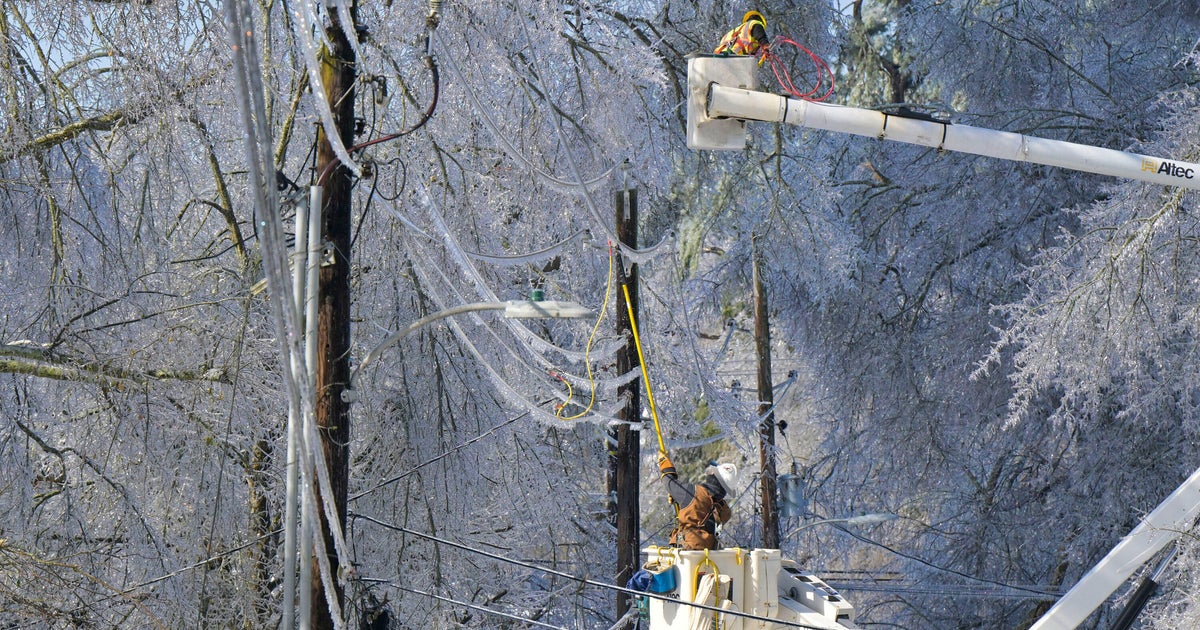
The scale of destruction has overwhelmed utility companies working to restore service. Sarah Brooke Bishop, a spokesperson for the Northeast Mississippi Electric Power Association, explained that crews from Mississippi and several neighboring states are working around the clock until every customer has power restored. However, the massive, widespread damage created by countless fallen trees and downed power lines has created serious obstacles that can’t be overcome quickly, no matter how hard crews work. An hour north of Oxford, in Ripley, families have been informed by their local power company that it will be at least another week before all power is restored—a timeline that continues to push further into the future. The restoration process has become increasingly complex: while much of the mainline infrastructure has been repaired, crews now face the painstaking task of going from house to house to reconnect individual customers. According to Jill Knox, a spokesperson with the Oxford public school district, 30% of their staff remained without power as of Wednesday. When asked to describe the situation, Knox didn’t mince words: “It’s still pretty dire.”
Community Response and Support Systems
In times of crisis, communities often reveal their true character, and Oxford has shown remarkable compassion. At a donation event held at Oxford Middle School on Wednesday, volunteers distributed meals, snacks, and coats to families desperately in need. Volunteer staff members have also been delivering items directly to families unable to travel. Knox reports that they’ve been feeding up to 600 people daily with free hot meals—a staggering number that illustrates both the scope of the crisis and the community’s generous response. She’s also aware of several other food drives throughout town that have been helping hundreds of additional people each day. The outpouring of support has been overwhelming in the best possible way. “I cannot say enough great things about everyone in this community,” Knox said, her pride in her neighbors evident despite the difficult circumstances everyone faces.
A Young Man’s Brush with Death
Some Oxford residents aren’t just grateful for electricity or warm meals—they’re simply grateful to be alive. Twenty-year-old Brindin Chandler’s story is remarkable and sobering. Last week, during the height of the ice storm, instead of sleeping in as many young people might, Chandler was volunteering his time to help crews chainsaw and remove dangerous fallen trees. When he returned home around 10 a.m. and walked up to his mobile home, he witnessed something terrifying: a large tree crashing through his home and landing directly on his bed. If he hadn’t been out helping others that morning, if he had instead been home sleeping as he normally would have been, the tree would have crushed him. “Because we were doing that is the only reason that I wasn’t in there,” Chandler reflected. He chalks his survival up to “luck,” saying, “I never thought it would happen to me. Glad to be alive.” The moment he saw the tree fall, his thoughts went to his two cats who were inside. He instantly ran over to search for them, but couldn’t find them initially. Tragically, one of his cats died in the collapse, while the other survived. It took three days of sorting through the rubble before they found the deceased cat’s body.
Finding Light in the Darkness
The mobile home had been Chandler’s starter home, a place he’d lived for almost two years and made his own. Now, he’s living with his father until he can find another place to call home. He works for his father, and the two even play together in a metal rock band—a bond that has surely provided comfort during this difficult time. Since the storm destroyed his home, Chandler has continued working throughout the Oxford community, helping others deal with their tree damage and debris. He says being part of “one community” has felt good, giving him purpose amid his own loss. When asked how he’s maintained such a positive attitude—helping others clear trees off their houses while a tree still sits on his own—his answer revealed wisdom beyond his years: “Well, they say life is what you make it, if you stay negative, everything in front of you will probably be negative, if you stay positive, everything will at least seem that way.” His resilience represents the spirit many Mississippians are showing during this prolonged crisis: choosing hope over despair, community over isolation, and service over self-pity, even when their own lives have been turned upside down. As restoration efforts continue, stories like Chandler’s and the Golden family’s remind us that behind every power outage statistic is a real family struggling, sacrificing, and somehow finding the strength to carry on.