



China’s New “Ethnic Unity” Law: A Push Toward Cultural Assimilation
Understanding the New Legislation
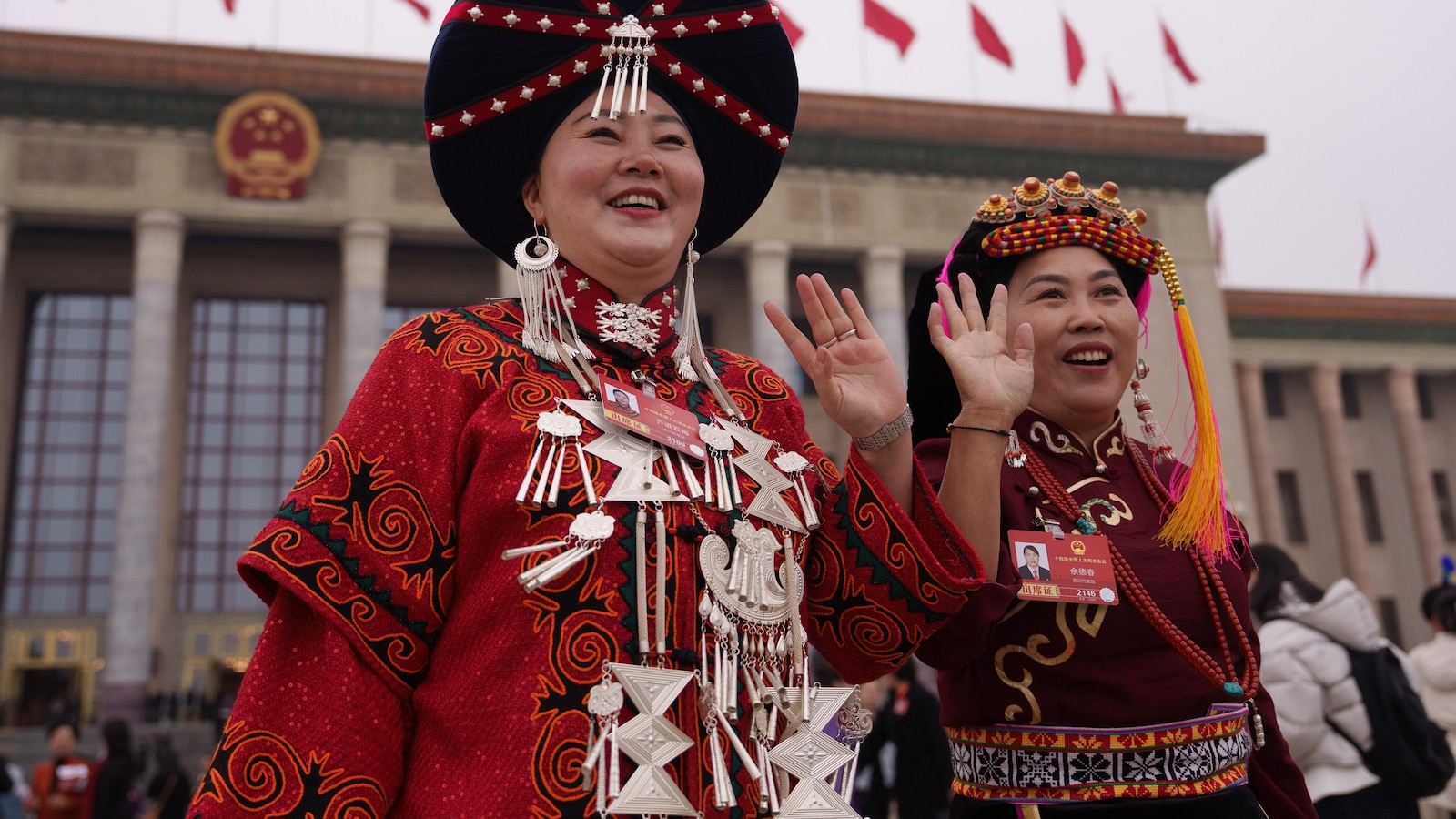
China has taken a significant step in reshaping its approach to ethnic minorities with the passage of a comprehensive “ethnic unity” law. Approved by the National People’s Congress, China’s legislative body, this sweeping legislation aims to create what officials describe as “a stronger sense of community among all ethnic groups in the Chinese nation.” According to Lou Qinjian, the delegate who presented the proposal, the law represents a unified approach to national identity. However, critics and human rights observers paint a different picture, viewing this measure as another tool to erode the cultural identities and traditional rights of China’s diverse minority populations. The law requires all government agencies, private businesses, armed forces, political parties, and social organizations to actively promote what it calls a “common consciousness of the Chinese nation,” marking a fundamental shift in how China approaches ethnic diversity within its borders.
The Impact on Language and Education
One of the most controversial aspects of the new law centers on language policy, particularly its mandate regarding Mandarin Chinese in education. Article 15 of the legislation requires that Mandarin be taught to all children from before kindergarten through the end of compulsory education, effectively making it impossible for minority languages to serve as the primary language of instruction anywhere in the country. While Mandarin has already become the dominant teaching language in regions with significant minority populations like Inner Mongolia, Tibet, and Xinjiang, this law formalizes and extends that policy nationwide. The practical effects of this approach are already visible in Inner Mongolia, where a dramatic shift occurred in 2020. Students who had previously studied much of their curriculum in Mongolian suddenly found themselves restricted to using only Chinese textbooks, with Mongolian relegated to a single hour-long foreign language class each day. This abrupt change sparked widespread protests and a government crackdown, followed by re-education campaigns. Scholars note that while China’s constitution technically guarantees each ethnic group “the right to use and develop their own language,” the new law effectively supersedes these protections, prioritizing national unity over cultural preservation.
From Autonomy to Assimilation
The passage of this law represents what experts describe as the final blow to China’s earlier promises of meaningful autonomy for ethnic minorities. James Leibold, a professor at Australia’s LaTrobe University who specializes in China’s ethnic policies, called the measure “a death nail in the party’s original promise of meaningful autonomy” and characterized it as the capstone of President Xi Jinping’s fundamental rethinking of how China manages its diverse population. China’s 55 recognized ethnic minority groups make up approximately 8.9% of the country’s 1.4 billion people, with the Han Chinese majority dominating the remaining population. Historically, the Law on Regional Ethnic Autonomy promised these groups limited self-governance, including the ability to create flexible economic development measures suited to their regions. However, the new legislation shifts the emphasis from preserving distinct cultural identities toward forging a unified national consciousness. The law also promotes what it describes as “mutually embedded community environments,” which scholars interpret as encouragement for demographic mixing that could break up neighborhoods where minorities have traditionally lived in concentrated numbers. This approach aims to encourage Han Chinese and minorities to integrate more thoroughly into each other’s communities, further diluting distinct cultural enclaves.
Global Reach and Legal Consequences
Perhaps one of the most concerning elements for international observers is the law’s extraterritorial scope. The legislation establishes a legal framework allowing the Chinese government to prosecute individuals and organizations outside China’s borders if their actions are deemed harmful to “ethnic unity” progress. This provision echoes similar clauses in the National Security Law imposed on Hong Kong in 2020, which enabled authorities to pursue people living abroad for actions Beijing considers seditious or subversive. Hong Kong’s government has already issued bounties for 34 overseas activists under that security law, demonstrating the government’s willingness to extend its legal reach beyond its physical borders. Rayhan Asat, a legal scholar at Harvard University, describes the law as “a strategic tool that gives the pretext to government to commit all sorts of human rights violations.” Her concerns are not merely theoretical—her younger brother, Ekpar Asat, is currently serving a 15-year prison sentence in Xinjiang on charges of inciting ethnic discrimination and hatred. According to Asat, her family received no formal notification of his arrest or trial. Her brother, an entrepreneur who created a social media platform for Uyghurs, was detained shortly after participating in the U.S. State Department’s International Visitor Leadership Program in 2016, suggesting that international engagement itself may have been viewed as suspicious by Chinese authorities.
The Uyghur Experience and Human Rights Concerns
The situation of the Uyghurs, a predominantly Muslim ethnic minority, provides a stark illustration of the direction China’s ethnic policies have taken in recent years. Uyghurs have been subjected to a prolonged campaign of detention and incarceration, with thousands held in what Chinese authorities initially called “vocational training centers” but which critics described as internment camps. Although these facilities were reportedly closed in 2019, thousands of Uyghurs ended up in the formal prison system, where experts say they were targeted not for actual criminal activity but for their ethnic and religious identity. Maya Wang, deputy Asia director at Human Rights Watch, argues that the new law isn’t genuinely about ensuring equality or economic participation for minorities. She points out that truly inclusive policies wouldn’t prevent children from learning two languages or force cultural assimilation on communities like Tibetans and Uyghurs. Wang emphasizes that the coercive nature of these policies undermines any claim that they represent equitable development or genuine inclusion. The government’s approach, she suggests, prioritizes control and uniformity over the kind of multicultural accommodation that would allow minority groups to maintain their distinct identities while participating fully in national life.
The Future of Cultural Identity in China
The long-term implications of this law extend far beyond immediate policy changes, raising fundamental questions about cultural survival and identity preservation. While Chinese officials, such as Hanengbi Ayisa, a National People’s Congress deputy from Xinjiang, claim that “unity of all ethnic groups is very well maintained” and that the government attaches great importance to national unity, critics see a different reality. Rayhan Asat expresses deep concern about what this means for future generations: “I think preserving any sort of Uyghur identity would be impossible,” she says, capturing the existential threat many minorities feel this law represents. It’s worth noting that many countries, including the United States, have pursued assimilation policies at various points in their histories, and China defends its approach as bringing development to ethnic minority areas. However, the speed, scope, and compulsory nature of China’s current policies distinguish them from integration efforts that allow for bilingualism and cultural preservation. As President Trump prepares for an upcoming summit with President Xi, advocates like Asat hope that cases like her brother’s will be raised in discussions. The fundamental tension remains between China’s stated goal of national unity and the rights of minority communities to maintain the languages, traditions, and cultural practices that define their identities. How this law is implemented in the coming years will determine whether China’s ethnic minorities can maintain any meaningful connection to their cultural heritage or whether that heritage will gradually disappear under the weight of mandated assimilation.