



Global Crisis Deepens as Iran-US Conflict Escalates Across the Middle East
Unprecedented Attacks Target Critical Infrastructure and Commercial Hubs
The world watched in alarm this week as a dangerous escalation unfolded across the Middle East, with Iran launching coordinated strikes against vital commercial and transportation infrastructure throughout the Gulf region. In what marks a significant intensification of hostilities that began less than two weeks ago, Iranian forces targeted Dubai International Airport—the planet’s busiest hub for international travelers—along with numerous commercial vessels navigating the region’s strategic waterways. These attacks came as direct retaliation for ongoing U.S. and Israeli military operations against Tehran, creating a volatile situation that threatens to disrupt global oil supplies and international commerce. The United Nations Security Council responded forcefully to Iran’s aggressive campaign, passing a resolution demanding an immediate cessation of strikes against Gulf neighboring nations. However, despite international pressure and calls for restraint, there are no indications that either side is prepared to back down from this rapidly deteriorating conflict that has already claimed thousands of lives and caused unprecedented economic disruption.
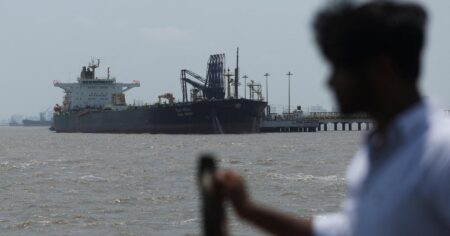
The most recent wave of Iranian attacks demonstrates the Islamic Republic’s strategy of inflicting widespread economic pain to force concessions from Washington and Jerusalem. On Thursday morning, residents of Bahrain’s Muharraq Island woke to scenes of chaos as a major fire erupted following an Iranian strike near the kingdom’s international airport. Authorities issued urgent warnings for citizens to remain indoors with windows sealed to avoid inhaling toxic smoke billowing from the affected area. The location’s proximity to jet fuel storage tanks and petroleum facilities serving Bahrain’s oil industry raised fears of a catastrophic secondary explosion. Meanwhile, in Iraq, an attack on the Basra port resulted in at least one fatality and forced authorities to completely shut down operations at all of the country’s oil export terminals—a decision with immediate implications for global energy markets. Farhan al-Fartousi, who directs Iraq’s General Company for Ports, confirmed that the strike targeted a vessel engaged in ship-to-ship transfers in the Persian Gulf waters. While Iraq’s commercial ports remained operational, the closure of oil terminals represented a significant blow to the country’s economy and the international oil supply chain.
Economic Toll Mounts as Conflict Disrupts Global Trade Routes
The financial burden of this rapidly expanding conflict has reached staggering proportions, with the Pentagon revealing to Congress that just the first week of military operations against Iran cost American taxpayers $11.3 billion. This eye-watering figure includes $5 billion spent on munitions alone during the conflict’s opening weekend, underscoring the intensity and scale of U.S. military involvement. These numbers emerged from a classified briefing provided to congressional leaders, according to anonymous sources familiar with the proceedings who weren’t authorized to discuss the private meeting publicly. As both nations dig in for what appears to be a prolonged confrontation, each side seems determined to outlast the other despite the mounting human and economic costs. The conflict has fundamentally disrupted established trade routes that the global economy depends upon, choked off supplies of essential commodities like fuel and fertilizer flowing from the Gulf region, and created dangerous conditions for air traffic through one of the world’s most heavily traveled airspaces.
Iran’s tactical approach has focused specifically on targeting the economic jugular of its adversaries and their allies. By attacking oil fields and refineries throughout Gulf Arab nations and effectively closing the narrow Strait of Hormuz to cargo traffic, Tehran has struck at the heart of global energy security. This strategic waterway normally carries approximately one-fifth of all traded oil worldwide, making its closure catastrophic for international energy markets. The situation became so dire that the International Energy Agency took the extraordinary step of authorizing the release of 400 million barrels of oil from emergency reserves—the largest such release in the organization’s entire history. Simultaneously, the United States announced plans to tap its Strategic Petroleum Reserve for 172 million barrels to be released next week, hoping this massive injection of supply would help stabilize prices that have skyrocketed since hostilities began. These unprecedented measures reflect the severity of the energy crisis triggered by the conflict and the international community’s desperate attempts to prevent a complete collapse of oil markets.
International Community Divided on Path Forward
The United Nations Security Council’s response to the crisis revealed deep divisions within the international community about how to address the escalating violence. The resolution passed Wednesday demanded an immediate halt to what it termed Iran’s “egregious attacks” on neighboring Gulf states, passing with a vote of 13-0. However, the apparent unanimity masked significant disagreement, as both China and Russia—two of Iran’s most important allies on the world stage—chose to abstain rather than support the measure. Their ambassadors criticized the resolution as “extremely unbalanced” for failing to acknowledge or condemn the U.S. and Israeli strikes on Tehran that precipitated Iran’s retaliatory campaign. Russia’s U.N. Ambassador Vassily Nebenzia argued that the one-sided language might create the false impression that Iran had launched “unprovoked attacks on Arab states” motivated purely by malice, without any context for its actions. Iranian Ambassador Amir Saeid Iravani echoed these concerns, stating that the resolution “deliberately ignores the root causes of the current crisis.” Meanwhile, Bahrain’s representative Jamal Alrowaiei defended the measure, declaring that “the international community is resolute in rejecting these Iranian attacks against sovereign countries that are threatening the stability of the peoples, especially in a region of strategic importance to global economy, energy, security and security of global trade.”
The attacks continued even as diplomats debated in New York. In the United Arab Emirates, Dubai bore the brunt of multiple strikes, with two Iranian drones hitting near Dubai International Airport and wounding four people, though remarkably flights continued operating despite the danger. Early Thursday morning, firefighters battled flames at a luxury apartment tower in Dubai Creek Harbor after another drone strike. Across the Gulf in Oman, emergency crews worked to contain a massive blaze at fuel storage tanks in the Port of Salalah following an Iranian attack. Iraq’s Kurdistan region saw drones launched toward the cities of Irbil and Sulaymaniyah, while in southern Iraq an oil tanker flying the Australian flag was struck near Khor Al-Zubair Port. According to Iraqi navy officials who spoke anonymously because they lacked authorization for public comment, 25 crew members were rescued from the stricken vessel, though it remained unclear whether others might be missing. These coordinated strikes across multiple countries demonstrated Iran’s capability to project force throughout the region and its willingness to target both military and civilian infrastructure to achieve its strategic objectives.
Israeli Operations Expand as Regional Conflict Widens
As Iranian attacks spread across the Gulf, Israel intensified its own military operations in both Iran and neighboring Lebanon. Shortly after midnight Thursday, air raid sirens pierced the night in Jerusalem and other Israeli cities as Tehran launched retaliatory strikes. The Israeli military responded with what it described as another “wide-scale wave of strikes” targeting sites in Tehran, continuing the cycle of attack and counterattack that has characterized this conflict. The violence also expanded significantly in Lebanon, where Israel targeted what it claimed were facilities and personnel connected to Hezbollah, the Iran-backed militant organization that has long operated along Israel’s northern border. The Israeli military reported that Hezbollah had fired dozens of rockets simultaneously across northern Israel in some of the heaviest fighting between the adversaries since the war began, prompting Israeli forces to launch extensive strikes against Beirut’s southern suburbs, producing massive fires and towering plumes of smoke visible across the Lebanese capital.
The humanitarian toll in Lebanon has been devastating. A particularly tragic incident occurred Thursday in Ramlet al-Bayda, a popular seaside tourist area of Beirut where many civilians displaced by the fighting had sought refuge. An Israeli strike hit a vehicle in the crowded district, killing seven people and wounding 21 others according to the Lebanese Health Ministry. When contacted by The Associated Press, the Israeli military press office stated it was “not aware” of conducting a strike at that location, raising questions about accountability and targeting procedures. One Hezbollah rocket managed to strike a house near the Israeli town of Karmiel, lightly injuring two residents according to Israeli rescue services. The Lebanese Health Ministry reported Wednesday that at least 634 people have been killed in Lebanon since this latest round of fighting erupted, while the U.N. refugee agency estimated that approximately 759,000 Lebanese have been internally displaced—forced to flee their homes to escape the violence. Inside Iran, authorities claim that more than 1,300 people have died from U.S. and Israeli strikes, while Israel has reported 12 civilian and military fatalities. The United States has acknowledged losing seven soldiers in combat operations, with another eight suffering severe injuries that will likely affect them for the rest of their lives.
Uncertain Future as Conflict Shows No Signs of Abating
As the conflict enters its second week with no diplomatic breakthrough in sight, the prospects for de-escalation appear increasingly remote. Both sides have invested enormous resources and political capital into their military campaigns, making it difficult for either to back down without achieving concrete objectives they can present to domestic audiences as victories. The Iranian government has framed its attacks on Gulf infrastructure as necessary responses to what it characterizes as unprovoked aggression by the United States and Israel, while Washington and Jerusalem maintain they are conducting legitimate military operations to degrade Iran’s nuclear capabilities and support for regional militant groups. This fundamental disagreement about the nature and legitimacy of each side’s actions makes finding common ground for negotiations extraordinarily difficult. The economic consequences continue to mount for the entire world, not just the nations directly involved in combat, as energy prices surge, shipping costs skyrocket, and the risk of broader regional instability grows with each passing day.
The international community faces a critical moment in determining how to respond to this crisis. While the U.N. Security Council resolution represents an important symbolic statement, its practical impact remains uncertain given that it lacks enforcement mechanisms and was opposed or questioned by major powers including Russia and China. The massive releases of strategic oil reserves by the United States and International Energy Agency provide temporary relief for energy markets but cannot substitute for a lasting political solution to the underlying conflicts driving this violence. Humanitarian organizations warn that the displacement of hundreds of thousands of people in Lebanon, combined with the deaths of thousands across the region, represents a human catastrophe that will have generational consequences regardless of how the military situation ultimately resolves. As diplomats work behind the scenes to identify possible off-ramps from the escalation spiral, military planners on all sides continue preparing for the possibility that this conflict could expand further, potentially drawing in additional nations and threatening even greater devastation across one of the world’s most strategically vital and historically troubled regions.