

The Isolation of Nicolás Maduro: Inside America’s Most Secure Prison Unit
A Deposed Leader Behind Bars
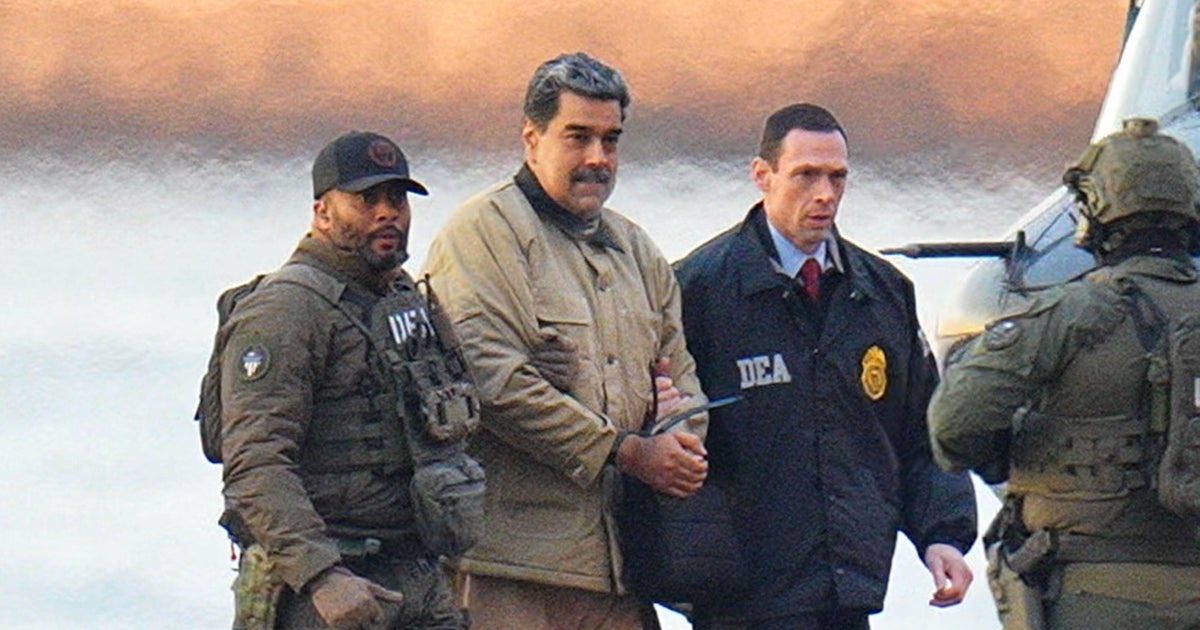
Nearly three months after a dramatic American military intervention in Venezuela, former president Nicolás Maduro and his wife Cilia Flores are preparing for their day in federal court. The couple will appear before a Manhattan judge on Thursday to face serious narco-terrorism and drug trafficking charges that could keep them imprisoned for decades. Since his arrest in January, Maduro has been confined to one of the most restrictive detention environments in the entire United States prison system—a high-security unit at Brooklyn’s Metropolitan Detention Center that officials describe as a “jail inside of a jail.” This isn’t just any prison cell; it’s a specially designed facility reserved for the nation’s most dangerous and high-profile detainees, where every movement is monitored and contact with the outside world is severely restricted. The 63-year-old former Venezuelan leader, who once commanded an entire nation, now spends his days in isolation, his world reduced to a small cell and brief moments of supervised recreation. His wife is held separately in the same facility, unable to communicate with her husband except through approved legal channels.
Life Under Special Administrative Measures
The conditions of Maduro’s detention are governed by what prison officials call “special administrative measures,” or SAMs—a designation so restrictive that only the U.S. Attorney General can authorize it. These measures are reserved for prisoners whose communications with the outside world could potentially harm others or compromise national security. In Maduro’s case, officials apparently believe that allowing him normal prison contact could enable him to coordinate activities that might endanger people or interests both in the United States and Venezuela. The SAMs unit where he’s held was created after the notorious Metropolitan Correctional Center in Manhattan—where financier Jeffrey Epstein died in 2019—was closed in 2021. Prison officials refurbished an existing unit at the Brooklyn detention center, adding reinforced walls and secure doors to create a fortress within a fortress. This specialized unit can accommodate up to twelve inmates, though it’s unclear how many others currently share this restrictive space with the former Venezuelan president.
The daily reality for Maduro is one of profound isolation. Unlike other high-profile inmates who have passed through the Metropolitan Detention Center—including accused CEO killer Luigi Mangione, music mogul Sean “Diddy” Combs, and Ghislaine Maxwell, Jeffrey Epstein’s associate—Maduro operates under far more severe restrictions. His entire existence is confined to the SAMs unit. He leaves his cell only for three purposes: to shower, to meet with his attorneys, or for one solitary hour of recreation each day. Even these brief respites from his cell offer no human contact beyond his guards. When he does venture to the recreation deck—a space with a handball court where he can “stretch his legs”—he goes completely alone, accompanied only by a security detail of two corrections officers and a lieutenant. Under constant 24-hour surveillance, every moment of his day is observed and documented. No one can enter the unit without explicit approval, and all visitors must be signed in and out with meticulous record-keeping.
A History of Housing Dangerous Prisoners
The use of special administrative measures has grown significantly over the past two decades, raising concerns among civil rights advocates about the psychological impact of such extreme isolation. A 2017 report by the Center on Constitutional Rights and Yale Law School documented cases of prisoners held under these conditions for years, even decades. While these measures are technically imposed for 120-day periods, they can be renewed indefinitely, meaning Maduro could theoretically remain in this isolated state until his trial concludes and, if convicted, potentially throughout his sentence. The SAMs unit has previously housed other fallen leaders from Latin America, including Juan Orlando Hernández, the former president of Honduras. Hernández was convicted on federal drug trafficking charges in June 2024 and subsequently transferred to FCI Hazelton in West Virginia before receiving a controversial pardon from President Trump in December 2025. The parallel between these two cases highlights a pattern of U.S. prosecution of Latin American leaders accused of narco-corruption, though critics have questioned the circumstances of Maduro’s arrest following a military intervention.
Defiance and Constitutional Battles
When Maduro first appeared before Judge Alvin Hellerstein for his arraignment on January 5th, he struck a defiant tone that reflected his refusal to accept his changed circumstances. “I am innocent. I am not guilty. I am a man, the president of my country,” he declared, describing himself as a “prisoner of war” rather than a criminal defendant. This framing suggests Maduro views his prosecution not as legitimate law enforcement but as a political action by a hostile government. His legal team has mounted an aggressive defense, filing motions to dismiss the entire case based on what they argue are violations of his constitutional rights. At the heart of their argument is a bureaucratic catch-22 that has left Maduro unable to pay his chosen attorneys. Because the Venezuelan government remains under comprehensive U.S. sanctions, any payment to Maduro’s legal team requires a special license from the Treasury Department’s Office of Foreign Assets Control (OFAC). According to his attorney Barry Pollack, these licenses were initially granted, then mysteriously revoked, and OFAC has refused to reinstate them.
“Mr. Maduro, who lacks the funds to retain counsel, is being deprived of his constitutional right to counsel of his choice,” Pollack wrote in court filings, adding that he cannot continue representing Maduro “if OFAC’s interference with Mr. Maduro’s ability to fund his defense persists.” This creates a profound legal dilemma: the U.S. government is prosecuting Maduro while simultaneously blocking his ability to mount an adequate defense with attorneys of his choosing. Legal experts like Georgetown professor Steve Vladeck acknowledge the constitutional complexity of this situation. While defendants don’t have an absolute right to a specific lawyer, they do have a fundamental right to effective legal representation. “The Justice Department has, presumably, at least a fair amount of leverage here,” Vladeck noted. “And the question is, what do they want? What do they want out of Maduro in return?” This observation raises the possibility that the legal maneuvering over attorney fees might be a pressure tactic designed to encourage Maduro to cooperate with prosecutors or reach a plea agreement.
The Broader Political Context
The case against Maduro represents an extraordinary moment in U.S.-Latin American relations and raises profound questions about sovereignty, intervention, and the limits of American power. The circumstances of his arrest—following a U.S. military invasion of Venezuela—are unprecedented in modern international relations and have sparked controversy both domestically and internationally. Critics have questioned the legal basis for such intervention and whether Maduro’s prosecution can be considered legitimate given the circumstances of his capture. Meanwhile, his wife Cilia Flores faces her own charges in a separate unit of the same facility, unable to communicate with her husband except through approved legal channels. The couple, who once occupied Venezuela’s presidential palace and wielded enormous power, now find themselves at the mercy of the U.S. justice system, dependent on court-appointed attorneys and living under some of the most restrictive conditions the American prison system can impose.
The charges they face—narco-terrorism and drug trafficking—are among the most serious in the federal criminal code and carry potential sentences that could effectively mean life imprisonment for both. Prosecutors have presumably compiled extensive evidence to support these allegations, likely including testimony from cooperating witnesses, intercepted communications, and financial records. However, the defense’s arguments about constitutional violations could complicate the government’s case, potentially leading to appeals that could drag on for years. As Thursday’s court appearance approaches, the legal community and international observers will be watching closely to see how Judge Hellerstein addresses the attorney payment issue and whether the case will proceed to trial or if some form of negotiated resolution might emerge. For now, Maduro remains in his Brooklyn cell, isolated and under constant watch, his dramatic fall from power complete—from leading a nation of millions to occupying a small cell in one of America’s most restrictive prison units, his freedom and his future entirely uncertain.