



Mysterious Orca Pod Captures Seattle’s Heart with Unexpected Downtown Visits
An Unusual Tourist Attraction Takes the City by Storm
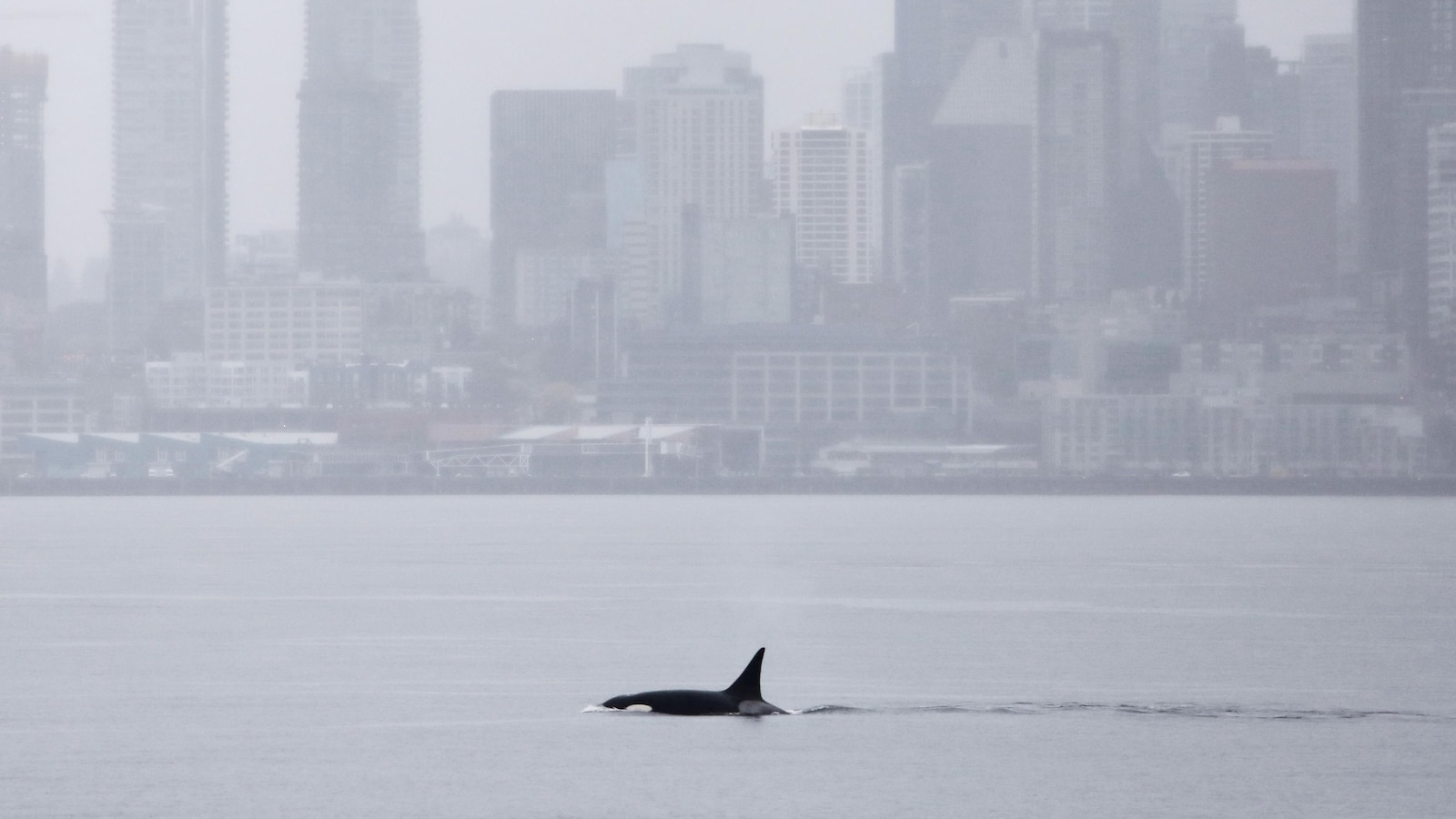
Seattle has always been known for its iconic landmarks and breathtaking waterfront views, but recently, the city has gained three new attractions that have captivated both residents and visitors alike. While most tourists come to Seattle with plans to visit the famous Space Needle and admire the stunning downtown skyline from the shores of Puget Sound, they’re now being treated to an unexpected bonus: a pod of killer whales that seems to be following a similar sightseeing itinerary. These three magnificent orcas, who had never been documented in Seattle waters before, have been making regular appearances just off the downtown coast throughout the past month, creating waves of excitement among whale watchers and nature enthusiasts. The visits have been nothing short of magical, with the whales also cruising along various other shorelines throughout the region, giving countless people the opportunity to witness these majestic creatures up close. For amateur photographer Hongming Zheng, who dedicates his free time to capturing images of whales, the arrival of this mysterious pod was worth an exhausting 10-hour drive to locate them. His effort was rewarded with what he described as an “epic” encounter, and his enthusiasm mirrors the sentiment of the entire community, with people expressing overwhelming joy at the presence of these unexpected visitors in their local waters.
The Mystery of the Unidentified Pod
The appearance of these three orcas initially puzzled marine researchers who have spent years meticulously documenting the killer whales that regularly inhabit the Salish Sea—the vast body of water that lies between Washington state and Canada. These scientists maintain comprehensive catalogs of known whales by carefully identifying and recording their distinctive features, particularly their dorsal fins and saddle patches, which are the unique grayish markings found on the sides of each whale. Every orca has its own pattern, much like a human fingerprint, making identification relatively straightforward for experienced researchers. So when this trio of orcas first appeared in Vancouver, British Columbia, back in March, it immediately raised eyebrows among the scientific community. After thoroughly checking their databases and catalogs, researchers confirmed that these three whales were completely absent from any records of local marine life—they were essentially strangers in these waters. The discovery prompted an extensive investigation, with researchers combing through historical photographs and databases from other regions. Their detective work eventually paid off when they found images of the same pod swimming in Alaskan waters just the previous year, according to Shari Tarantino, a representative from the Washington-based Orca Conservancy.
Meet the T419 Family
After confirming the identity and origin of these mysterious visitors, researchers formally designated them with official identification numbers: T419, T420, and T421. The “T” prefix in their names stands for “transient”—an amusing detail given their tourist-like behavior in Seattle, though the designation actually refers to their hunting patterns rather than their travel habits. The pod consists of a family unit that appears to include an adult female, presumably the matriarch of the group, along with what researchers believe are her two offspring. One of these offspring is a notably large young adult male, whose impressive size makes the pod even more spectacular to observe. What makes these particular orcas even more fascinating to scientists is a distinctive physical characteristic they possess that sets them apart from the local whale population: circular scars scattered across their bodies. These unusual markings are the calling cards of cookie-cutter sharks, small but aggressive predators that inhabit the deep open ocean. These sharks have a unique hunting method—they latch onto much larger animals and use their specialized teeth to slice out perfectly circular chunks of flesh, leaving behind distinctive round scars. The presence of these scars on the three orcas serves as compelling evidence that they’ve spent considerable time traversing the vast open ocean, far from coastal waters, since that’s the only habitat where cookie-cutter sharks are found.
Theories About Their Origin and Journey
While researchers have made significant progress in understanding where these whales might have come from, Shari Tarantino emphasizes that there’s still some uncertainty about their exact origins. The leading hypothesis among marine biologists suggests that the pod hails from Alaska, possibly from the remote Aleutian region, based on both their physical appearance and their scarring patterns. This theory is further supported by the fact that certain Alaskan orca populations are known to have extraordinarily wide ranges, traveling extensively across the vast expanse of the North Pacific Ocean. These particular populations don’t limit themselves to small territories but instead roam freely across thousands of miles of open water, which would explain how these three whales ended up so far from their presumed home range. The journey from Alaska to Seattle represents a migration of several thousand miles, raising the intriguing question: what motivated these whales to travel such an immense distance? Tarantino offers an interesting culinary hypothesis—these orcas may be on what could be described as a “field trip” in search of diverse food sources. Unlike Seattle’s famous endangered resident orcas, which have specialized diets consisting almost exclusively of salmon, this transient pod belongs to a different ecotype that feeds on marine mammals. The Salish Sea happens to be abundantly stocked with exactly the type of prey these whales prefer: harbor seals, sea lions, and porpoises are plentiful in these waters, potentially making the area an attractive feeding ground worth the long journey.
A Dream Come True for Whale Watchers
The impact these three orcas have had on the local community cannot be overstated. According to Tarantino, “They have quickly become a crowd favorite,” and the enthusiasm surrounding their visits has been extraordinary. For many people living in the Pacific Northwest, the dream of spotting a killer whale from shore remains just that—a dream they hope to fulfill someday. Orcas are magnificent creatures, but sightings from land are relatively rare and often require patience, luck, and perfect timing. However, this particular pod has been exceptionally generous with their appearances, repeatedly swimming close to shore and spending extended periods in areas easily visible to people on land. “People spend a lifetime hoping to see a killer whale from shore, and these three have more than delivered,” Tarantino noted, capturing the sentiment of countless grateful observers. The whales’ predictable pattern of visiting downtown Seattle and other accessible shorelines has given an unprecedented number of people the chance to witness these apex predators in their natural habitat. Families, photographers, marine enthusiasts, and casual observers have all gathered along the waterfront, cameras and binoculars in hand, hoping for a glimpse of the visiting celebrities. The excitement has spread through social media, with photos and videos of the pod going viral and drawing even more people to the shorelines in hopes of their own encounter.
The Bigger Picture and Conservation Hopes
The arrival of T419, T420, and T421 in Seattle waters serves as a powerful reminder of the incredible biodiversity that exists in the Pacific Northwest’s marine ecosystems and the importance of protecting these vital habitats. While these particular visitors have brought joy and wonder to thousands of people, their presence also highlights the broader challenges facing orca populations throughout the region. The endangered resident orcas that normally inhabit these waters face numerous threats, including declining salmon populations due to habitat destruction and overfishing, pollution, vessel traffic, and noise interference that disrupts their sophisticated echolocation abilities. The contrast between the apparently healthy transient pod and the struggling resident population underscores the complex factors that affect different orca ecotypes. The transient orcas’ mammal-based diet has allowed them to maintain more stable populations, while the resident orcas’ dependence on increasingly scarce salmon runs has pushed them toward the brink of extinction. The widespread public enthusiasm for the visiting pod demonstrates the deep connection people feel toward these intelligent, social creatures and could potentially be channeled into greater support for conservation efforts. Every person who has been moved by the sight of these whales swimming past the Seattle skyline represents a potential advocate for protecting marine environments and the creatures that depend on them. As for how long T419, T420, and T421 will continue their Seattle tour, that remains uncertain. These transient orcas are, by nature, wanderers who may move on whenever their instincts or appetites direct them elsewhere. For now, though, Seattle residents and visitors are savoring every moment with their unexpected guests, knowing that such close encounters with wild orcas are rare gifts that may not come again for years—or even lifetimes. The story of these three whales serves as a beautiful reminder that nature still holds surprises, and that even in our modern, urbanized world, wild creatures can still capture our imaginations and remind us of our connection to the natural world.