


Federal Judge Halts End to Protected Status for Haitian Immigrants
Court Issues Temporary Block as Legal Battle Continues
In a significant development for hundreds of thousands of Haitian immigrants living in the United States, a federal judge has stepped in to temporarily halt the Trump administration’s plan to end their protected status. U.S. District Judge Ana Reyes, presiding in Washington, issued an order on Monday that pauses the termination of Temporary Protected Status (TPS) for approximately 350,000 Haitians while legal challenges to the policy move forward through the courts. The protection was originally set to expire on February 3rd, a deadline that would have left hundreds of thousands of people uncertain about their future in the country they’ve called home, in some cases for more than a decade. This judicial intervention provides a critical lifeline to the Haitian community as they continue to fight for their right to remain in the United States safely.
Understanding Temporary Protected Status and Its Importance
Temporary Protected Status represents a humanitarian program that allows people from countries experiencing severe hardship to live and work legally in the United States. The Secretary of Homeland Security has the authority to grant TPS when conditions in a person’s home country make it unsafe for them to return, whether due to natural disasters, ongoing armed conflicts, political instability, or other extraordinary circumstances that temporarily prevent people from returning safely. While TPS provides crucial protections—allowing recipients to work legally, obtain driver’s licenses, and live without fear of immediate deportation—it’s important to understand that it doesn’t create a direct pathway to permanent residency or citizenship. For the hundreds of thousands of Haitians who have built lives in America under this status, working jobs, raising families, and contributing to their communities, the program has meant the difference between safety and potentially life-threatening circumstances. The designation for Haiti was first activated in 2010 following the devastating earthquake that killed hundreds of thousands of people and destroyed much of the country’s infrastructure, and it has been extended multiple times by both Republican and Democratic administrations as Haiti has continued to struggle with recovery and security challenges.
The Trump Administration’s Broader Immigration Enforcement Strategy
The move to end protections for Haitians represents just one piece of the current administration’s comprehensive approach to immigration enforcement and deportation. Homeland Security Secretary Kristi Noem has moved aggressively to terminate TPS designations across multiple countries, affecting roughly a million people in total. Beyond the 350,000 Haitians, the administration has ended protections for approximately 600,000 Venezuelans fleeing political persecution and economic collapse, 60,000 people from Honduras, Nicaragua, and Nepal, more than 160,000 Ukrainians who fled war in their homeland, and thousands more from Afghanistan and Cameroon. These actions align with the administration’s stated priority of mass deportation and stricter immigration enforcement. Many of these terminations face legal challenges in federal courts, as immigrant advocacy groups, affected individuals, and civil rights organizations argue that ending these protections violates both legal procedures and humanitarian principles. The scope and speed of these policy changes have created uncertainty for communities across America, where TPS holders have established roots, often living in the country for many years while conditions in their home nations remain dangerous.
The Humanitarian Crisis Awaiting Deportees to Haiti
The situation in Haiti that would await those forced to return is genuinely dire, painting a picture that makes the stakes of this legal battle crystal clear. Attorneys representing Haitian TPS holders didn’t mince words in their December court filing, stating bluntly: “If the termination stands, people will almost certainly die. Some will likely be killed, others will likely die from disease, and yet others will likely starve to death.” This isn’t hyperbole but a realistic assessment of conditions on the ground in Haiti, where gang violence has spiraled to unprecedented levels, effectively controlling large portions of the country including much of the capital, Port-au-Prince. Hundreds of thousands of Haitians have been internally displaced by this violence, forced to flee their homes with nowhere safe to go within their own country. The government has limited control and capacity to protect citizens or provide basic services. Healthcare infrastructure remains severely damaged from the 2010 earthquake and subsequent crises, food insecurity is widespread, and the rule of law has largely broken down in gang-controlled areas. For people who have been living safely in the United States, many for over a decade, forced return to these conditions would represent not just hardship but genuine threats to their survival and that of their family members.
Legal Arguments: Racial Animus and Procedural Failures
The lawsuit challenging the termination of Haiti’s TPS status makes serious allegations about both the motivations behind the decision and failures to follow proper legal procedures. Attorneys for the Haitian TPS holders argue that the decision was motivated by racial animus—essentially discrimination based on the fact that the affected population is predominantly Black. They point to various statements and the broader context of the administration’s immigration policies as evidence of this bias. Additionally, they argue that Secretary Noem failed to properly consider whether Haiti is experiencing an ongoing armed conflict that would pose a “serious threat” to personal safety—a legal requirement when making TPS determinations. The gang violence that has effectively created a civil war situation in parts of Haiti should qualify under this standard, the plaintiffs argue. In response, the Department of Homeland Security has defended its decision, claiming that conditions in Haiti have improved sufficiently to warrant ending the protected status. Government attorneys argued in their December filing that claims of racial motivation are based on statements “taken out of context, often from other speakers and from years ago, and without direct links to the Secretary’s determinations,” and that Secretary Noem provided “reasoned, facially sufficient explanations for her determinations.” The government pointed to the authorization of a new multinational security force to combat gangs as evidence of positive developments, though critics note this force has had limited success in establishing security.
What Comes Next: Uncertainty and Hope
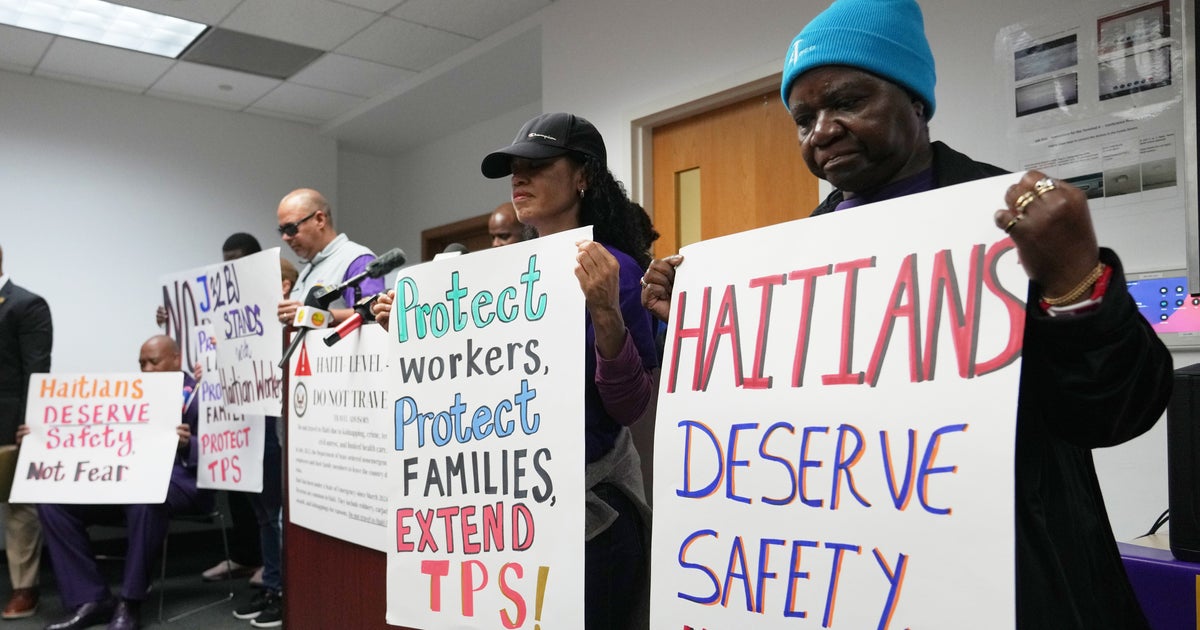
As this legal battle continues to unfold in the courts, hundreds of thousands of Haitian families across America face an uncertain future, caught between the lives they’ve built and the dangers that await in their homeland. Judge Reyes’s decision to temporarily block the termination provides breathing room, but it’s not a final resolution—the case will proceed through the legal system, and the ultimate outcome remains to be determined. In communities from Florida to New York to Massachusetts, where large Haitian populations have established themselves, people who have been working as nurses, teachers, construction workers, and in countless other essential roles now wait to learn whether they’ll be allowed to stay in the country they’ve called home or be forced to return to one of the most dangerous and unstable nations in the Western Hemisphere. Advocacy groups have rallied to support the Haitian community, organizing demonstrations like the January 28th rally in Fort Lauderdale, where supporters gathered with signs calling for the extension of TPS before its scheduled February 3rd expiration. The judge’s intervention means these advocacy efforts can continue while the legal process plays out. For now, the Haitian TPS holders have won a temporary reprieve, but the broader question of their long-term status and the humanitarian obligations of the United States toward people fleeing genuinely dangerous conditions remains unresolved, highlighting the ongoing tension between immigration enforcement priorities and humanitarian protection in American policy.