

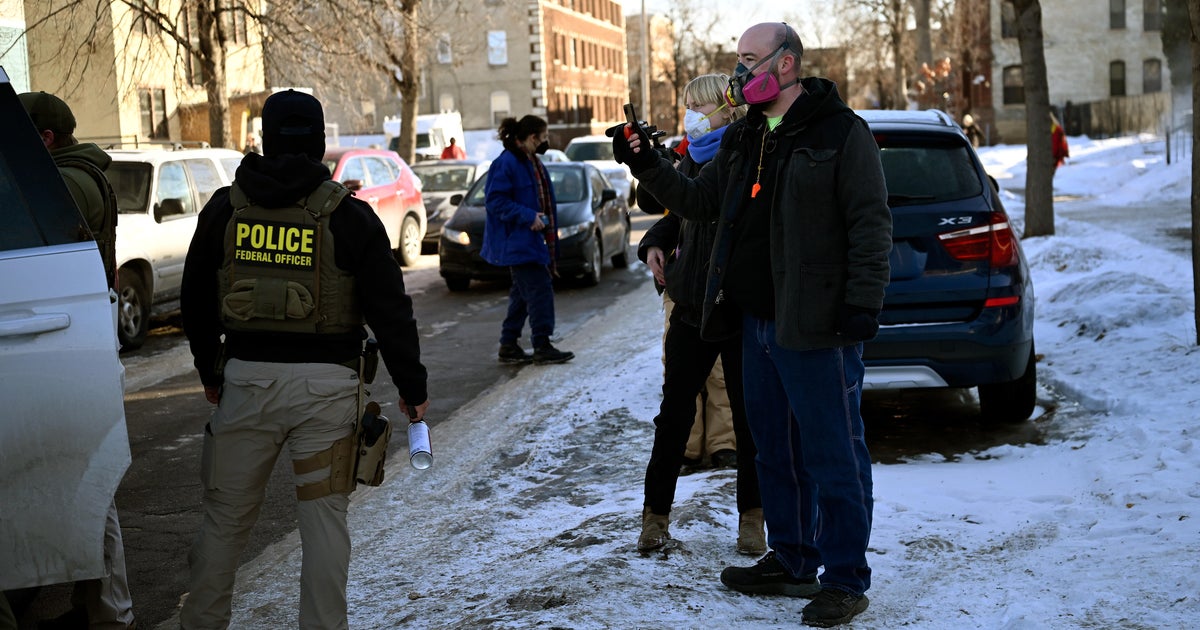

Federal Judge Denies Minnesota’s Request to Stop Immigration Operation
Court Rules Against Temporary Restraining Order
In a significant legal decision that has intensified the debate over federal immigration enforcement, Federal Judge Kate Menendez denied Minnesota’s request for a temporary restraining order to stop “Operation Metro Surge” on Saturday. The ruling represents a setback for state and local officials who have been fighting against what they characterize as federal overreach in their communities. According to the court documents filed on Saturday, Minnesota and its cities of Minneapolis and St. Paul failed to provide sufficient evidence to meet their legal burden of proof. The state had argued that the massive federal immigration operation was causing serious harm not only to the Twin Cities and the state as a whole, but also to individual residents who have been affected by the unprecedented deployment of federal agents in their neighborhoods. Meanwhile, lawyers representing the U.S. Department of Justice dismissed the lawsuit as “legally frivolous,” setting the stage for what has become a contentious legal and political battle over immigration enforcement and states’ rights.
Judge’s Reasoning and Legal Precedent
Judge Menendez’s decision was heavily influenced by recent legal precedent from higher courts. In her ruling, she referenced a case where the Eighth Circuit Court of Appeals recently vacated a preliminary injunction that had restricted the amount of force federal agents could use against peaceful protesters. That higher court had determined that the injunction would cause irreparable harm to the government by hampering its ability to enforce federal law, despite what Judge Menendez acknowledged was “much more settled precedent” in that particular case. Drawing a parallel to the current situation, Judge Menendez reasoned that if that previous injunction was deemed to have gone too far in restricting federal operations, then completely halting Operation Metro Surge would certainly be an even greater overreach by the court. Furthermore, the judge explained that because there was substantial evidence supporting arguments from both sides regarding the motivation behind the operation, and because the relative merits of each side’s competing positions remained unclear, she was reluctant to find that the likelihood of success weighed sufficiently in favor of granting a preliminary injunction. This careful legal reasoning reflects the complexity of cases where state and federal authorities clash over enforcement priorities and constitutional boundaries.
Local Officials Express Disappointment and Concern
The reaction from local officials was swift and filled with frustration following Judge Menendez’s ruling. Minneapolis Mayor Jacob Frey released a statement expressing deep disappointment with the decision, emphasizing that the court’s ruling doesn’t change the lived experiences of people in his city. He spoke passionately about what residents have endured, describing an atmosphere of fear, disruption, and harm caused by a federal operation that he believes never belonged in Minneapolis in the first place. Mayor Frey was particularly critical of the operation’s impact on public safety, arguing that contrary to its stated purpose, Operation Metro Surge has brought the opposite of safety to the community. He contended that the operation has actually detracted from the order and stability needed for a functioning city, characterizing it as nothing less than an invasion that needs to stop immediately. This strong language reflects the deep frustration felt by local officials who believe their authority and their understanding of their communities’ needs are being undermined by federal intervention. The state of Minnesota, along with Minneapolis and St. Paul, had sought the temporary restraining order in their lawsuit against Homeland Security Secretary Kristi Noem and other Trump administration officials, hoping to at least temporarily halt what they see as an unconstitutional federal intrusion.
Minnesota’s Constitutional Arguments and Allegations
The lawsuit filed by Minnesota presents several serious constitutional and practical arguments against Operation Metro Surge. At the heart of the state’s legal challenge is the claim that the Trump administration has violated the 10th Amendment of the U.S. Constitution through infringement of police power and unlawful coercion. The 10th Amendment reserves powers not delegated to the federal government to the states, and Minnesota argues that local law enforcement falls squarely within state authority. Perhaps most significantly, Minnesota alleges that it has been singled out and targeted by Immigration and Customs Enforcement (ICE) in a way that no other state has experienced, suggesting that the operation is not motivated by legitimate law enforcement purposes. Instead, the state contends that Operation Metro Surge serves as a pretext for leveraging demands and punishing political leaders within the state and Twin Cities who oppose the Trump administration’s immigration policies. The state even claims that one of the administration’s true objectives is gaining access to Minnesota’s voter rolls, a charge that raises serious concerns about federal overreach beyond immigration enforcement. Beyond constitutional arguments, the court filing details practical disruptions to daily life, including how the large-scale presence of federal agents has affected the healthcare industry, damaged local businesses, and even prevented residents from attending religious services. Schools have been particularly impacted, with the state claiming that federal officers’ use of force and students being detained on their way to and from school have had negative impacts on attendance and student focus, forcing several school districts to temporarily close their doors.
The Trump Administration’s Defense and Justification
The Trump administration has mounted a vigorous defense of Operation Metro Surge, arguing that the operation was necessary to address genuine public safety dangers arising from the presence of individuals living in the country illegally in the Twin Cities area. Administration lawyers contend that these dangers are made significantly worse by sanctuary city policies adopted by Minnesota, Minneapolis, and St. Paul, which they argue prevent proper cooperation between local and federal law enforcement on immigration matters. The Department of Justice filed a substantial 34-page lawsuit in 2025 specifically alleging that Minnesota officials are jeopardizing the safety of their own citizens by allowing people who entered the country illegally to circumvent the legal immigration process. The administration maintains that Operation Metro Surge has strictly been in furtherance of enforcing federal immigration law, which it argues is clearly within the federal government’s constitutional authority, and that the operation represents the fulfillment of President Trump’s campaign promises to crack down on illegal immigration. U.S. Attorney General Pam Bondi celebrated the judge’s ruling on social media Saturday, calling it “another HUGE” legal win for the Justice Department on the social media platform X, demonstrating the administration’s view that courts are validating their approach to immigration enforcement.
The Broader Context and Future Implications
Operation Metro Surge represents the largest federal deployment of law enforcement in United States history, a fact that underscores the unprecedented nature of this confrontation between state and federal authorities. The scale of the operation reflects the Trump administration’s determination to make immigration enforcement a top priority, even in the face of substantial opposition from state and local officials. The legal battle over Operation Metro Surge is likely far from over, as Minnesota and the Twin Cities can continue their lawsuit even without the temporary restraining order, potentially appealing Judge Menendez’s decision to higher courts. This case raises fundamental questions about federalism, the balance of power between state and federal governments, and the extent to which states can resist federal enforcement actions they believe are harmful to their communities. The outcome will likely have implications far beyond Minnesota, potentially setting precedents for how similar conflicts are resolved in other states and cities that have adopted sanctuary policies. As the legal proceedings continue, residents of the Twin Cities find themselves caught in the middle of a constitutional clash, experiencing disruptions to their daily lives while politicians and lawyers argue over jurisdictional boundaries and enforcement priorities. Whatever the ultimate legal resolution, Operation Metro Surge has already transformed the landscape of immigration enforcement in America and demonstrated the deep divisions that exist over how the country should approach immigration policy and enforcement in practice.