


A Veteran’s Fight: 50 Years in America, Now Facing Deportation
A Family Torn Apart by an Uncertain Future
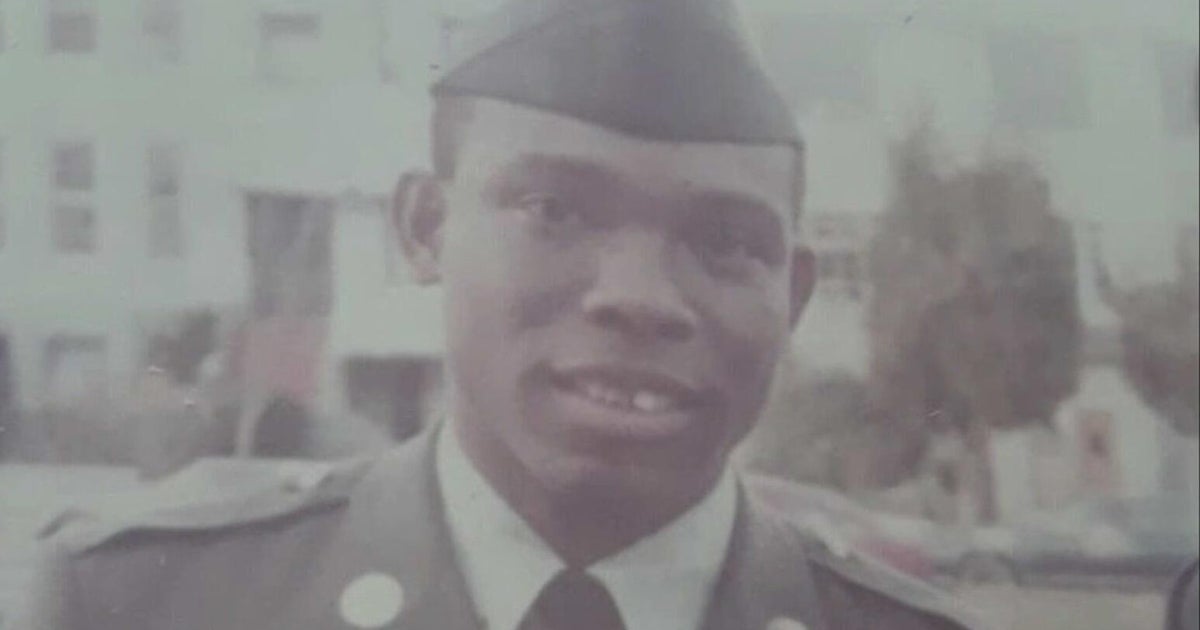
After calling America home for more than half a century, Godfrey Wade finds himself locked in a desperate battle against deportation. The Army veteran, who first arrived from Jamaica as a teenager in 1975, has spent nearly five months detained by Immigration and Customs Enforcement (ICE), separated from the life he built in Covington, Georgia. His fiancée April Watkins describes their situation with heartbreaking simplicity: “We’ve built an amazing life together, and to be separated from that is very challenging, especially since he did not have an opportunity to have his voice heard.” The home they share now feels empty, missing the man who served his adopted country in uniform and spent decades contributing to his community in countless ways.
The pain of Wade’s absence ripples through his entire family. Six children and three grandchildren are left wondering when—or if—they’ll see him again. His daughter Christian Wade describes the ordeal as “an emotional roller coaster,” sharing the heartbreak of watching her own young daughter cry herself to sleep, missing the grandfather who has been such a central part of her life. What makes this separation even more agonizing is the seeming injustice of it all—a man who wore the uniform, who raised his right hand and swore to defend this nation, now finds himself treated as unwanted. For a family that believed in the promise of America, largely because Wade himself instilled that faith in them through his military service, the current nightmare feels like a betrayal of everything they were taught to believe in.
From Jamaica to the Army: Building an American Life
Godfrey Wade’s American story began the right way—lawfully and with hope. In 1975, he arrived in the United States as a teenager, following the legal immigration process. He didn’t just come to America seeking opportunity; he gave back immediately by enlisting in the U.S. Army. Wade served his adopted country overseas and earned an honorable discharge, a distinction that his family says defined his character. “That was his foundation, and he took pride in it and made us believe in the U.S. Army,” recalls his daughter Emmanuela Wade. The military wasn’t just a job for Wade—it was the bedrock upon which he built his identity as an American, even before he could claim citizenship.
After his military service, Wade lived as a lawful permanent resident for decades, embodying the immigrant success story that America has long celebrated. He didn’t limit himself to one profession but instead explored multiple paths, working as a chef, tennis coach, and fashion designer. His versatility and work ethic impressed everyone who knew him. “He’s dipped his hands in everything that makes America good,” Emmanuela observed, painting a picture of a man who embraced every opportunity to contribute to his community. For more than forty years after his military discharge, Wade lived quietly, worked hard, raised his family, and built relationships. He paid his taxes, followed the law, and created the kind of stable, productive life that immigration advocates and critics alike claim to want from those who come to America. Yet despite all this, a series of events from more than a decade ago has now put everything he built in jeopardy.
How a Turn Signal Led to Detention
The chain of events that shattered Wade’s life began on an ordinary day—September 13, 2025. He was pulled over in Conyers, Georgia, for something countless Americans do every day without consequence: failing to use a turn signal. What should have been a routine traffic stop escalated when officers discovered Wade was driving without a valid license, leading to his arrest. In the course of processing that arrest, authorities discovered something that Wade himself didn’t know existed: a removal order from 2014. Suddenly, a minor traffic violation had unearthed a decade-old deportation order, and ICE took Wade into custody. Within hours, the life he had built over fifty years began to crumble.
The removal order itself stems from two incidents that Wade’s attorney describes as minor and long-resolved. In 2007, Wade wrote a check that bounced, and in 2006, he was charged with simple assault in a domestic incident. According to his legal representation, the assault charge involved a domestic argument where “a glass of milk was spilled and pots and pans were knocked to the floor. No physical violence was ever alleged.” Wade took responsibility for both matters—he paid the bounced check in full along with all associated fines, and he resolved the assault charge. These were the kinds of mistakes that many people make and move past, learning from their errors and becoming better for it.
What makes Wade’s situation particularly troubling is how the 2014 removal order came to exist in the first place. Wade never appeared at the hearing that resulted in his removal order because he was never properly notified that the hearing was happening. Court records show that hearing notices were sent to an address being used by ICE, but those notices were returned as undeliverable. Wade continued living his life, completely unaware that he had been ordered removed from the country. He had no opportunity to present his case, explain his circumstances, or demonstrate the rehabilitation and stability he had achieved in the years since those minor offenses. The first time he learned about the removal order was when ICE agents detained him following his 2025 traffic stop. “Someone’s old mistakes does not define who they are,” Christian Wade pleads. “Understand the context. There’s more to a story than just four words, and people need to see the humanity of the person.”
A System That Separates Before Listening
Since his arrest, Wade has been caught in the machinery of the immigration detention system, moved from facility to facility while his family desperately tries to visit and his attorney fights to have his case reopened. Initially, Wade was taken to Atlanta’s ICE field office before being transferred to Stewart Detention Center. For months, his loved ones made five-hour round trips just to see him for brief visits, speaking through plexiglass barriers. These visits became precious moments of connection in an otherwise isolating experience. But even that difficult routine was disrupted when Wade was suddenly transferred to Richwood Correctional Center in Louisiana, hundreds of miles further from his Georgia family.
The Louisiana transfer brought new fears. Wade’s attorney learned that he had been placed on a flight manifest to Jamaica, meaning deportation could happen at any moment. “You’re on pins and needles because you don’t know what’s going to happen,” Watkins explains. “Am I gonna hear that he’s in Jamaica? Do we need to figure out transportation, figure out clothes for him?” Christian Wade adds, capturing the anxiety of not knowing whether each phone call might bring news that their loved one has been removed to a country he hasn’t called home in five decades. ICE has not responded to requests for comment about Wade’s case, and their online detainee search simply lists him as “in ICE custody” at the Louisiana facility.
Because the 2014 removal order is considered final, Wade has not been granted a hearing to present his case. His entire future hinges on whether authorities will agree to reopen his case and give him the opportunity that he was denied in 2014—the chance to be heard. His attorney has filed an appeal requesting exactly that, and members of Congress from both political parties have written to the Department of Homeland Security urging that Wade’s case be reconsidered. The bipartisan support suggests that reasonable people across the political spectrum can see the injustice in deporting a veteran over decade-old minor offenses without ever giving him his day in court. “What we are asking for is just that one hearing, that one chance, that one opportunity to be heard,” Watkins says with the exhaustion and hope of someone who has been fighting an uphill battle for months.
The Human Being Behind the Case Number
Even in detention, separated from everything familiar and facing an uncertain future, Wade’s character shines through. His creativity, which served him in his various careers, continues to find expression behind bars. He has taken to drawing portraits of other inmates, bringing moments of humanity and recognition to people who, like him, are caught in a system that often seems to see them as problems rather than people. These drawings offer a glimpse into who Wade really is—not just a case number or a removal order, but a talented, thoughtful man who sees others and wants to honor their dignity even in the most difficult circumstances.
Watkins speaks of Wade’s faith as the foundation keeping them both strong through this ordeal. “He’s a very strong man of faith, and so his faith is that foundation, and with that, I’m able to lean on him, he’s able to lean on me,” she shares. The relationship between Wade and his ex-wife is also described as positive and healthy, a testament to his character and his ability to maintain important relationships even after they change form. “No one is perfect,” Watkins acknowledges. “He restituted the money. He has an amazing relationship with his children as well as his ex-wife.” The portrait that emerges from his family’s descriptions is of someone who has made mistakes, taken responsibility for them, and built a good life characterized by strong relationships, hard work, and service to others.
What Does “Thank You for Your Service” Really Mean?
Wade’s case raises profound questions about how America treats those who serve in uniform but were not born on American soil. “You’re not from this country, but you serve. You’re willing to die for this country. That should matter,” Watkins argues, giving voice to a sentiment that many Americans would likely agree with in principle but that the immigration system seems to ignore in practice. When Wade enlisted in the Army as a young man, he made himself available for the ultimate sacrifice—giving his life for a country that was not yet fully his own. He served overseas, far from the home he was building, protecting American interests and representing American values. He earned an honorable discharge, meaning he fulfilled his obligations with integrity.
Yet decades later, that service seems to count for nothing in the face of a bounced check and a domestic dispute that involved no physical violence. Christian Wade’s words cut to the heart of the matter: “When we say thank you for your service, it should mean something.” In airports and restaurants across America, people routinely thank veterans for their service, often as a reflexive gesture of respect. But what does that gratitude mean if the country those veterans served can discard them over minor, long-resolved offenses without even granting them a hearing? If the words “thank you for your service” are to have meaning beyond empty politeness, they must translate into recognition that those who wore the uniform deserve to be treated with dignity and fairness, especially when they’ve spent fifty years contributing to American society.
As Wade’s family continues to fight for his case to be reopened, they’re not asking for special treatment or for his past mistakes to be erased. They’re simply asking for what the American justice system promises everyone: the opportunity to be heard. They want the chance to paint the full picture of who Godfrey Wade is—not just the two minor offenses from nearly two decades ago, but the veteran, the father, the grandfather, the fiancé, the chef, the coach, the designer, the artist, the man of faith who has called America home for more than five decades. Without intervention from the Department of Homeland Security, Wade could be deported within days to Jamaica, a country he left as a teenager and where he has no remaining connections. His family waits, hopes, and prays that somewhere in the system, someone will recognize that Godfrey Wade deserves at least one chance to tell his story before being permanently separated from the only home he’s known for most of his life.